
Two rare, endangered whales swim off usual course. Keep an eye out, Texas experts warn
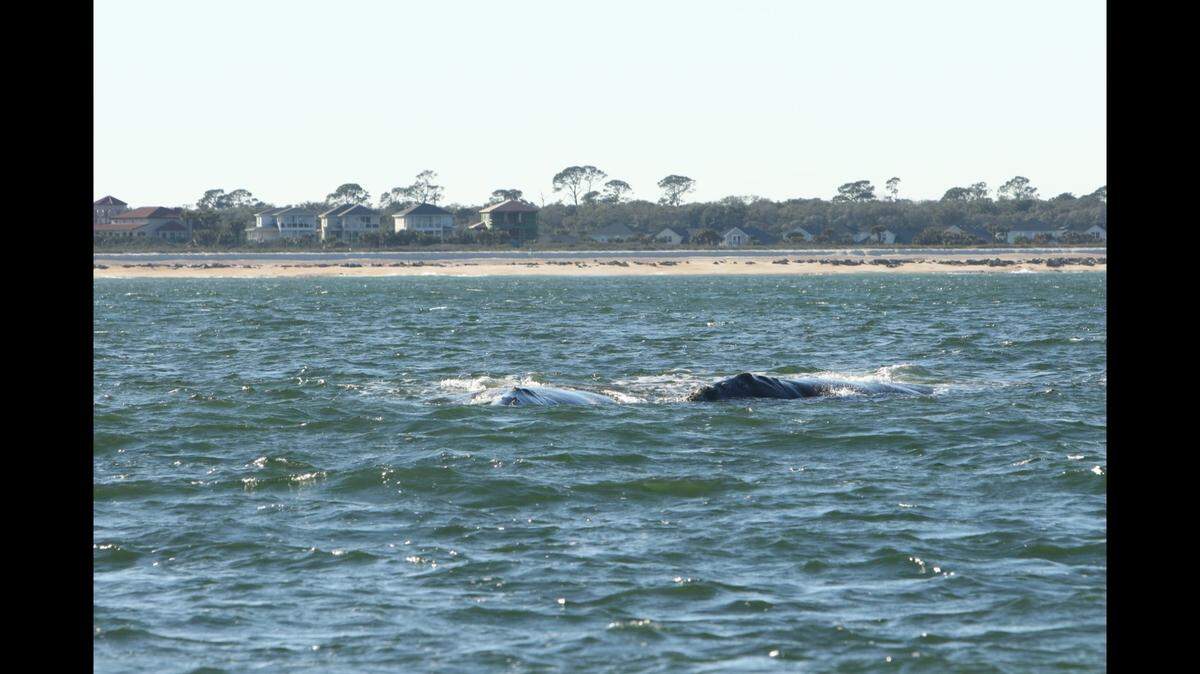
A pair of rare and critically endangered whales has journeyed past their usual course, appearing in the Gulf Coast where they’re at greater risk — and Texas experts are keeping an eye out for them.
Two female North Atlantic right whales, dubbed Koala and Curlew, were spotted near the Florida-Alabama border on Feb. 2, according to the Florida Fish and Wildlife Conservation Commission. Right whales generally swim south during the winter to the warmer waters off the southern United States, but Koala and Curlew have gone much further to the Gulf of Mexico, where sightings are rare.
_fitted.png "Screenshot (5846)_fitted.png")
“North Atlantic right whales are critically endangered. They are slow-moving animals and are at high risk for collisions with vessels. Despite their enormous size, right whales maintain a low profile (like an alligator or log) and are often difficult to spot,” FWC said.
Experts aren’t sure why the duo has kept going.
If they’ve come this far it’s possible they could travel further still, even all the way to the Texas coast.
“Heads up Gulf vessel operators: Two *highly endangered* North Atlantic Right Whales were recently sighted in the northern Gulf as far west as Mississippi and traveling westward,” the Texas Marine Mammal Stranding Network, a nonprofit rescue group, said in a Facebook post. “It is highly unusual for right whales to be in this area.”
It’s been nearly 20 years since a right whale was seen near the Texas coast, in January 2006, TMMSN Director Heidi Whitehead told the Houston Chronicle. A whale named Boomerang was observed with a calf seemingly wounded by a ship propeller, she told the outlet, adding that the mother and calf were seen about a month later near Florida and the calf showed signs of healing.
There are an estimated 370 North Atlantic right whales left, according to the National Oceanic and Atmospheric Administration. With the species’s numbers dwindling, the loss of Koala or Curlew would be devastating.
The far-flung journey has experts worried about the whales because they’ve wandered outside the view of whale spotters and watching groups along the East Coast, which can issue warnings to vessels when they’re near any whales, USA Today reported. However, the Gulf Coast is more of a blind spot, where Koala and Curlew don’t have as large a network of experts and volunteers watching out for them.
“Boaters are urged to post a lookout. If a whale is spotted, slow down, and operate at a slow speed or put your engine in neutral if possible. Assess the scene and slowly leave the area while keeping watch,” the FWC said.
Right whales weigh around 140,000 pounds, are 52 feet long from mouth to fluke and can live for 70 years, according to NOAA. However, being struck by ships or getting tangled in fishing gear are among the biggest threats to the species.
Anyone who spots Koala or Curlew is asked to contact the National Oceanic and Atmospheric Association at 877-WHALE-HELP.
This story was originally published February 9, 2025 at 12:07 PM with the headline "Two rare, endangered whales swim off usual course. Keep an eye out, Texas experts warn."