
Why are Starbucks baristas on strike? Here’s what they want customers to know
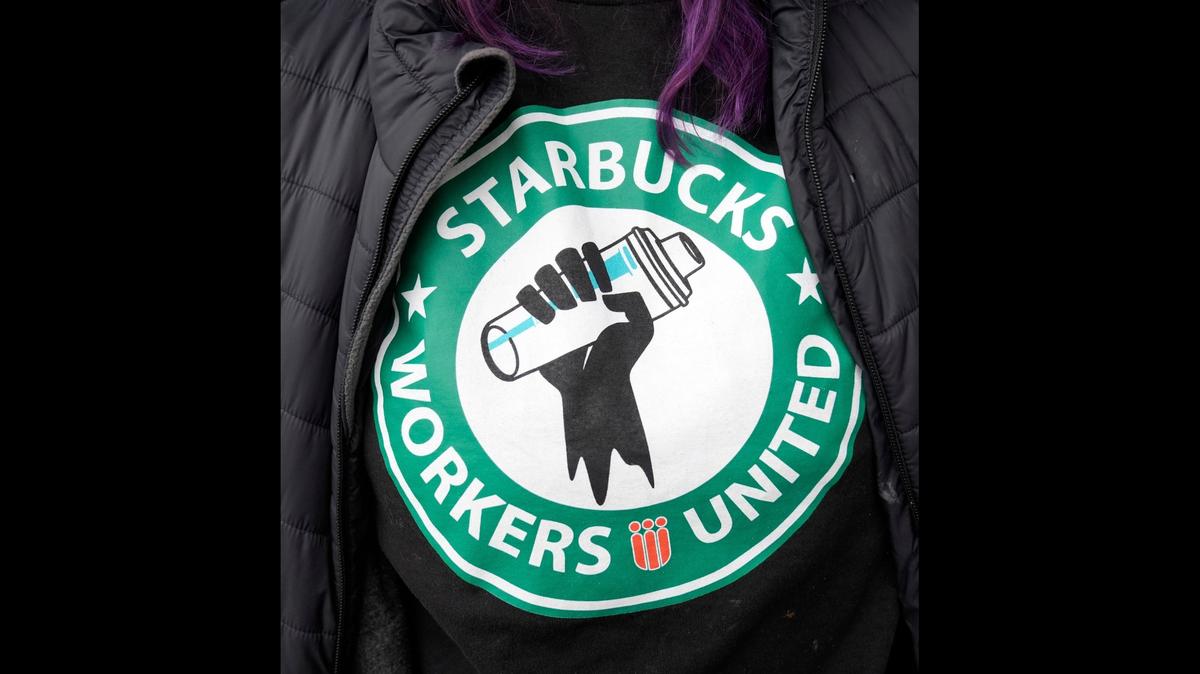
It’s been more than a week since Starbucks baristas began walking off the job to protest what they call a “new, regressive dress code” pushed by the coffee giant.
The nationwide walkout has grown to more than 2,000 union baristas across 150 stores as of Monday, May 19, according to Workers United, the union representing more than 11,000 Starbucks workers in the U.S.
Rolling, one-day strikes are ongoing as Starbucks implements an updated employee dress code. The changes were enforced unilaterally with Starbucks failing to bargain with union members over the new policy, the group said.
But baristas want customers to know this effort is about more than the color of their shirts.
“A lot of partners can’t afford this (new dress code),” Jasmine Leli, a three-year barista and union bargaining delegate from Buffalo, New York, told McClatchy News in a phone interview. “So we’re having to make the hard decision, ‘do I eat, or do I purchase’” new work clothes?
“It’s impacting the partners in a really negative way, and I think the customers should know that.”
The union confirmed the employee strike has caused closures at some locations, but didn’t say how many.
Starbucks addressed the protest in a statement, saying less than 1% of its stores have taken part “in (Workers United’s) attempts to cause disruption.”
“The biggest update to our dress code is simple: wear a black shirt — either your own or one we provide,” the company said. “It would be more productive if the union would put the same effort into coming back to the table to finalize a reasonable contract.”
Here’s what to know about the nationwide walkout.
Workers United protest Starbucks dress code
The coffee giant announced the changes in April as part of a larger “Back to Starbucks” initiative helmed by CEO Brian Niccol. The coffeehouse is returning to its roots with “simplified” colors that “highlight our iconic green apron,” Starbucks said in a news release.
The new dress code took effect May 12 and requires solid black short or long-sleeved crew neck, button up or collared shirts — a shift from its previous policy that allowed a range of dark colors and patterns, CBS News reported.
“We’re also making a new line of company-branded T-shirts available to partners, who will receive two at no cost – including partner network options,” the coffee giant said.
Additionally, employees must wear khaki, black or denim bottoms — or risk being sent home.
The changes drew the ire of union baristas who said the policy isn’t being applied equally.
“It’s like a form of discipline,” Leli said. “So we’re getting in trouble because the manager is interpreting the dress code in a way that continuously moves the goalpost.”
On Reddit, one employee said they were sent home over their permanent dental retainer and told not to return “until I can get the blue permanent retainer in my mouth removed or get a clear retainer.”
Partners said reasons for their dismissals ran the gamut from the wrong color pants to non-waterproof shoes and colorful socks.
Leli said sending workers home only worsens understaffing — a key issue baristas are calling on Starbucks to address.
“Instead of listening to baristas who make the Starbucks experience what it is, they are focused on all the wrong things, like implementing a restrictive new dress code,” Paige Summers, a shift supervisor from Hanover, Maryland, said in a statement.
“The path to turning Starbucks around begins with a fair contract with union baristas that addresses the staffing, pay, and support we need to do our jobs,’” she said.
Contract negotiations ongoing
Starbucks and Workers United have yet to reach a contract agreement, though negotiations have been going on since February 2024, Axios reported.
Last week, the union said it filed a complaint with the National Labor Relations Board, citing what it called Starbucks’ failure to bargain over the new employee dress code.
“We’re constantly dealing with all of the changes that keep coming (from Starbucks), and none of them are addressing the core issue,” Leli said. “We just need this contract yesterday.”
Starbucks provided an update on contract negotiations back in April, saying an “incomplete framework for single-store contracts” presented by the union has effectively hampered efforts to reach a deal.
“Starbucks remains optimistic that, through productive compromise and respectful dialogue, we can finalize a contract that is fair and equitable,” the company said. “A strong and successful Starbucks is in the interest of every partner.”
This story was originally published May 20, 2025 at 11:13 AM.