Bear raids camper’s cooler and slurps orange juice. Now CO officials concerned
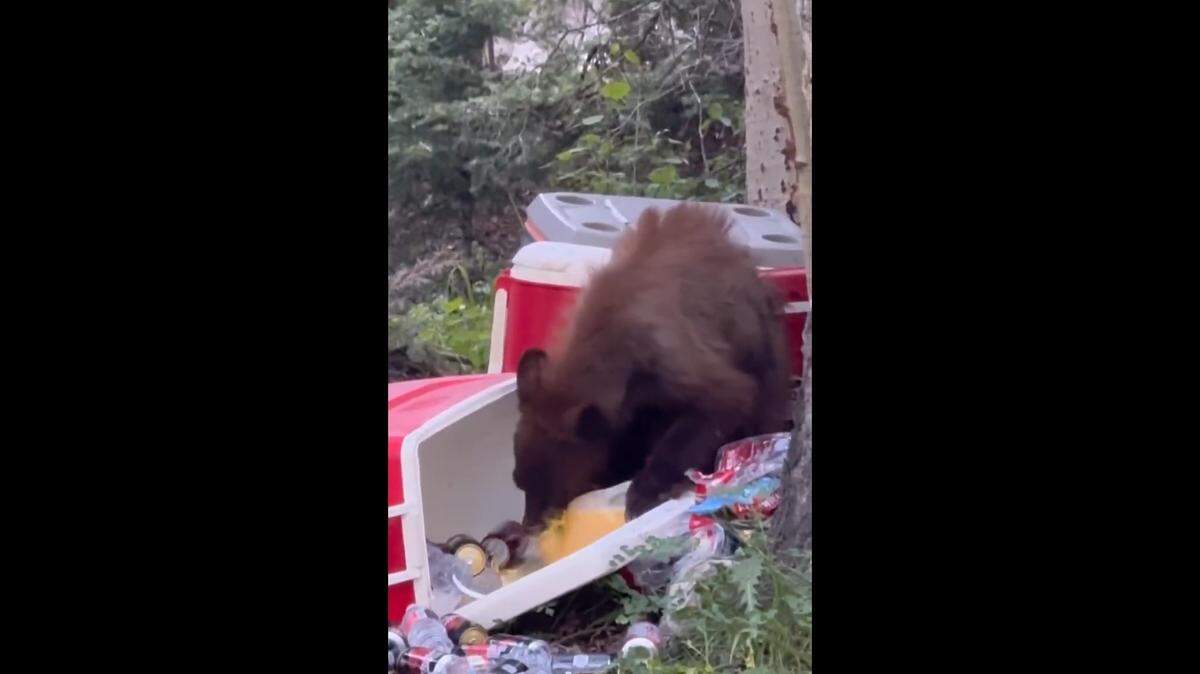
A bear got into a cooler at a Colorado campsite and slurped up some orange juice, video shows.
Now wildlife officials are warning campers to avoid these incidents — for their own safety and the safety of the bears, Colorado Parks and Wildlife Southwest Region said in a July 1 post on X, formerly known as Twitter.
“Keep a clean camp,” the agency said in the post, adding that a wildlife officer went to the location at Buckhorn Lakes to educate campers on bear safety. “Incidents like this can quickly escalate to future conflict that is entirely preventable.”
Video shows the bear kneeling over an overturned cooler and puncturing a jug of what looks like orange juice, then lapping it up.
“When a bear like this gets a food reward from a campsite, it will remember that spot and continue to come back looking for food,” officials said. “The easiest way to avoid bears is to not have anything in your campsite that has a smell that will attract them.”
Officials recommended storing food, drinks and toiletries in campsite lockers (called bear boxes) if they’re provided, or otherwise bear-proof containers away from your tent or locked in a car’s trunk. It’s also important to clean anything used for cooking and eating, including grill grates and used dishes.
“If a bear enters your campsite, haze it away with loud noises. Yell, bang pots and pans, use your car horn or an air horn and scare the bear away so it has a negative association with the campsite,” officials said. “As an extra precaution, carry bear spray when you go camping.”
And report any bear activity to Colorado Parks and Wildlife, officials said.
“We’d rather get out and do education and work with humans to remove attractants than see incidents like this continue to escalate to the point of conflict,” the agency said.
Buckhorn Lakes is about a 260-mile drive southwest from Colorado Springs.
What to do if you see a bear
Bear attacks in the U.S. are rare, according to the National Park Service. In most attacks, bears are trying to defend their food, cubs or space.
There are steps people can take to help prevent a bear encounter from becoming a bear attack.
Identify yourself: Talk calmly and slowly wave your arms. This can help the bear realize you’re a human and nonthreatening.
Stay calm: Bears usually don’t want to attack; they want to be left alone. Talk slowly and with a low voice to the bear.
Don’t scream: Screaming could trigger an attack.
Pick up small children: Don’t let kids run away from the bear. It could think they’re small prey.
Hike in groups: A group is noisier and smellier, the National Park Service said. Bears like to keep their distance from groups of people.
Make yourself look big: Move to higher ground and stand tall. Don’t make any sudden movements.
Don’t drop your bag: A bag on your back can keep a bear from accessing food, and it can provide protection.
Walk away slowly: Move sideways so you appear less threatening to the bear. This also lets you keep an eye out.
Again, don’t run: Bears will chase you, just like a dog would.
Don’t climb trees: Grizzlies and black bears can also climb.