Inside the search for Bryan Kohberger: Consumed by 4 murders, Idaho police never stopped


Nov. 13, 2022: Multiple homicide reported
Moscow Police Cpl. Brett Payne arrived at a white, three-story house in a neighborhood off the University of Idaho’s campus in Moscow on Nov. 13, 2022. It was two hours after a 22-year-old rookie patrol officer first reported back to emergency dispatch about a homicide, recorded on the 911 call.
Payne walked through the crime scene for his initial pass that Sunday afternoon. Items were strewn about like that of a typical college student, Payne wrote in a police report. He noticed nothing out of the ordinary on the first floor.
That changed as he, and one of the officers who initially responded, walked upstairs. There, in a small second-floor bedroom, Payne saw a young woman, later identified as Xana Kernodle, with numerous stab wounds on her arms, hands and face, lying on the floor next to her bed, he wrote in his report. She was dead.
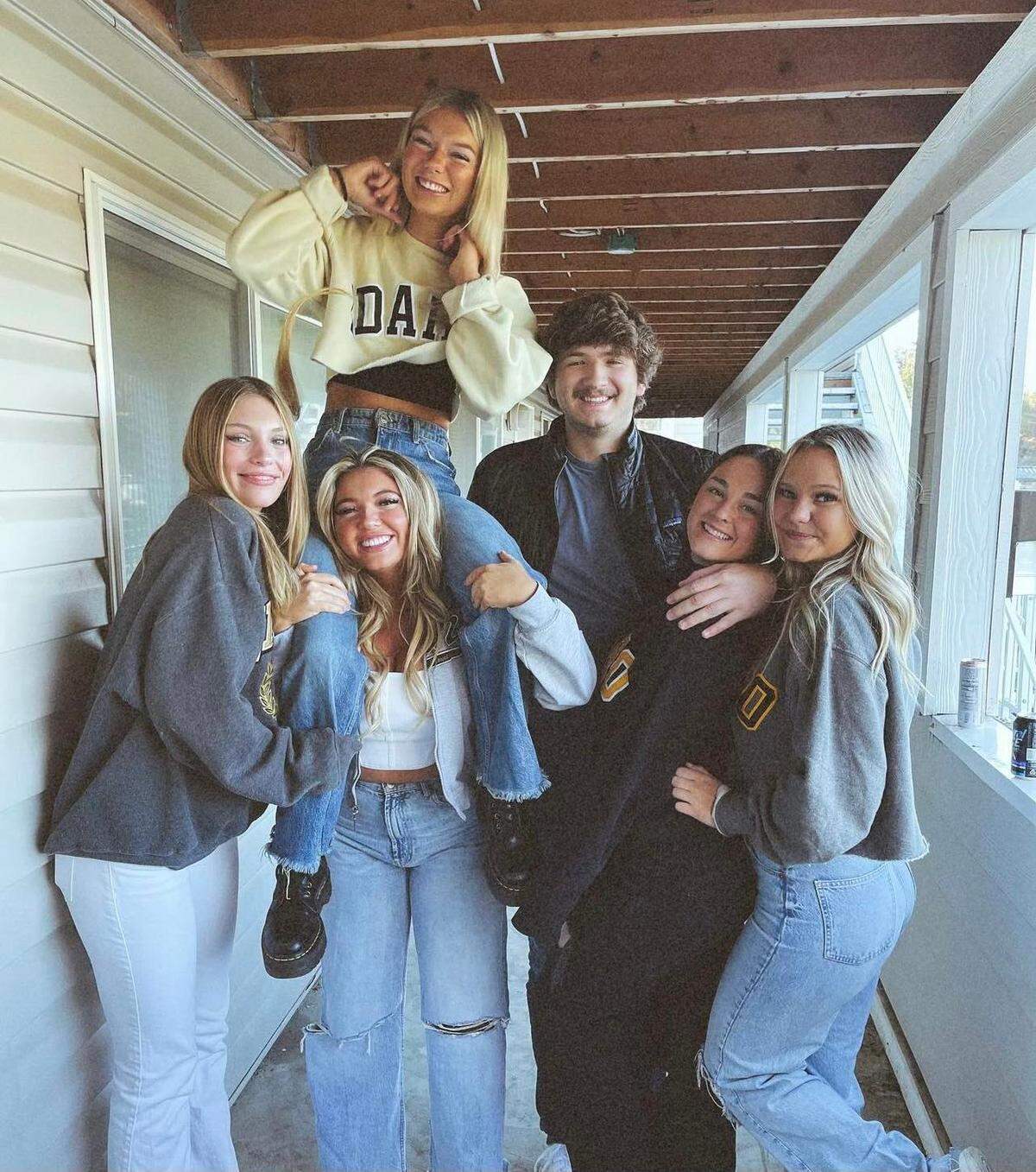
Behind her, still in bed and partly covered by a blanket, was her boyfriend, Ethan Chapin. He also was dead. Payne continued upstairs to the third floor, where he saw two young women, later identified as childhood best friends Kaylee Goncalves and Madison Mogen, lying in bed beside each other, also dead, the report read.
Next to the women was something out of place. Payne immediately spotted a key piece of evidence, according to Idaho State Police Lt. Darren Gilbertson. A leather knife sheath.
Payne relayed that detail to Gilbertson, who got to Moscow about a half hour later with his team. Police called Gilbertson in quickly to assist in what was the first quadruple homicide of his 20-year career.
“We knew it was important, we knew it didn’t fit there,” Gilbertson told the Idaho Statesman. “Obviously, we knew that it appeared all four were killed by a knife, and probably the same one.”
Other potential clues were sparse. It soon became clear to Gilbertson, then a sergeant who drove up from Lewiston, that he was observing a senseless act of brutality against four college students, he told the Statesman. What he called a “true whodunit” that would require all of his focus to try to solve.
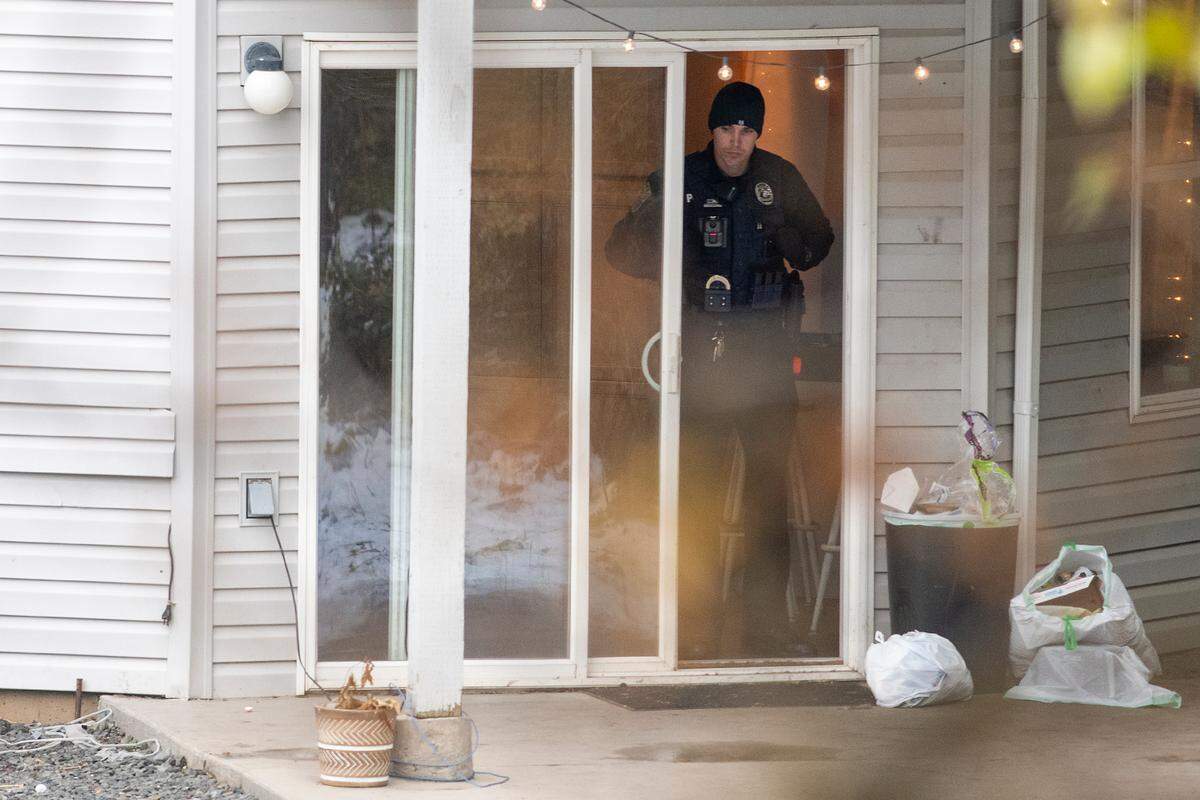
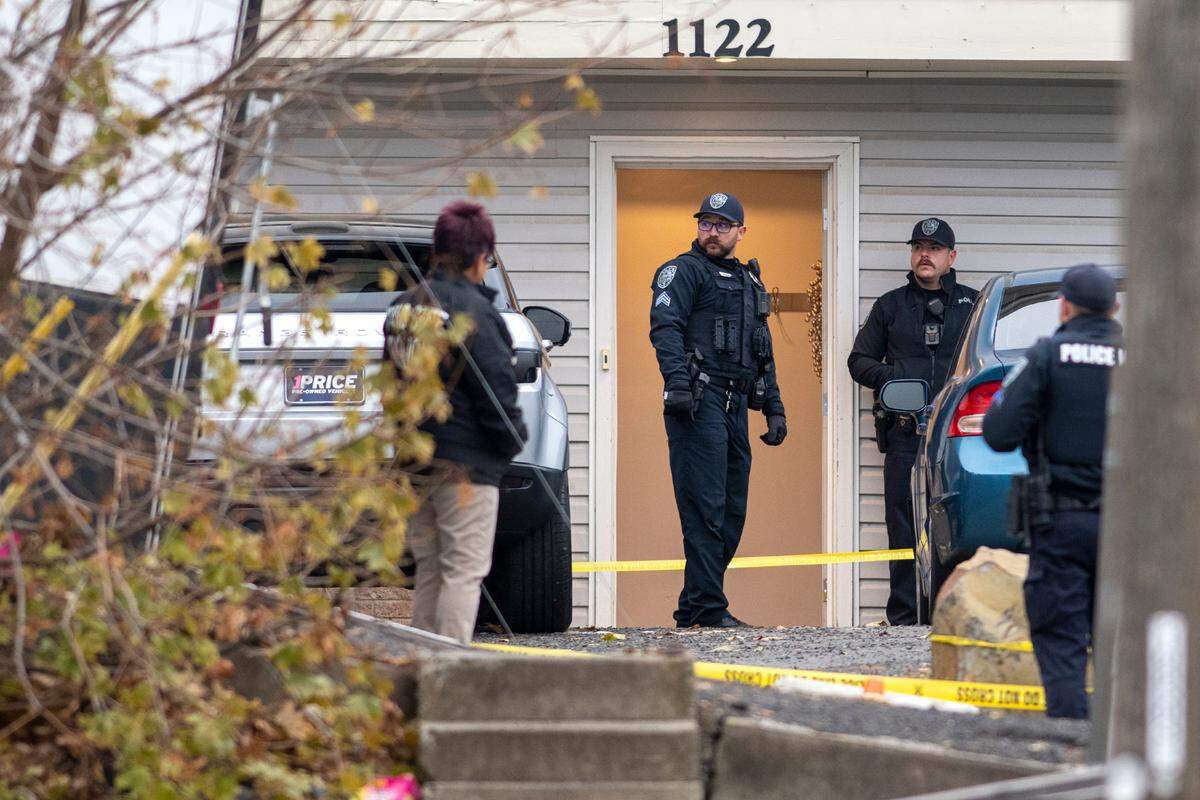
Moscow police officers secured the home to give detectives their best chance at finding the killer, Gilbertson said. Not even James Fry, then the local police chief and a former investigator, entered the crime scene. For hours, police waited to begin collecting evidence until a search warrant was approved at about 5 p.m., Gilbertson said.
Hundreds of reports released by the Moscow Police Department — and reviewed by the Statesman — showed police quickly cordoned off the area and began tasking officers with varying assignments: The initial responder identified college-aged people gathered out front of the house; another officer logged the people entering the home; a corporal took initial photos; and a patrolman stood guard at the sliding glass door in the kitchen, which was found ajar.
More than a dozen people, including two roommates who survived the stabbings, family members, and friends of the victims, were taken to the police station about a mile away for interviews. One after another, they were questioned by detectives, as those who remained waited within the department’s second-floor training room, Moscow Police Chief Anthony Dahlinger told the Statesman by phone.
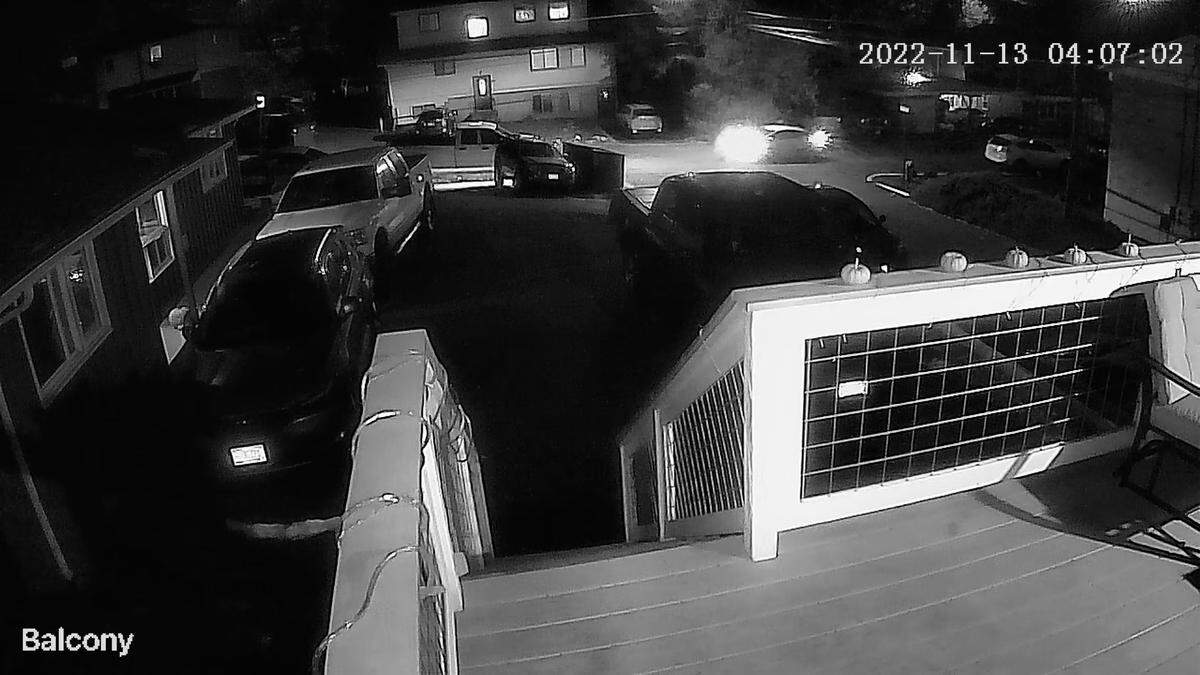
Other officers canvassed neighborhoods to obtain video from every house with a surveillance system, according to police reports. Footage from a camera in the light bulb base of the immediate neighbor’s balcony would become another critical piece of evidence.
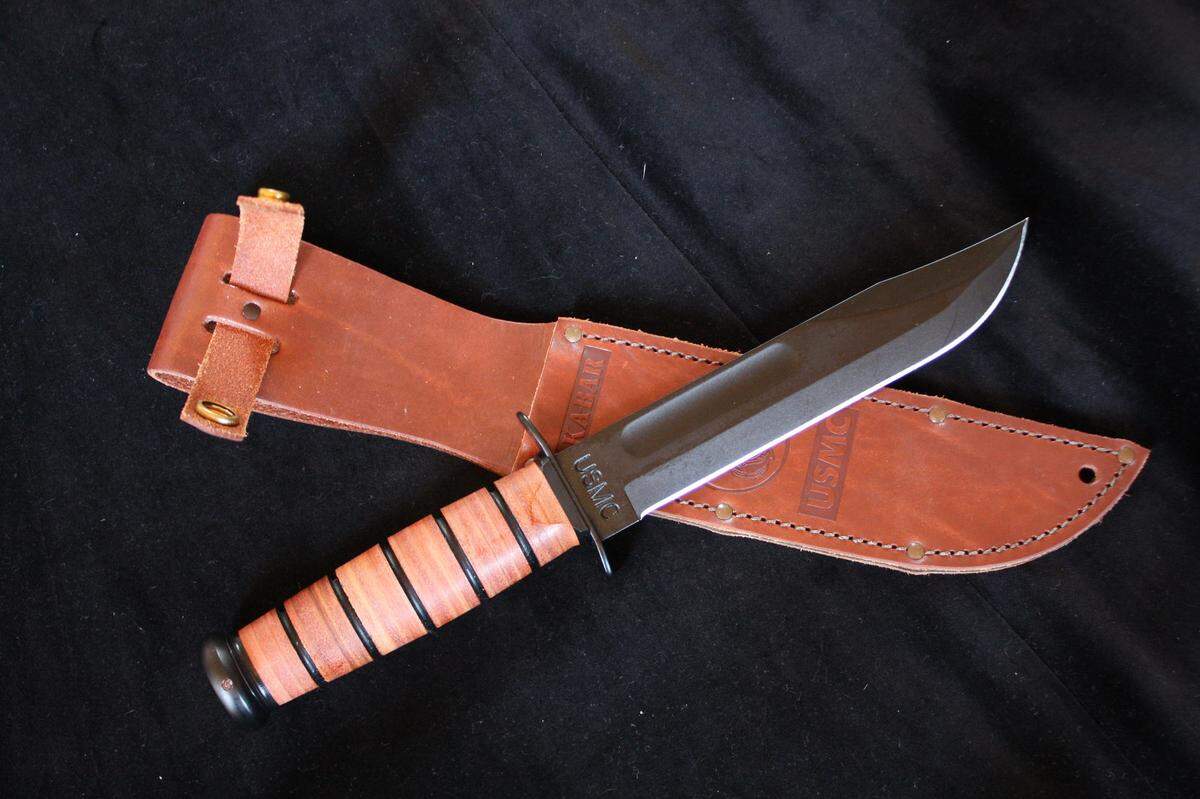
The next day, Nov. 14, investigators focused on what could be the key to unlocking the entire case: the tan leather knife sheath. It was stamped with a U.S. Marine Corps eagle, globe and anchor emblem and designed for a Ka-Bar knife.
A former U.S. Marine, Gilbertson had particular familiarity with the lethal weapon issued to members of that military branch. And he knew, with certainty, that someone wielding the combat-style knife could have carried out such carnage, he added.
The tips of Ka-Bar knives are known to break off when used in combat, Gilbertson said. That didn’t happen in this attack, and no parts of the murder weapon have ever been recovered, he said.
Troopers drove south to Meridian the day after the murders to hand-deliver it to the Idaho State Police crime lab to begin inspecting it for potential DNA, Gilbertson said. Meanwhile, in Moscow, an officer was sent to local businesses to ask about possible Ka-Bar knife sales, according to a report.
A police spokesperson and Dahlinger, who was a captain with the department at the time, denied specific inquiries into Ka-Bar knives around town in the investigation’s first few weeks.
“We wanted to protect that information from any potential — you know, the suspect is still out there,” Dahlinger said last week. “So if we let it slip, or let it be known that we’re looking specifically for a Ka-Bar knife, that would tip them off that we found the sheath and that we’ve got a piece of evidence here.”
But scouring Moscow had been fruitless. By mid-afternoon on Nov. 14, the officer reported back a dead end. None of the sporting goods and hardware stores — nor the local Walmart — sold Ka-Bars, his report read. Records showed police pursued other leads that ultimately led nowhere while the state crime lab examined the knife sheath. Idaho State Police had already joined the case as reinforcement. On day two, the FBI was called in, Fry and Gilbertson told the Statesman.
Investigators waited with bated breath to learn whether the state crime lab found anything. As police continued working the case, media attention and public interest surrounding the student homicides began to soar.
Nov. 20, 2022: DNA results come in
A common idea persists, including among law enforcement, that if homicide investigations go without an arrest in the first 48 hours, the likelihood that the case will be solved significantly drops off.
Dahlinger didn’t know whether there was any truth to the 48-hour rule. But, he said, after chasing down lead after lead, he began to feel like investigators might be running out of possibilities.
“You have those ups and downs, that roller coaster of emotions, daily,” he told the Statesman. “Excitement about a new lead, and then it’s dashed. Something else comes up, and then it’s dashed. It just wears you down.”
Historically, law enforcement in the region has been able to crack such cases — even past murder investigations — within a day, maybe two, Gilbertson said. Even in this case, detectives believed they would settle on their suspect by the next day, he said.
“That’s how it goes for us most of the time,” Gilbertson said. “So the realization, as we got into day three and four that we don’t have anybody, … that really changes everything greatly. And so that’s when we formed and set up a command structure, different teams for a long-term investigation.”
Obtaining footage from the immediate neighbor’s security camera proved a challenge to investigators in the first week.
Within hours of arriving at the crime scene, a corporal in a police report said, he collected a memory card from the surveillance camera. Investigators ran into technical difficulties and were unable to pull any footage. So they returned the card, hoping to obtain recordings of what the camera captured in the neighborhood early that morning with the neighbor’s help.
Four days after the homicides, on Nov. 17, an officer reached back out to the neighbor to obtain the footage, but learned she’d left Moscow until the end of the month, records showed. The next day, another person who lived at the house was able to pull up the footage from the night of the killings on her phone and screen-record it. She gave the videos to an officer, who also took the entire camera and router as evidence.
The video showed a white sedan that the FBI eventually identified as a Hyundai Elantra, circling the King Road neighborhood several times before it sped away. Police labeled the car “Suspect Vehicle 1.”
As the investigation extended into its first week, law enforcement was still awaiting word from the crime lab about the knife sheath. Meanwhile, Dahlinger said they worked to build the case.
“The rest of it was just good old-fashioned police work,” he said, “literally boots on the ground, canvassing the entire town, talking to anybody and everybody, and gathering video and audio, whatever we could from everybody.”
On Nov. 20 — seven days after the homicides — Idaho State Police got the results. Lab analysts, according to court records, found a single source of male DNA on the button snap of the sheath.
They ran the profile through the FBI’s national DNA database, known as CODIS, but received no match.
The next day, a police sergeant drove down from Moscow to Meridian to retrieve the DNA profile from the crime lab to take it out of state for help to try to identify its source.
He boarded a flight from Boise to Houston on Nov. 22 with the DNA — packed in a vial inside an envelope sealed with evidence tape and placed in a box from the lab — in a backpack he carried on and never left his sight, according to a police report. The sergeant brought it directly to Othram, a private forensics lab in Texas that works with law enforcement on unsolved cases.
Since summer 2021, Idaho State Police has contracted with Othram to use investigative genetic genealogy, or IGG, to help close cases. The advanced DNA technique, which includes leveraging public ancestry databases to build a family tree and work backward to narrow the list of possible suspects, has traditionally been reserved for cold cases.
“This case exemplifies why Othram was built — to overcome the limitations of traditional forensic DNA technology and bring certainty to investigations, whether current or cold,” the company recently wrote.
Othram by that point had helped Idaho solve a few cold cases. It was now involved in not only its first active investigation for the state, the company said, but one of the highest-profile cases in America.
Dec. 19, 2022: DNA tool pinpoints suspect
The investigation had an early run of “quick wins,” Gilbertson said, by obtaining new evidence, including more security footage to help piece together the four student victims’ nights and clearing various suspects through interviews and cross-referencing whereabouts. But the case grew from days to weeks old. National media attention continued to intensify without a suspect, and the case soon stretched into December.
“We already feel enough pressure from ourselves, because we want to do our jobs and we want justice for those victims and for their families,” Gilbertson said. “But then in this case, to have the media presence and to have the pressure of what would end up being the nation and the world at times was just absolutely incredible.”
Othram continued trying to flip the DNA profile from the knife sheath into a family name. The lab had begun to land on distant relatives connected to it through ancestry databases, but still no direct hit.
On almost a daily basis, Dahlinger said, investigators would have another possible suspect to rule out. They chased claims that a dealer was selling drugs to fraternities and sororities on campus, according to records; and a tip about a man in his 60s in Kitsap County, Washington, near Seattle, who drove a white Hyundai Elantra and was accused of trying to entice children.
Investigators also reviewed sale records of Ka-Bar knives from all over Idaho and Washington, one of the reports showed. From Boise, to Coeur d’Alene, to Spokane, to Seattle.
“We were trying to find whatever connection we could, and we were looking at all potential angles, right?” Dahlinger said. “Very early on, we were like, ‘OK, could this have been drug-related? Could it have been family-related? Could it have been’ — I mean, there were a million different theories out there, and we had to kind of test each one of them and ask some questions, and most of them got dashed very quickly.”
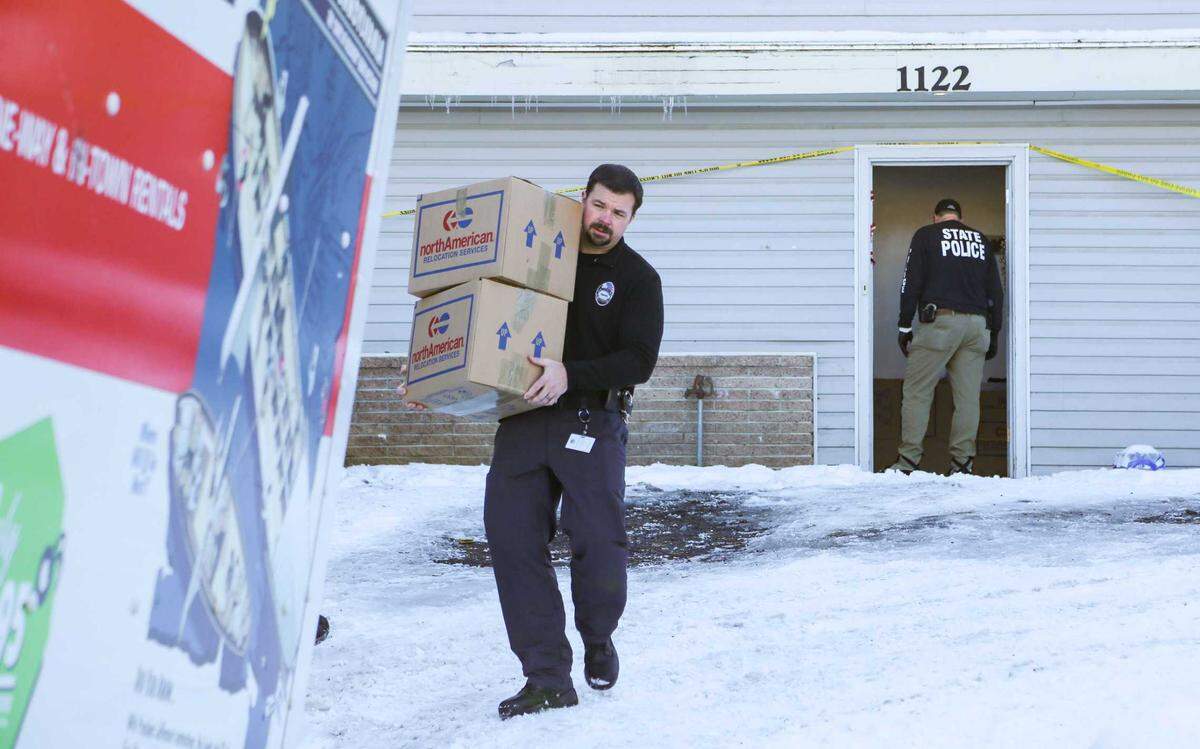
Investigators reviewed bank records, social media accounts, dating apps and other records for any piece of information.
The investigation dragged on. With still no news on the DNA — the case’s most promising evidence — lead investigators felt like they’d hit a wall now into the fifth week.
“Day after day after day after day, and we’re chasing down thousands of tips and leads and nothing is producing anything,” Gilbertson said. As one example, a partial footprint that police found on the home’s second floor and detailed with a diamond-shaped pattern in the probable cause affidavit, never got them anywhere, he said.
Needing a spark, investigators asked Othram to halt its efforts after it built the DNA profile needed for use in IGG. The FBI stepped in and took over. Federal agents were handed full access to the profile on Dec. 13, when they began combing through databases for a match, Gilbertson said.
“They had further resources and some capabilities that we thought may get us somewhere quicker,” he told the Statesman at a news conference. “And so we made the decision to then shift that to the FBI and continue that process.”
Just six days later, on the evening of Dec. 19, Payne and Gilbertson got a call. The FBI had a name: Bryan Kohberger.
“It was absolutely surreal. Just absolutely incredible — disbelief,” Gilbertson said. Any cheer was brief, and had to be.
“As quickly as we had it, we went to work,” he said.
Kohberger was a graduate student at Washington State University, just over the Idaho state line in Pullman. He hadn’t been brought up as a suspect to that point. His 2015 white Hyundai Elantra had been excluded in a list of potential vehicles, police told the Statesman, because they had initially requested 2011-2013 models, though they later broadened the search. But once they knew about Kohberger, he checked all the boxes, Gilbertson said.
Kohberger wasn’t in Pullman, investigators said they learned that same night. He’d left for the holiday break from school to return to eastern Pennsylvania, where he was from and his family still lived.
The next day, Dec. 20, the FBI dispatched to his parents’ home in the Pocono Mountains, Gilbertson said. He declined to provide specifics, citing confidential operations, but agents were inside the tucked-away gated community and confirmed Kohberger was there, Gilbertson told the Statesman.
They began around-the-clock surveillance of the Kohberger family home, Gilbertson said, as Idaho investigators hurriedly worked toward establishing the grounds for an arrest warrant. The investigation, which had expanded into its sixth week, moved quickly at that point.
On Dec. 23, Payne received a search warrant for the location data from Kohberger’s cellphone. It showed at least a dozen visits to the coverage area of the cell tower nearest the King Road home, he wrote in a report. “All of these occasions, except for one, occurred in the late evening and early morning hours of their respective days,” it read.
Four days later, on Dec. 27, investigators waited for their chance and took trash from the Kohberger home, Payne wrote in the report. It was flown to the Idaho State Police crime lab for analysis, where analysts — the next day — matched a discarded Q-tip as the father of the single source of male DNA found at the crime scene in Moscow.
Payne filed for an arrest warrant on Dec. 29, which a judge granted. He and Gilbertson made plans to immediately fly to Pennsylvania.
Hours later, at about 1 a.m., the FBI and Pennsylvania State Police mobilized in the neighborhood and executed a raid of the Kohberger family home. Payne and Gilbertson watched a live feed on their phones about a half hour east at a police station in Stroudsburg, Pennsylvania, as officers arrested Kohberger, Gilbertson said. Then they awaited his arrival.
Dec. 30, 2022: Bryan Kohberger arrested
At 2 a.m. on Dec. 30, 2022, Payne and Gilbertson sat across from the man they’d been after for seven weeks. For the next 45 minutes, they interviewed Kohberger, then 28 years old, who police believed fatally stabbed the four college students, Payne wrote in a report.
Based on guidance from the FBI’s behavioral analysis unit, Payne told reporters, they tried to keep it “pretty surface-level,” just to get him comfortable and speaking. He had asked them several times to make sure his parents, and their dog, were OK. Police assured him they were.
Kohberger was advised of his Miranda rights — that he could choose to remain silent — and the three made “small talk,” according to another report written by Payne. Kohberger said he was a first-year Ph.D. student in WSU’s criminology program. They also spoke about sports. Kohberger told them he didn’t much follow the Cougars football team, and was more of a baseball fan.
Kohberger applied only to WSU and University of California Irvine’s criminal justice doctoral programs, he said, because neither required a graduate entrance exam. WSU accepted him, and he and his father road tripped to Pullman. He said they arrived July 1, 2022 — his first time in the Pacific Northwest. A neighbor in his graduate student apartment complex mentioned having met Kohberger’s father, who was “very talkative” when he moved his son in, another report read.
Text messages obtained through a subpoena, and explained in the reports, showed that WSU professors had discussed Kohberger’s interactions with female students during his time as a teaching assistant. In one thread, a professor told the group they should consider performing an intervention on Kohberger after he offended several women.
Kohberger planned to work as a teaching assistant again next semester, he told Payne and Gilbertson. But according to a report, the university terminated his position, and he also lost his funding for his Ph.D. program.
In mid-December, Kohberger’s father flew to Pullman, and they began a cross-country road trip back to Pennsylvania in his son’s white Hyundai Elantra. During the drive, they were pulled over by law enforcement twice in a 10-minute span just east of Indianapolis in stops that the FBI long denied had anything to do with him being tailed. Kohberger and his father were back in Pennsylvania by Dec. 16, and the FBI had not landed on his name until Dec. 19. The case’s lead prosecutor also recently reiterated to The New York Times that the back-to-back traffic stops were “totally coincidental.”
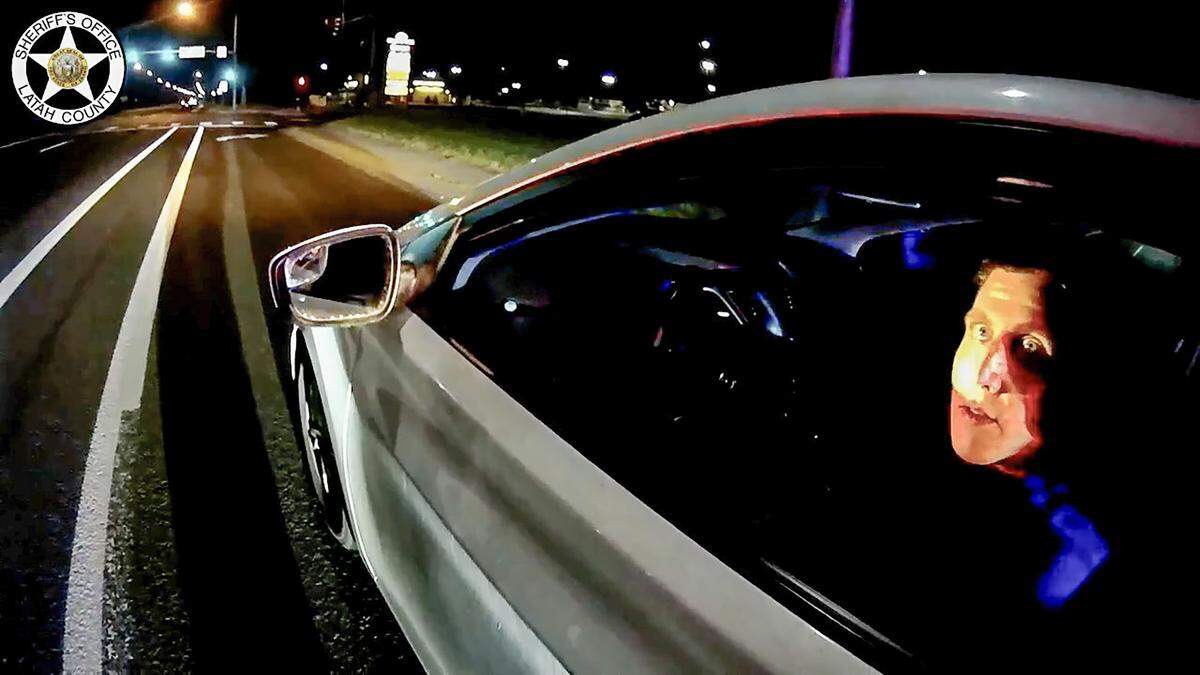
Kohberger had interest in becoming a professor, he told the two Idaho detectives, because he “loved college” and “knowledge was far more important to him than money,” the report read. Kohberger also considered entering law enforcement, but did not want to become a police officer unless he was certain, he said.
Kohberger didn’t say much of anything about the case in Moscow as he returned to his coursework at WSU, peers told the Statesman days after his arrest. But he was tracking it, Gilbertson said. On Kohberger’s phone, investigators found saved screenshots of local news stories about the students’ deaths, he said.
Just an hour earlier, members of state and federal law enforcement burst into Kohberger’s parents’ home to arrest him and execute a search warrant. Kohberger was already awake upstairs and appeared to be sorting “miscellaneous garbage,” Gilbertson said.
During overnight surveillance in the days leading up to his arrest, Kohberger was observed once very late at night walking in dark clothing around his parents’ neighborhood. But reports that law enforcement witnessed him throwing trash away in his neighbor’s garbage were untrue, Gilbertson said. Reports that claimed they saw Kohberger using bleach to clean his car, which he drove back to Pennsylvania with his father, also were false.
“I think that was online stuff,” Gilbertson told the Statesman. “We did not ever through surveillance see that or observe that, at all.”
Kohberger made a break for it as police forcefully entered and tried to get downstairs headed for his room in the basement, he said.
Included on a search warrant list of the dozens of items police seized from the Kohberger home were a Glock handgun, two items identified as a “green leafy substance,” and a book with underlining on page 118.
The suspected drugs were marijuana, according to a police report, in a state where cannabis is legal for medical purposes. It was found in a spare room of the home, so it was unclear whether the marijuana was Kohberger’s, Gilbertson said. The handgun was registered to him, and also found in his lower-level bedroom with three empty magazines and the record of sale.
The book, Gilbertson said, was titled “Feel the Fear and Do It Anyway,” by Susan Jeffers, a self-help book about techniques for turning anger and indecision into action. Gilbertson didn’t know what had been underlined, but, he said, it remains in police evidence.
Kohberger’s disposition during their interview was “calm” and “relaxed,” Payne told reporters. Kohberger didn’t ask why he was there until deep into their conversation, Gilbertson said. The suspect showed no signs of anger, concern or the appearance of being rattled, Gilbertson said.
“There was none of that,” he said. “That was very strange to be going through and seeing that type of behavior, his expressions. It’s what you see in court: direct eye contact, he stares directly at you.”
But when he and Payne referenced the case in Moscow, Kohberger “shut down” and no longer had interest in talking, Gilbertson said. He sat back in his chair, said he had the “utmost respect for law enforcement,” but that he had a constitutional right to an attorney, according to the report. The two Idaho detectives concluded the interview.
During his nearly two and half years in jail awaiting trial, Kohberger had hundreds of mostly video calls that were monitored by police, only with his mother, father and two older sisters outside of those with his attorneys, Gilbertson said. His mother and father were on almost all of the calls, with his sisters also there most of the time, he said.
In none of the discussions did the Kohberger family ever talk about the murders with their son and brother, Gilbertson said. Instead, the calls hovered on “completely trivial stuff,” he said, and never broached the issue of whether he killed the four students.
“Not one bit,” Gilberston said. “The closest they would ever get is maybe speaking just briefly about the next motion or hearing coming up and … something good’s going to come out of what we have coming up next. Even as they lost motion after motion after motion.”
July 23, 2025: Kohberger sentenced after guilty plea
At Kohberger’s sentencing hearing last month, attended by his mother and one of his sisters, Kohberger donned silver shackles and belly chains with an orange jail jumper. It was the first time in more than two years that the defendant appeared inside a courtroom in anything other than a shirt and tie. Members of the victims’ families filled the seats for the chance to describe how deeply his actions have scarred them.
Earlier in July, Kohberger agreed to plead guilty to four counts of first-degree murder in exchange for removing the death penalty as a possible punishment. With his mother and father in the courtroom, he accepted consecutive life sentences with no chance of parole, and waived all of his appeal rights.
At that hearing, Latah County Prosecutor Bill Thompson, who led the prosecution of Kohberger in the closely watched legal proceedings, laid out the highlights of the state’s case.
Kohberger bought a Ka-Bar knife, sheath and sharpener on Amazon in March 2022 while still living in Pennsylvania, Thompson said. He also later tried to delete or alter his purchase history with the online retailer, he told the court.
In addition, since Kohberger moved to the region, his phone connected to the cell tower that serves the King Road neighborhood 23 times, all in the late evening and early morning hours, Thompson said.
Kohberger’s cellphone also was turned off for about two hours the morning of the murders, including the window when police believe he killed the four students, Thompson said. His phone location data also indicated he returned to the King Road coverage area later that morning between 9:12 a.m. and 9:21 a.m., according to the probable cause affidavit signed by Payne. The King Road neighbor’s security camera did not show Kohberger’s white Elantra again between those times, Gilbertson told the Statesman.
Later that day, Kohberger’s cell data showed he traveled from Pullman south to the area of Clarkston, Washington, and Lewiston, Idaho, about eight hours after the King Road murders, the affidavit read. There, surveillance video showed, he exited his Elantra “consistent with Suspect Vehicle 1” from the neighbor’s security footage, and walked into an Albertsons in Clarkston. He went through the self-checkout stand and bought only a pre-packaged Starbucks frappuccino coffee drink, Gilbertson said.
Kohberger left the grocery store around 1 p.m., and pinged again to a cell tower just after 5:30 p.m. about 25 miles north in Johnson, Washington. What Kohberger did during that time — and also, according to the affidavit, during another three-hour window where his cellphone again stopped reporting to the network until 8:30 p.m. — remains unknown.
“This area is the confluence of the Clearwater River and the Snake River,” Thompson said at the plea hearing. “Lewiston is Idaho’s seaport. Large bodies of moving water down there.”
Investigators searched high and low for the Ka-Bar fixed-blade knife they believe Kohberger used to kill the four U of I students, Gilbertson said. That included near the rivers, as well as hikes Kohberger frequented, such as in Wawawai County Park and Steptoe Butte State Park in Washington, among other possible locations from tracking his route.
“We, of course, went through this thousands of times in our hopes to try to locate either clothing that he might have changed out of, or certainly the murder weapon. Extensive searches,” Gilbertson said. “I think it’s as likely that he could have thrown the knife into the river from one of the bridges.”
The case’s lead investigator acknowledged it’s also possible that when Kohberger drove to Lewiston, he could have just wanted to get out of town to burn off “a lot of nervous energy” a matter of hours after the crime.
The two surviving roommates called 911 to the home at 11:56 a.m. that morning. Moscow police arrived within minutes.
“He’s got to be wondering, why is nothing happening? No police, no calls, no nothing,” Gilbertson said. “I think that’s when he goes ahead and makes his trip down to the Lewiston-Clarkston area. Is it to get rid of stuff? I don’t know. We can’t say because we never found anything.”
The knife was never found. It wasn’t from a lack of tips either.
In March 2023, three separate people called in to report knives they found discarded throughout the Palouse, according to reports. One was a Ka-Bar brand, but it wasn’t a match.
A year later, another Ka-Bar knife was found in the Cascade mountains. It wasn’t anywhere near Kohberger’s known path of travel and was found with its sheath.
The decisive error that led Kohberger to leave the knife’s sheath behind was likely on account of Kernodle, Gilbertson said. She was still awake and in the middle of eating a late-night order of Jack in the Box delivered by DoorDash, Gilbertson said. Kernodle likely heard Mogen and Goncalves in distress and went upstairs to check on them, he said.
“She certainly did go up the stairs,” Gilbertson said. “Fortunately, that’s what stopped him up there and caused him to screw up and leave the knife sheath, was either hearing or seeing Xana. And then that took his attention away, and he followed her down the stairs to her bedroom.”
Would you still have been able to find him without the sheath? That’s something Payne and Gilbertson said they’ve talked about “ad nauseam,” when asked by a reporter at a news conference.
“The answer is yes,” Payne said, most likely through Kohberger’s vehicle.
“We had some amazing people going truly line by line over tens of thousands of white Hyundai Elantra. So we believe we would have got to it through that avenue. The time frame for that is uncertain: It could have been a week later. It could have been two months later.”
But without the DNA found on the sheath left at the crime scene, Thompson told the Statesman that he wasn’t certain charges ever could have been brought against Kohberger. It wasn’t until police linked the used Q-tip from the Kohbergers’ trash to the crime-scene DNA that prosecutors had enough to seek an arrest, he noted. A direct match was then made between a swab of Kohberger’s cheek and the DNA from the knife sheath after his arrest.
On July 23, Gilbertson watched from the front row at Kohberger’s sentencing hearing. The defendant’s demeanor that morning reminded him of being back face to face with Kohberger in the interview room in Pennsylvania, witnessing his “complete disconnection with everything.”
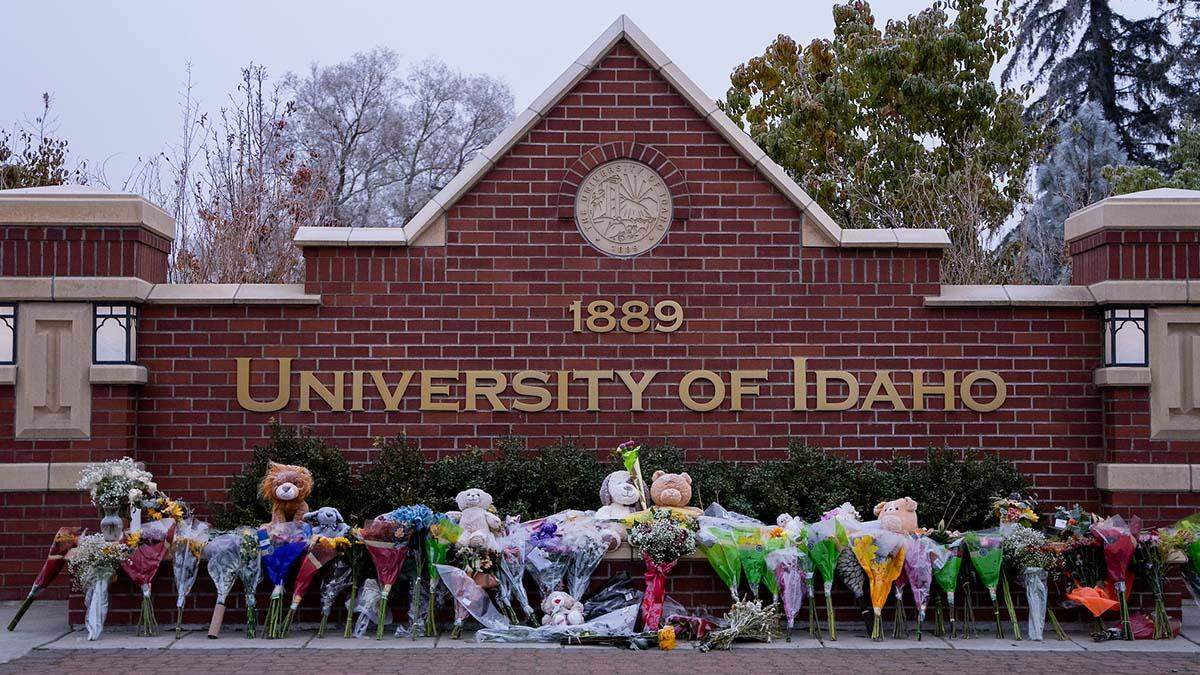
The courtroom was filled with a range of emotions from sorrow to anger, as mothers, fathers, siblings, grandparents, and the two surviving roommates read statements detailing the impact of losing their loved ones. Their statements provided a glimpse into the lives of Mogen, who loved to go to concerts with her dad, and Goncalves, who played pranks. Kernodle, the life of the party, was deeply in love with Chapin, who was the kind of person everyone wanted to be around.
For two hours, Kohberger sat at the defense table between his attorneys, watching the families and friends who lost someone they loved, without any expression.
“Really quite unemotional,” Gilbertson said of Kohberger. “He blinked a little bit more a couple times during that, he looked around. … He’s very much just flowing and just going through this process.”
Speaking to the victims’ families and experiencing their words in court at sentencing was emotional for him, too, Gilbertson said. He hoped his efforts to reach a conviction for Kohberger helped deliver some amount of finality in the case for the victims’ families.
“This has been our life,” Gilbertson said. “It’s consumed every bit of it, every day.”
Gilbertson wasn’t alone. He sat in the courtroom along with Payne, Dahlinger, Fry, and even the rookie officer who first responded to 1122 King Road, watching the case’s conclusion.
They had changed, Fry told the Statesman, and communities had changed. Lives had changed, and lives had been destroyed. But after nearly three years, they all walked out of the courthouse, and Kohberger was on his way to maximum-security prison. It was finally over.
This story was originally published August 14, 2025 at 3:00 AM with the headline "Inside the search for Bryan Kohberger: Consumed by 4 murders, Idaho police never stopped."