Rare creature with a long tail fin washed up on a South African beach. Take a look

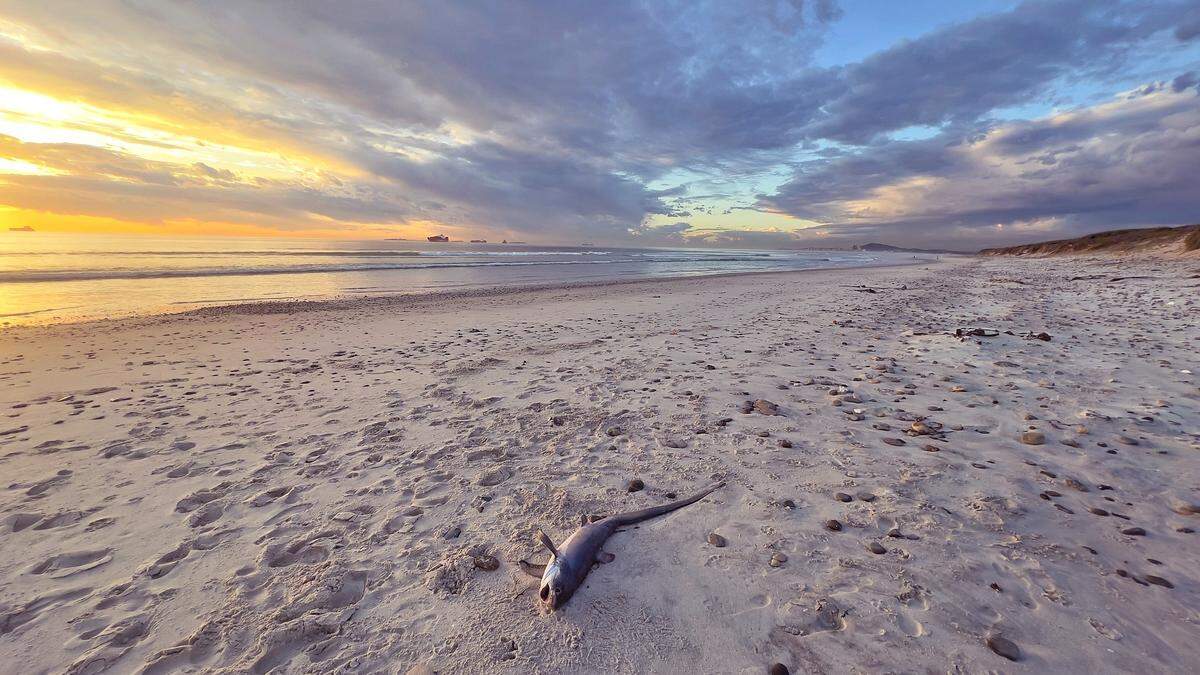
A South African wildlife photographer was out on Sunset Beach when he came across something unusual.
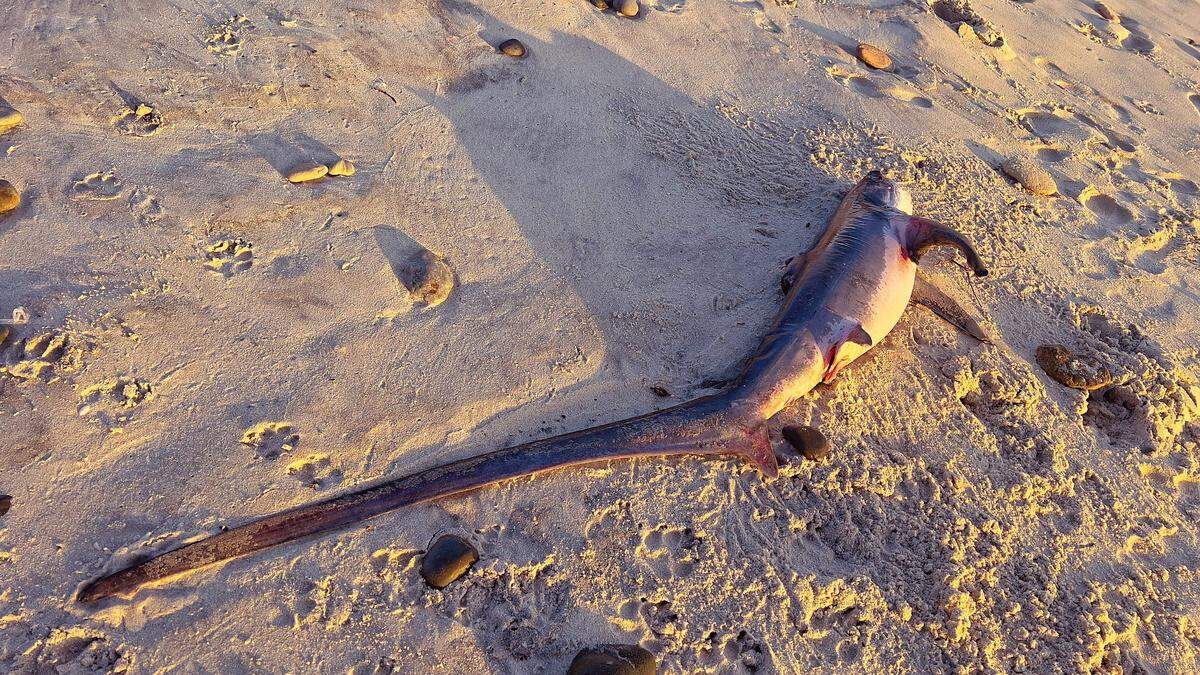
A small shark, with an incredibly long tail fin, was washed up on the beach.
“It’s not often we get to see this remarkable shark,” the photographer, Alex Aitkenhead, told IOL, a news site in South Africa.
The rare sighting was a juvenile thresher shark, Aitkenhead said in a Facebook post.
Thresher sharks are a group of three shark species that are known for their “long, scythe-like tails that account for half their body length,” according to Shark Advocates International.
Their tails aren’t just for show.
Thresher sharks are “aggressive predators” that use their tail to hit and stun fish species, knocking them out before taking a bite, according to NOAA Fisheries.
The sharks have a large environmental range, reaching from the North Atlantic to the central Pacific, but they are not common to South Africa, Shark Advocates International says.
Deputy Mayor of Cape Town Eddie Andrews told IOL that the last time a thresher shark washed ashorewas multiple years ago in Strand, 30 miles outside the city.
“It’s not common for this species to wash ashore in Cape Town, due mainly to the fact that these sharks prefer warm, temperate or tropical waters and are pelagic,” meaning found in the deep sea, Andrews said.
Sightings of the shark are rare for another reason.
The International Union for Conservation of Nature has the thresher shark listed as “vulnerable” on their Red List, meaning the populations are in decline and are at risk of becoming endangered.
Shark Advocates International says that thresher sharks are fished for their meat, their skin is used for leather and their livers are used for oil in some countries. They are also fished recreationally, including in the United States.
“At the time we did not realize the significance of such a find as we know this shark,” Aitkenhead told Newsweek. “This shark was in a very good state – no damage or any sign of injuries or predation.”
This story was originally published March 17, 2023 at 10:42 AM with the headline "Rare creature with a long tail fin washed up on a South African beach. Take a look."