Crumbling 11th century church resurfaces — a warning sign for drought-stricken Spain
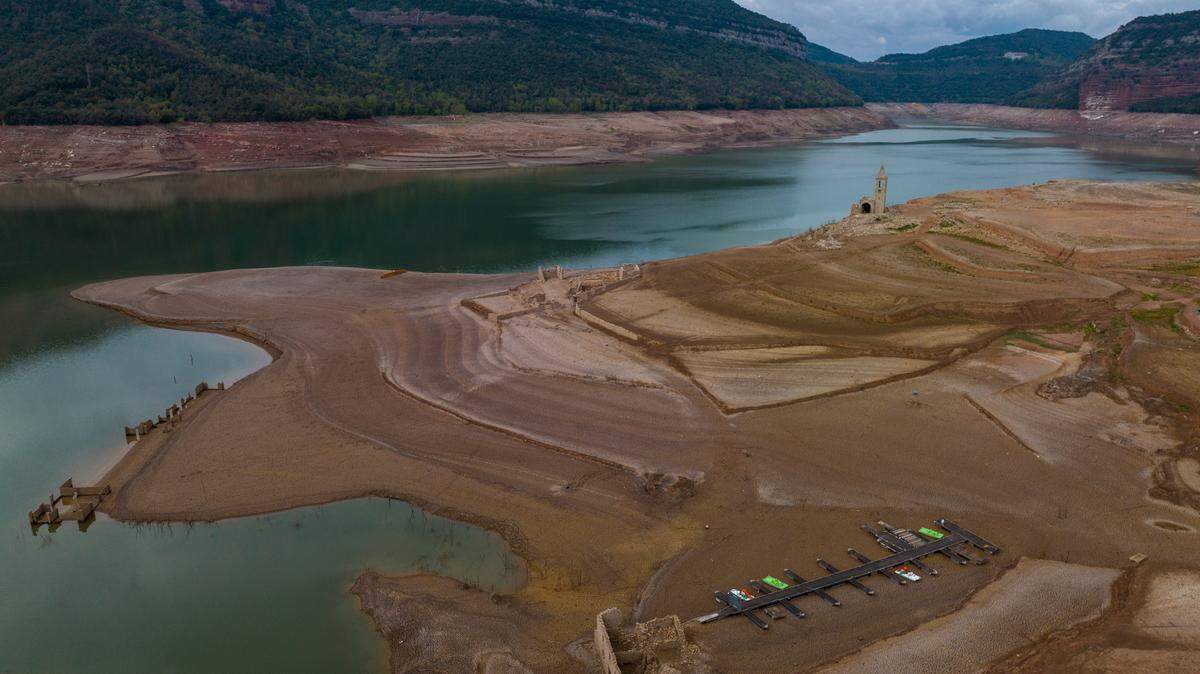
A decaying 11th-century church and surrounding village resurfaced from a shrinking reservoir in eastern Spain.
Instead of ringing melodic bells, the dusty church ruins ring out a warning.
The village of Sant Romà de Sau hummed with activity for 1,000 years — until life came screeching to a halt in the 1960s when the area was chosen to be the site of a new reservoir, Atlas Obscura reported. Locals packed their belongings, exhumed their loved ones from the cemetery and left.
Their empty homes and abandoned church soon filled with water, and the Sau reservoir was formed, the outlet reported.
The Sau reservoir, about 55 miles northeast of Barcelona, provided water to nearby communities for decades, BBC reported.
But now the reservoir is providing something else: a warning sign.
Rising from a watery tomb
The church of Sant Romà de Sau has reemerged from its watery tomb, video footage from the Catalan Water Agency shows. Fully exposed, the three-story bell tower appears worn but resolute. Several do-not-enter signs hang across the dusty archways of the ruined sanctuary.
The foundations of long-gone village buildings sit nearby, video footage shared by Accuweather on Twitter shows. The tannish-gray stone structures look dilapidated and tattered from centuries of use and decades underwater.
The Sau reservoir shrunk to less than 7% capacity on April 21, according to data from the Catalan Water Agency. A year ago, the reservoir was filled to 61% capacity.
Water levels dropped so low that authorities evacuated fish in an attempt to save the animals from rotting and contaminating the Sau reservoir, BBC reported.
The church of Sant Romà de Sau was also visible last summer when Europe experienced its worst drought in 500 years.
‘Very critical situation’
Across the Catalonia region, the situation is not much better with reservoirs at only 26% capacity, water authorities said.
“This is a very critical situation,” Samuel Reyes, director of the Catalan Water Agency, told BBC. “This drought in Catalonia is a marathon. The worry is that we are on alert not just for two years or so, but for three or four years.”
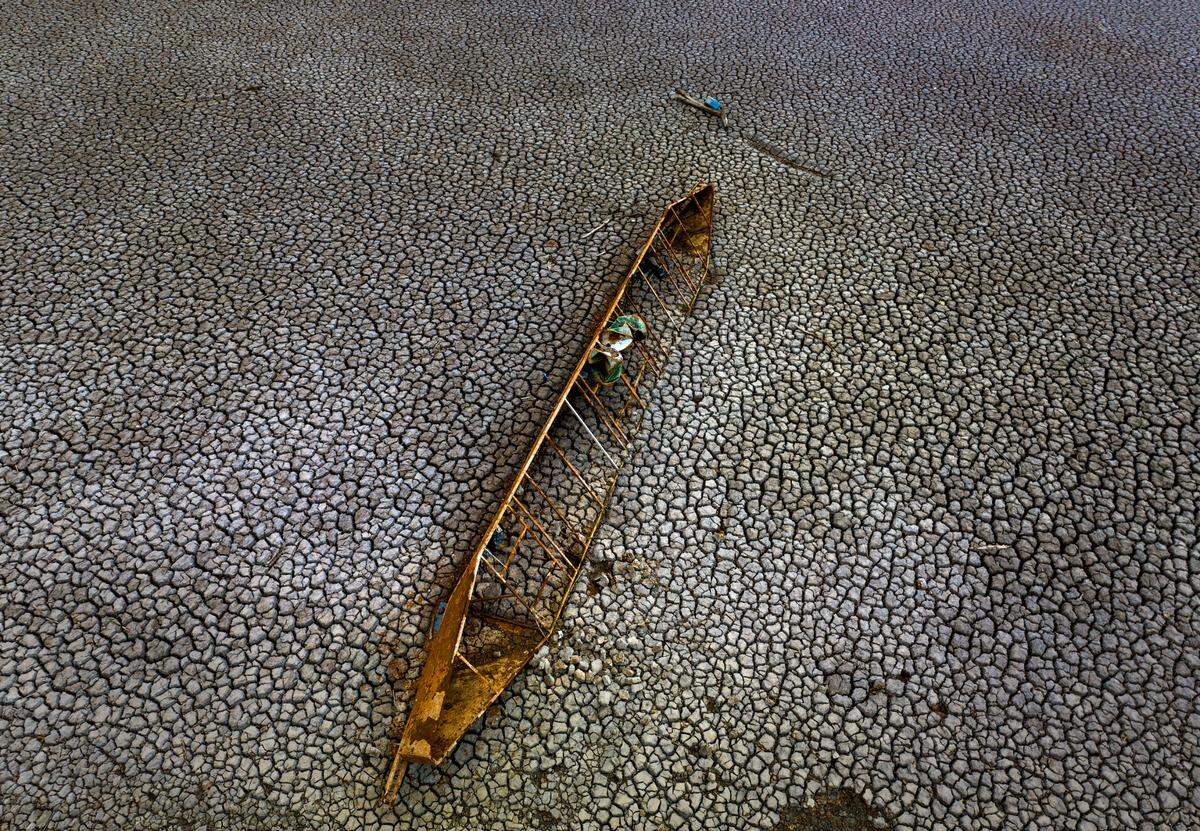
Several factors have contributed to Catalonia’s shrinking reservoirs, including a lack of rainfall and long-term drought exacerbated by climate change.
Spain entered a long-term drought at the end of 2022 after months of below-average rainfall, according to a March news release from the State Meteorological Agency, AEMET, and Ministry for the Ecological Transition and the Demographic Challenge.
In the first half of April, over half of Spain did not see a single drop of rain, AEMET said in an April 19 post on Twitter. Officials expect this April will be one of the driest ever recorded.
The European Drought Observatory echoed these warnings in a March report.
“Impacts of the emerging drought are already visible in France, Spain, and northern Italy and raise concerns on water supply, agriculture and energy production,” officials said in the report.
“The persistent lack of precipitation and a weeks-long sequence of warmer-than-average temperatures” also contributed to the risk of an impending drought, officials said. If conditions persist, “the current situation may become critical in the coming months.”
Google Translate was used to translate news releases from the Catalan Water Agency, the Ministry for the Ecological Transition and the Demographic Challenge, and Twitter posts from the State Meteorological Agency, AEMET.
This story was originally published April 21, 2023 at 8:56 AM with the headline "Crumbling 11th century church resurfaces — a warning sign for drought-stricken Spain."