Metal detectorist thinks he found coin. It was actually an ancient treasure. See it
.png "A metal detectorist discovered an ancient artifact while exploring beneath a tree in Wales, museum officials said. This photo is representative of the region where the artifact was found.")
Rob Edwards was having an unlucky day.
He and his cousin were exploring with their metal detectors in Pembrokeshire, Wales, in November 2020.
Edwards decided to change the program on his equipment — and suddenly he “found a great crisp signal.”
Beneath an oak tree, Edwards detected “something silver,” according to a March 13 news release from Museum Wales. At first he thought it was a coin, but he was surprised to learn his guess was wrong.
Edwards had actually unearthed an ancient silver thimble.
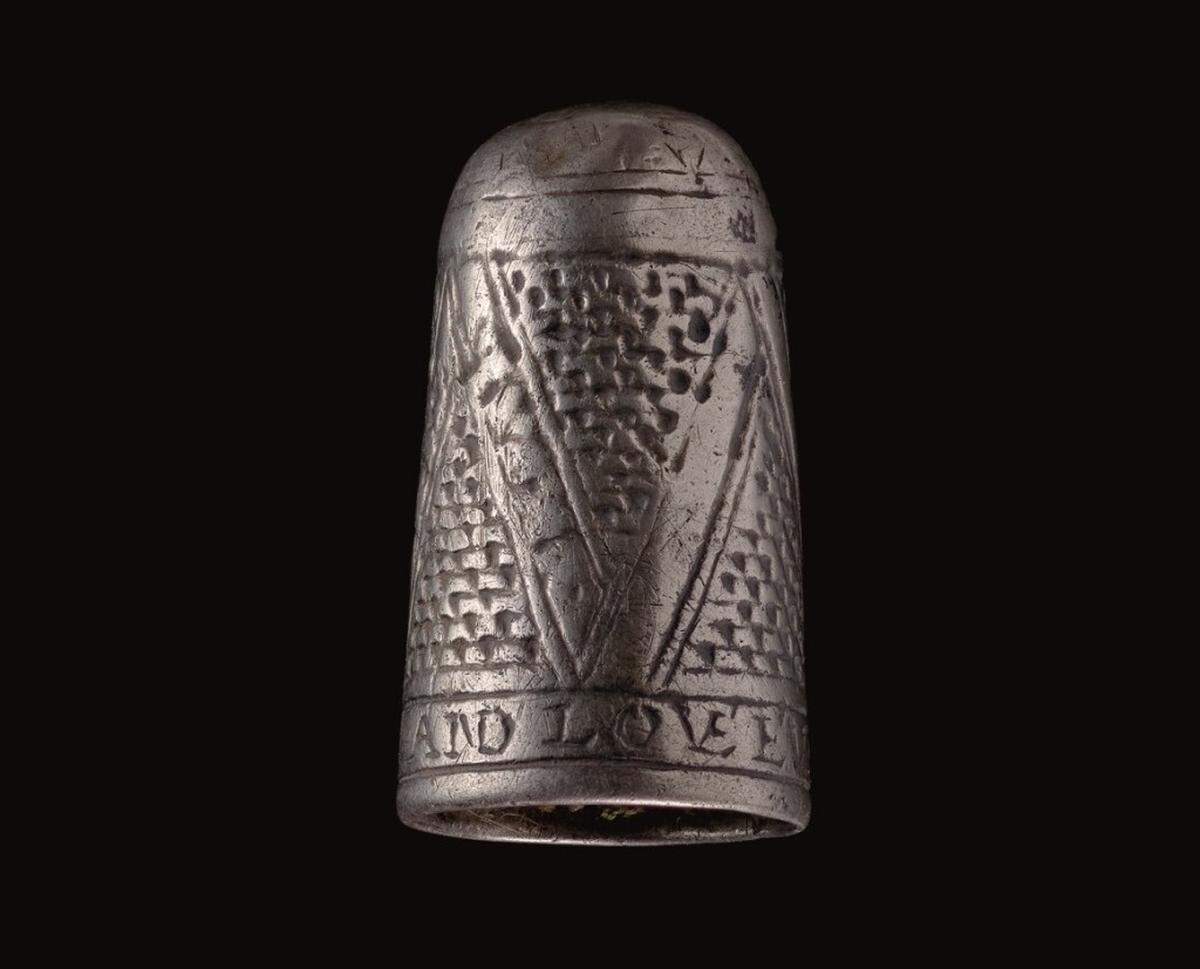
“It wasn’t until later when I saw the similar waffle pattern on another thimble that I knew I had found something special,” he said in the museum’s release. “To be honest, my cousin (who is also my detecting partner) was a little jealous!”
Edwards turned his discovery over to experts who recently shared their identification of the item.
The thimble dates to the post-medieval era — roughly between 1682 and 1740 — and it resembles several other thimbles dating to the 17th century from England and Wales, officials said.
The “tall, narrow but heavy” object is made of two parts: Its rounded top is connected to a body adorned with six tranverse bands in a “zig-zag pattern” on top of a “basket-weave pattern.”
An engraving at the bottom of thimble reads “LYKE STIL AND LOVE EVER” in capitalized Roman script, according to experts.
“I like to think about who used it,” Edwards said. “Was it used in the castle I could see over the way? Did someone get in trouble when it was lost? I’m very happy that I’ve been able to share it with the rest of you.”
Officials said the thimble could have been “an intimate (and therefore romantic) possession, suitable as a gift between lovers.”
This story was originally published March 15, 2024 at 11:12 AM with the headline "Metal detectorist thinks he found coin. It was actually an ancient treasure. See it."