Massive 2,200-year-old tomb with grand interior unearthed in China. See its treasures
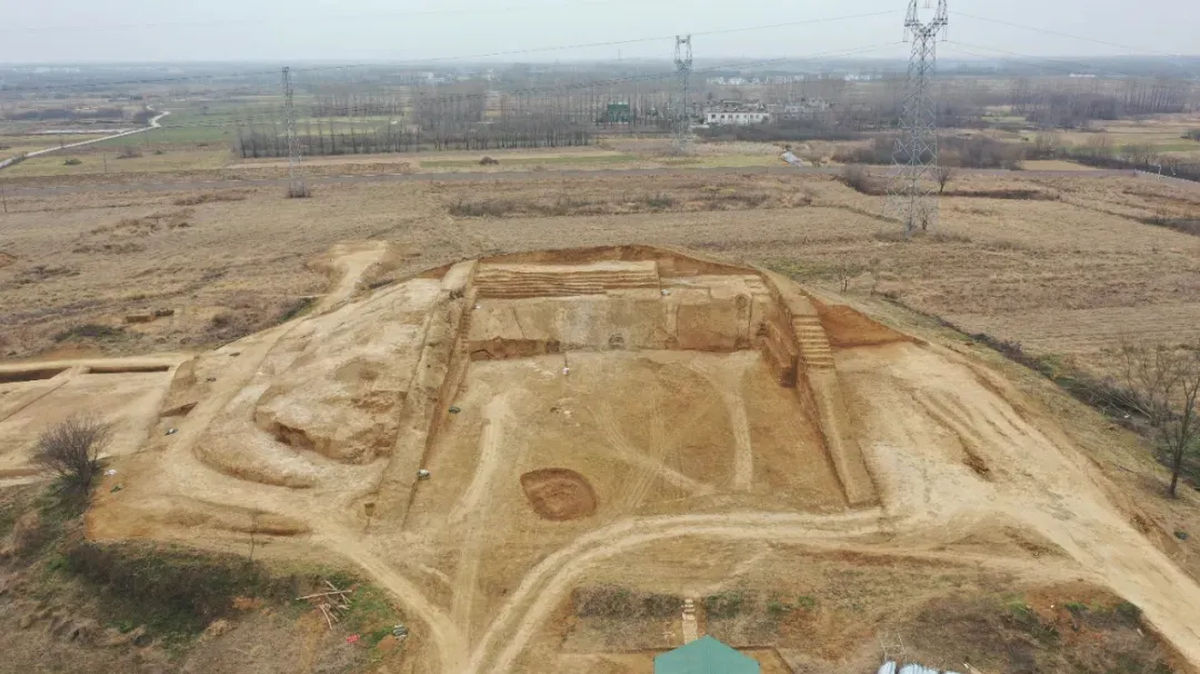
In an otherwise relatively normal-looking field of eastern China’s Anhui Province sits a large mound. When covered with grass and trees, the mound looks quite natural.
But, when archaeologists began digging, they quickly realized this wasn’t a normal hill. It was a massive 2,200-year-old tomb filled with treasure.
Archaeologists spent the past four years excavating the mound outside Huainan, the Institute of Archaeology at the Chinese Academy of Social Sciences said in an April 17 news release.
The gigantic burial complex — dubbed Wuwangdun — spans just over 16 million square feet, roughly the size of 280 football fields or triple the size of Vatican City. Surrounded by a moat, the complex has three main sections: an external cemetery, a central tomb and a coffin chamber.
The Wuwangdun complex was built by the ancient Chu state and dates to the Warring States Period, a tumultuous era in Chinese history that began in 475 B.C. and ended in 221 B.C., the Huainan Municipal Government said in an April 17 news release.
The external cemetery has a large rectangular pit filled with horses and chariots, sacrificial pits and other structures, archaeologists said.
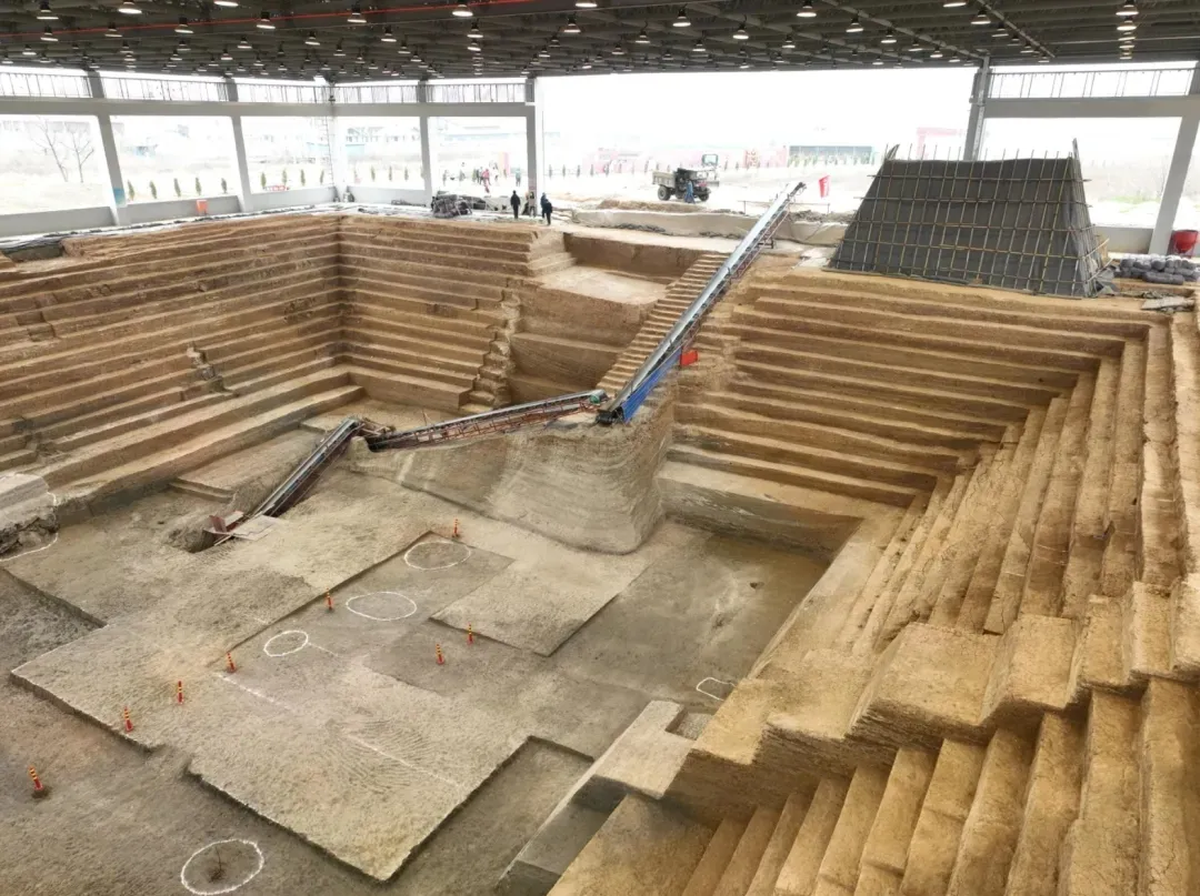
In the middle of these structures is the centerpiece of the complex: the 2,200-year-old tomb, shaped almost like an inverted pyramid. Its four walls descend into the ground in 21 large steps. A sloping entranceway extends outward from one side.
After the tomb was built, archaeologists said soil was heaped on top to create a mound-like shape. Excavations unearthed shovels, tools, spears, arrowheads and bamboo baskets.
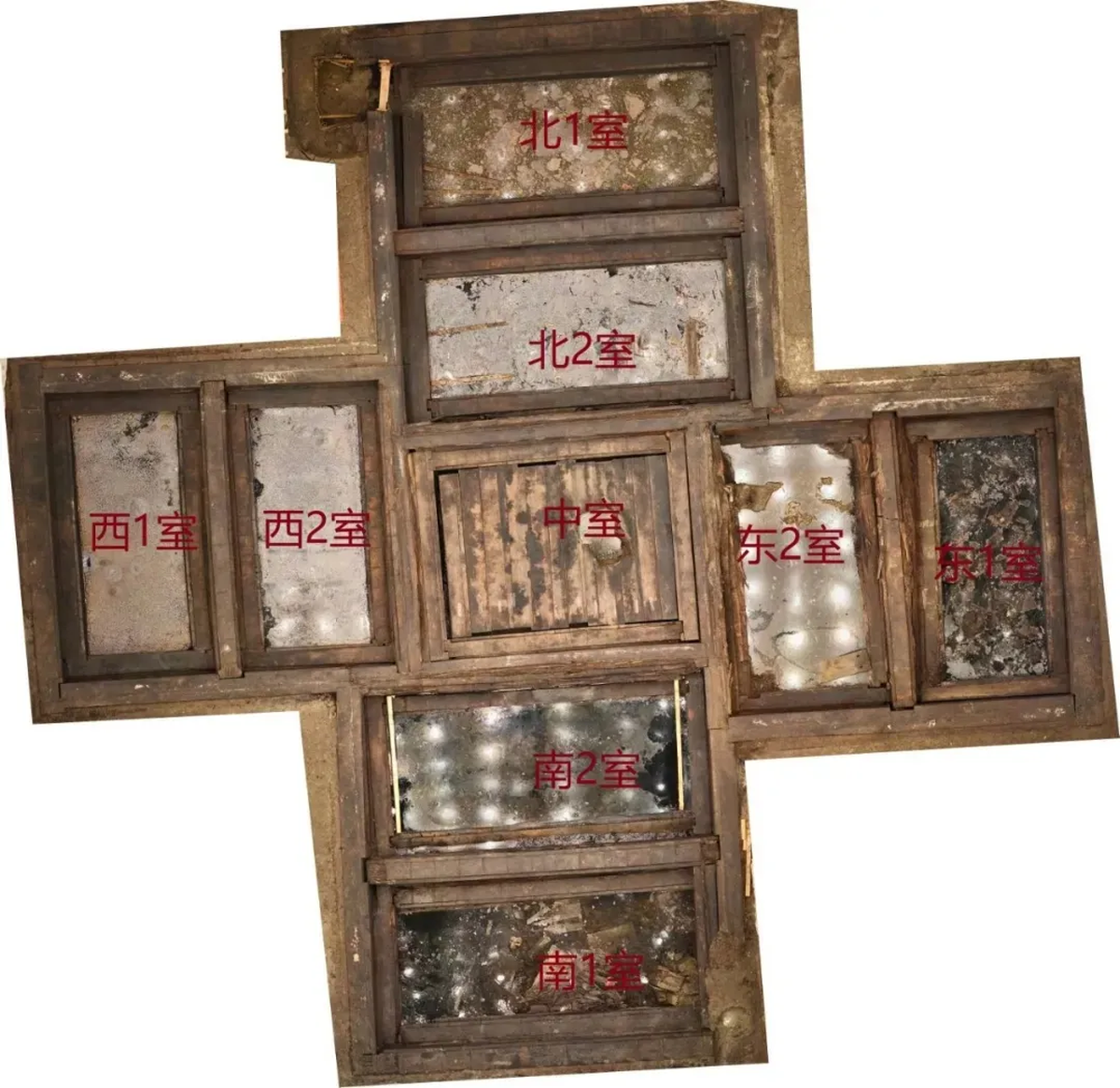
At the bottom of the 2,200-year-old tomb sits the coffin chamber. This wooden structure has nine rooms and is shaped like a plus sign. A photo shows the coffin after excavations removed the bamboo mats that covered the top.
Archaeologists found almost a thousand words written on the wooden coffin walls, the institute said. The text described the placement of coffin pieces and the function of different rooms.
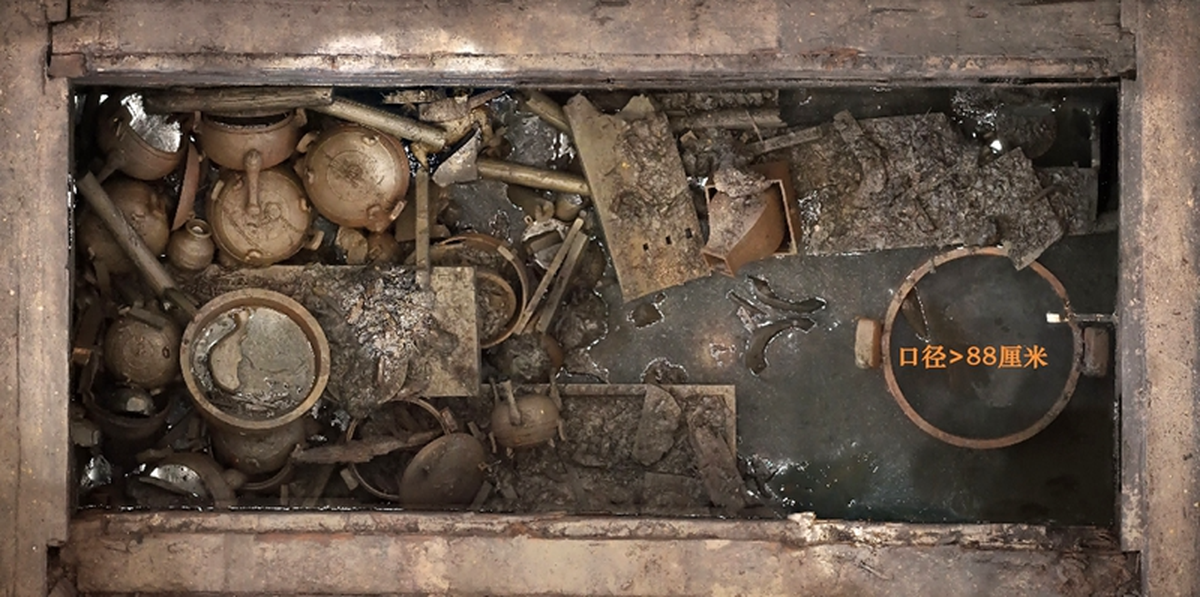
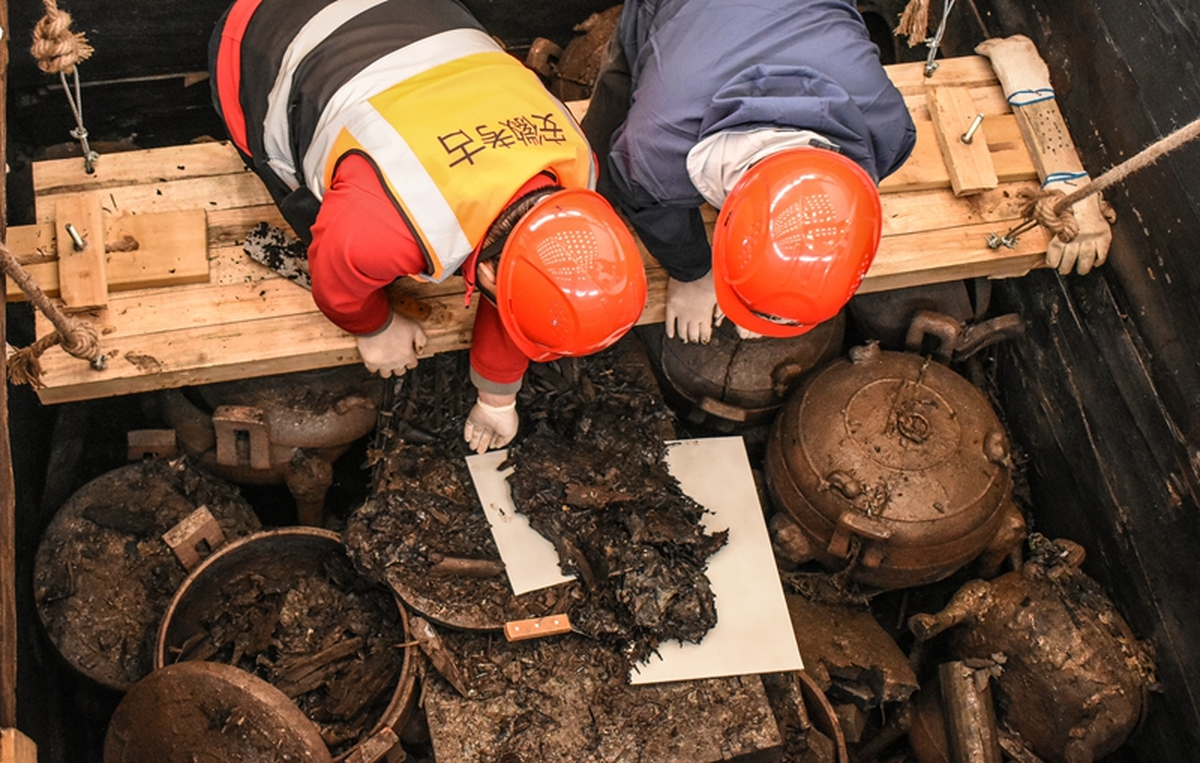
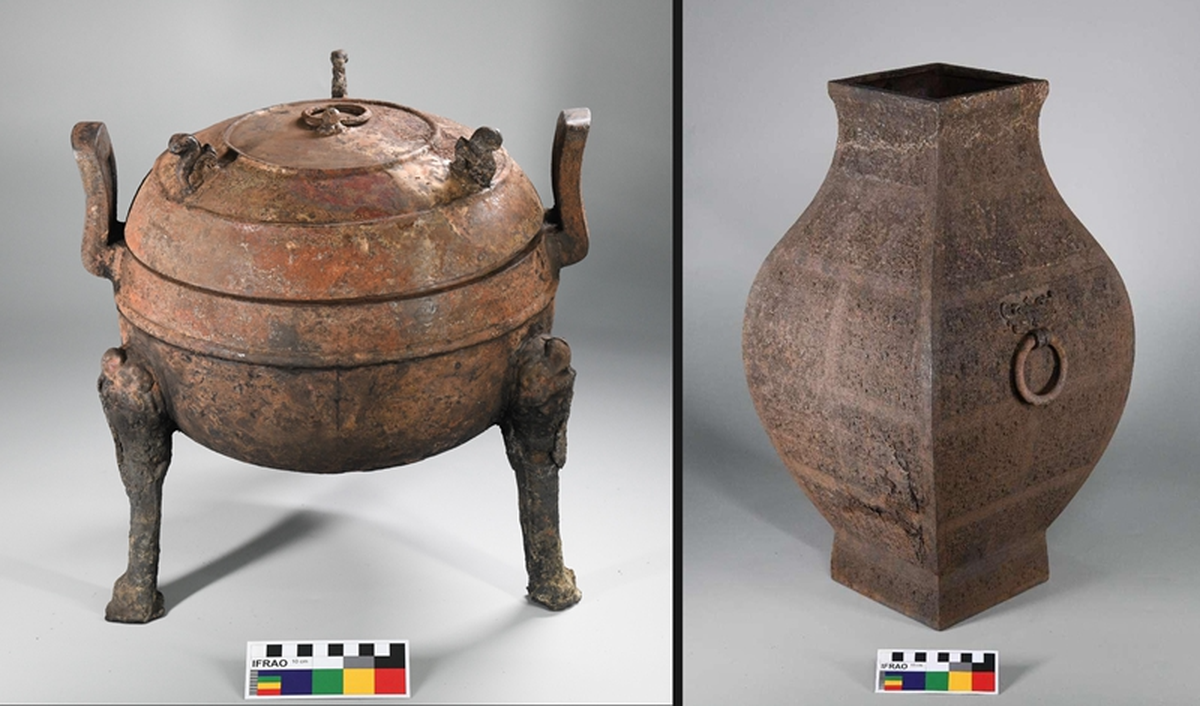
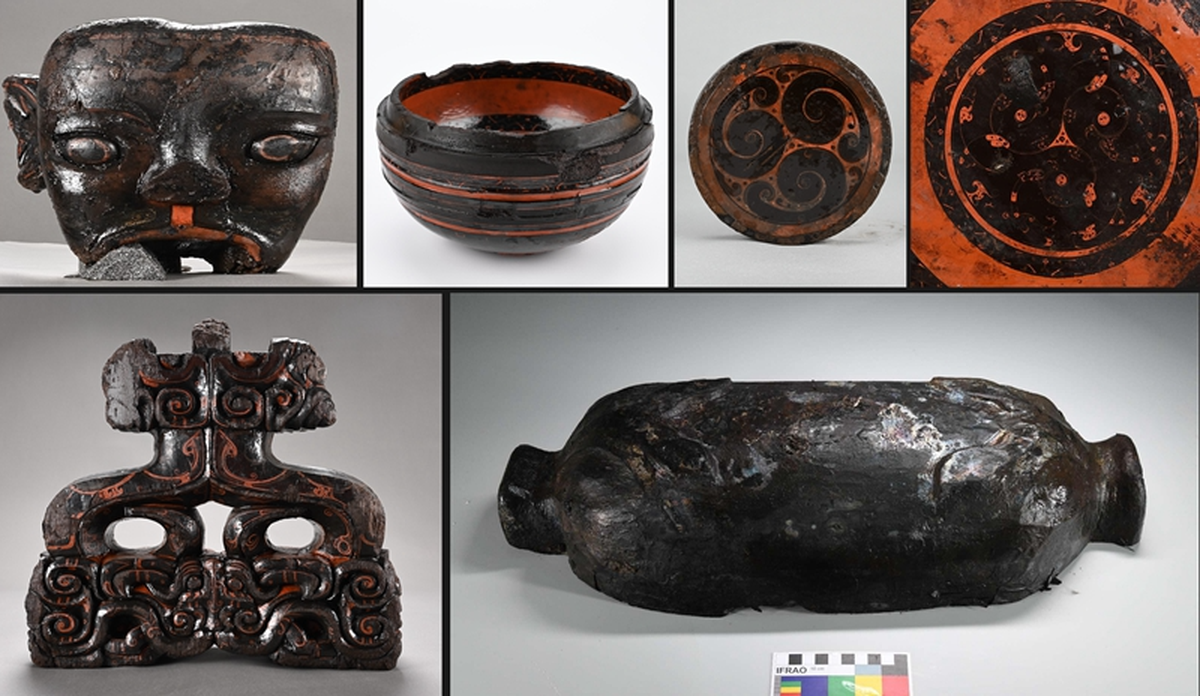
So far, over a thousand artifacts have been uncovered at the Wuwangdun burial complex, archaeologists said. These include musical instruments, lacquered wooden items, bronze vessels and utensils, among others. Photos show a few of these treasures.
The 2,200-year-old tomb complex is the “largest, highest-level and most complex” tomb of its kind ever found, reported the Shanghai Eye, a Chinese state-supported news outlet.
But one central mystery lingers: who was buried here? The leading theory is that the tomb belongs to an ancient king of the Chu state, King Kaolie, but more research is needed, the Shanghai Eye reported.
Excavations at the Wuwangdun tomb in Huainan are still ongoing. Huainan is a city in Anhui Province in eastern China, a roughly 600-mile drive south from Beijing.
Google Translate was used to translate the news release from the Institute of Archaeology at the Chinese Academy of Social Sciences.
This story was originally published April 24, 2024 at 6:12 AM with the headline "Massive 2,200-year-old tomb with grand interior unearthed in China. See its treasures."