500-million-year-old alien-like sea creature discovered in Canada. It’s a new species
More than 500 million years ago, something in the ocean changed.
Some creatures evolved to build their own hard-shelled exterior. Others grew to sizes never seen before as the amount of oxygen on the planet’s surface finally reached a level high enough for complex creatures to exist.
Most important, for about 10 million years, the number of animals living in the ocean skyrocketed.
It’s called the Cambrian Explosion, and it turned the largest environment on the planet from a vast open sea to a packed ecosystem.
Some of the new species look similar to their modern-day ancestors, but others look like they would be better suited on an alien planet.
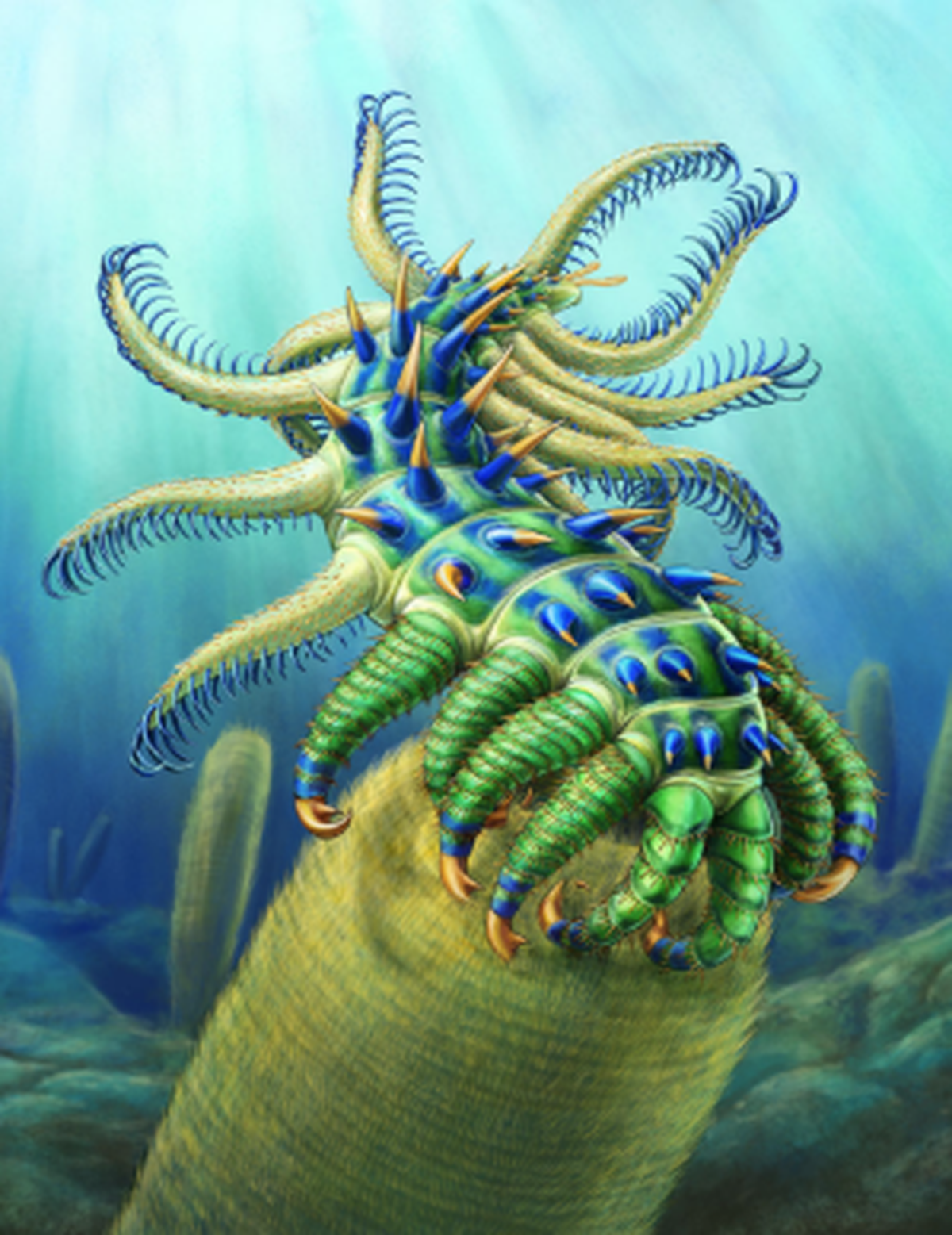
One of those is entothyreos synnaustrus, a spined animal with stubby clawed legs and flailing appendages — and it’s a new species.
In 1983, members of the Royal Ontario Museum traveled to the Canadian Rockies and discovered a vast fossil bed in what is now Yoho National Park, according to a study published June 21 in the Journal of Systematic Palaeontology.
Since then, roughly 10,000 fossils have been discovered at the site, including a soft-bodied prehistoric ocean creature that looks like a tulip, earning the site its name in 2012, according to the study.
More than 50 new species have so far been identified using the fossils found at the Tulip Beds, but other fossils have remained a mystery.
Fossils of a lobopodian were among those still unidentified when researchers recently took a closer look.
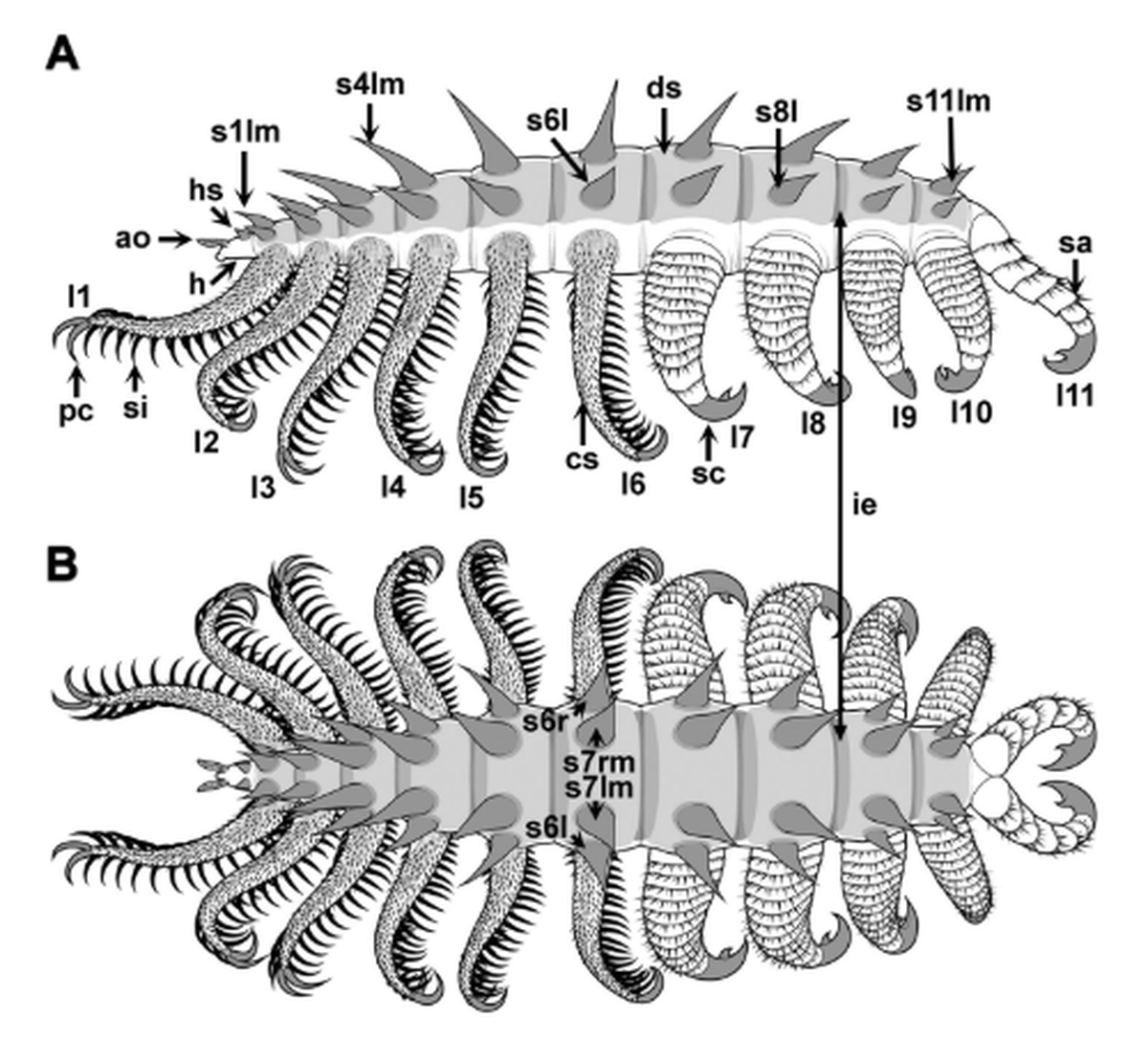
The lobopodian, part of a group of animals known for their long bodies and short, stubby legs (e.g. velvet worms, tardigrades), appeared to have spikes protruding from the body, in addition to legs on the back half of the body while feather-like appendages grew from the front, according to the study.
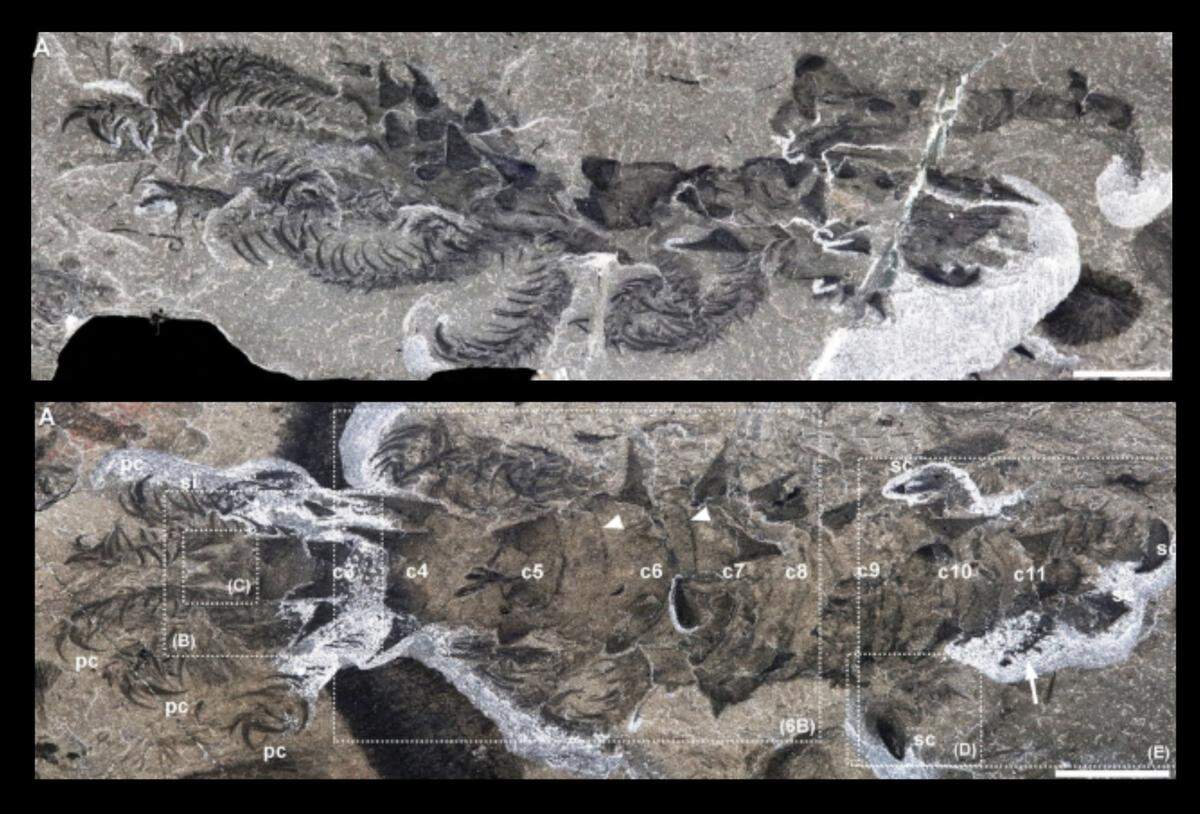
The creature is about 2 inches long, with 11 pairs of lobopods, or appendages, according to the study.
Half of the lobopods are “long and slender,” researchers said, while the other half is “stouter” and “conical.”
The long lobopods are covered in “very short spines,” with two rows of “very long” and “curved” “chevron-shaped, claw-like spines,” according to the study.
During the era of the Cambrian Explosion, some animals evolved to be able to create their own exoskeleton, a process known as sclerotization.
Sea creatures went from being soft and flexible to something similar to modern-day arthropods, like crustaceans and centipedes, according to the study.
It has so far been unclear how and when that evolutionary change took place, but entothyreos synnaustrus is providing answers.
The animal has both soft and hardened parts of the body that can possibly be attributed to a shedding of an outer layer, researchers said. Or, the species represents the beginning evolution of hard outer shells.
The new species also shows “regionalization” where different sections of the body perform different functions, more similar to arthropods than lobopodia, according to the study.
“Hypothetically, this could have turned arthrodization into an exaptation, providing arthropods with a rigidifying yet functional morphology, comparable to certain lobopodians, and which would develop as the basis of their tremendous morpho-functional diversity,” researchers said. “In other words, arthrodization as defined by arthropods might be regarded less as a ‘key innovation’ but more as the by-product of a complex morpho-functional genome in the making.”
Yoho National Park is located outside Banff, Canada, in southeastern British Columbia.
This story was originally published June 26, 2024 at 8:46 AM with the headline "500-million-year-old alien-like sea creature discovered in Canada. It’s a new species."