Pregnant creature with gold, lace-like eyelids found near river. It’s a new species
In a mountain forest of Papua New Guinea, a pregnant creature perched on some leaves near a stream and scanned the area with solid black eyes. But it wasn’t the only one looking around.
A visiting scientist found the pregnant animal — and discovered a new species.
Stephen Richards hiked into the forests of Hela Province in 2008 and 2009 to survey wildlife, he wrote in a study published Aug. 19 in the peer-reviewed journal Raffles Bulletin of Zoology. The area was part of a biodiversity hotspot.
During the visits, Richards found seven frogs with unique gold eyelids. He captured the animals and, after taking a closer look, realized he’d discovered a new species: Nyctimystes hanwara, or the hanwara tree frog.
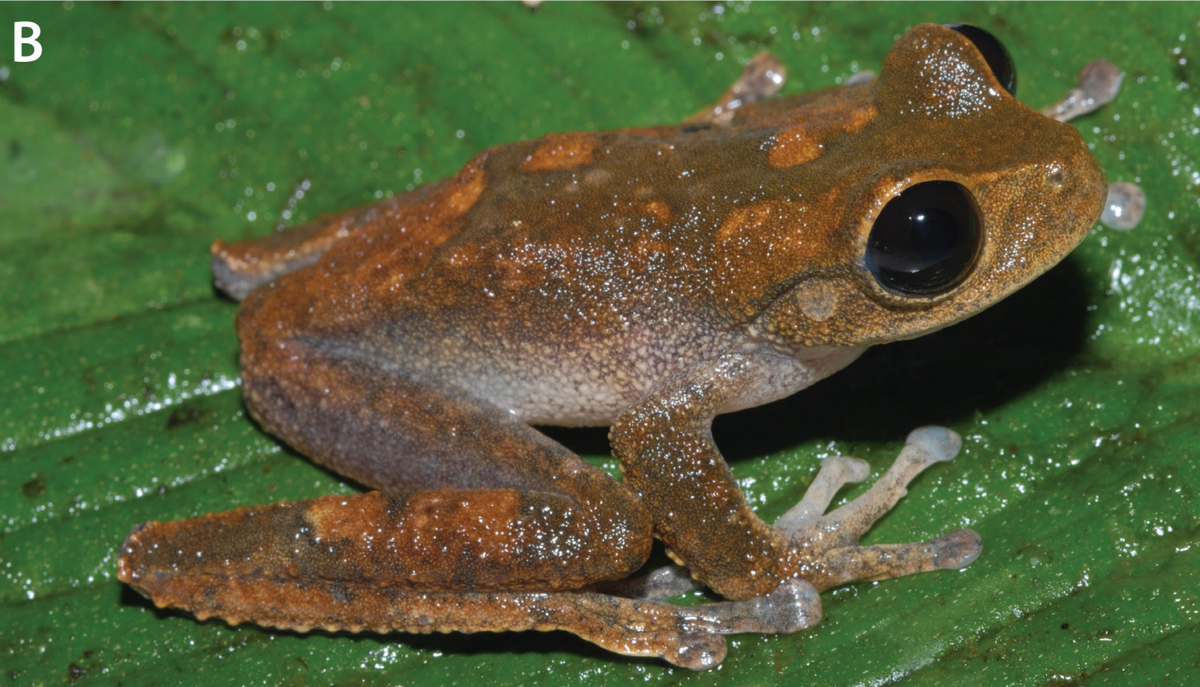
Hanwara tree frogs are considered “moderate”-sized, reaching just over 2 inches in length, the study said. They have “slender” bodies with “long” fingers and “long” hind limbs. Their “wide” heads have “large” eyes with gold, veiny eyelids.
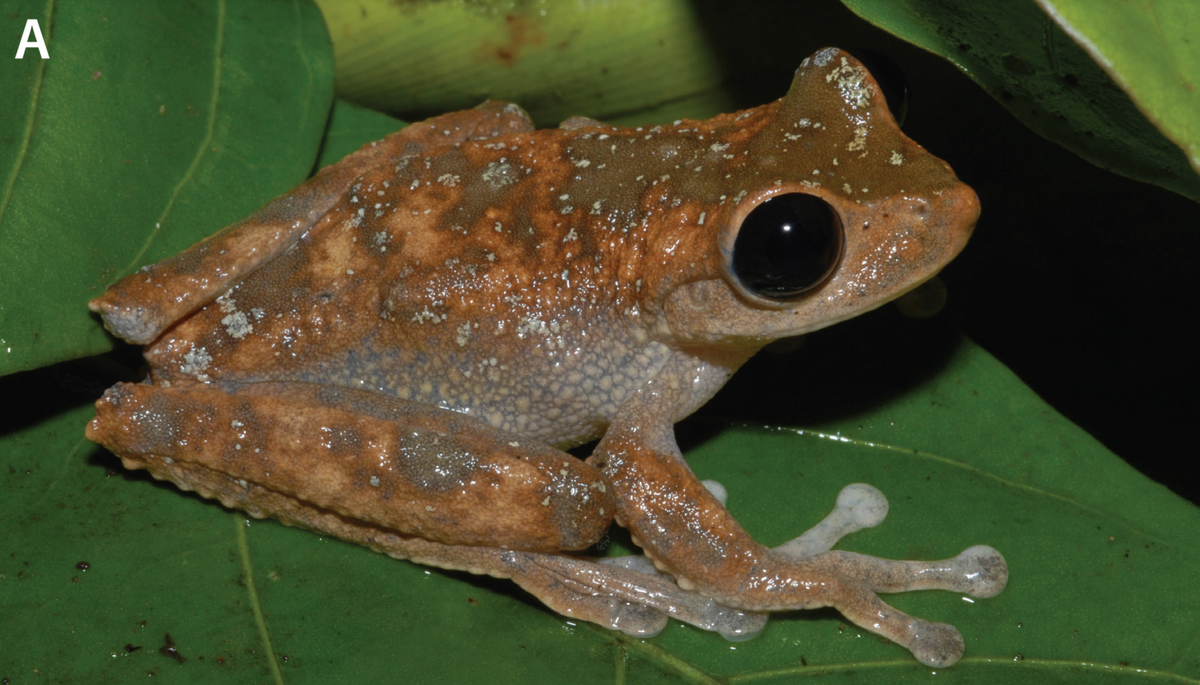
A photo shows the pale brown coloring of the new species. Lighter gray spots and darker brown patches dot its back. Its prominent eye is solid black.
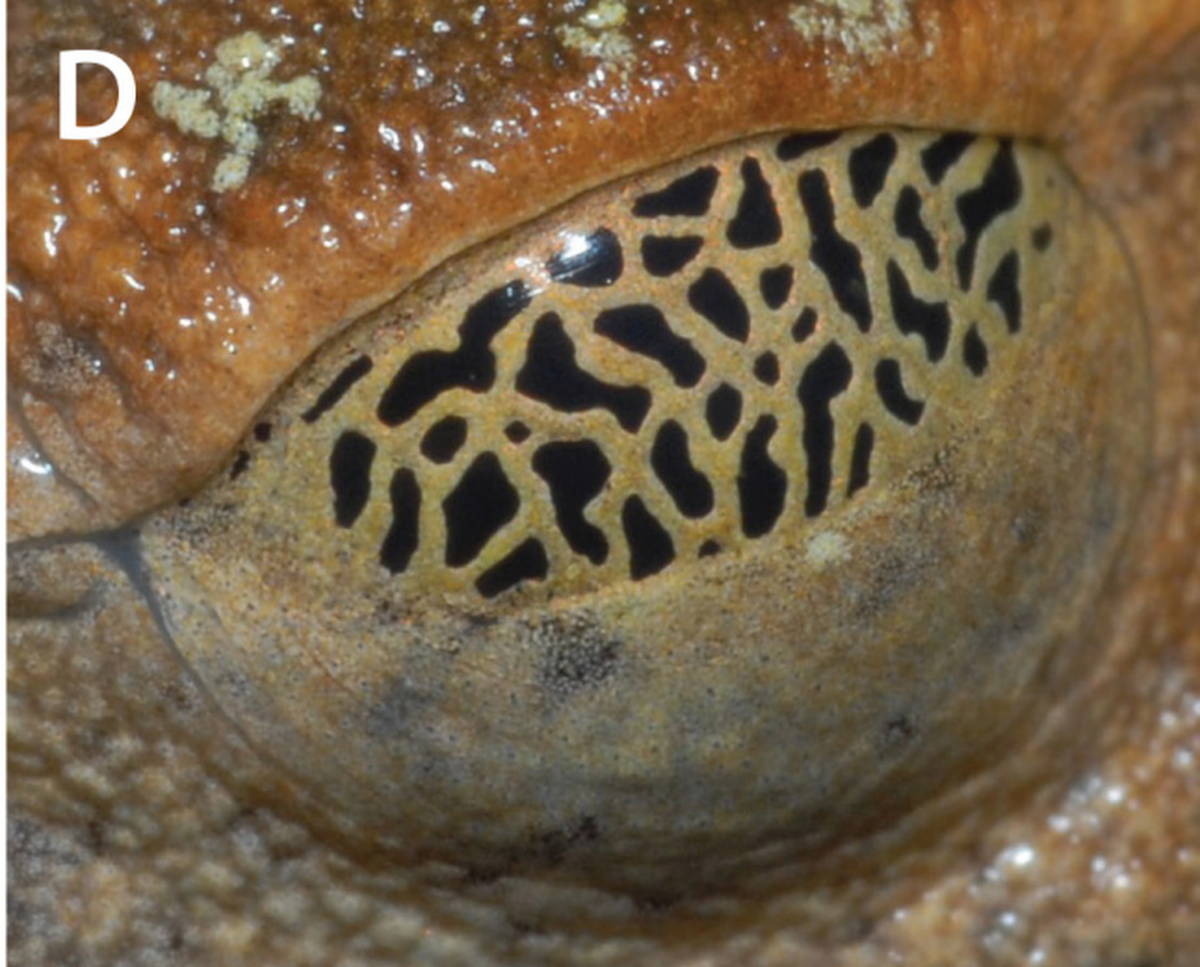
Another close-up photo shows what the frog’s lower eyelid looks like when closed. The gold eyelid veins create irregular blotches, giving it a lace-like pattern.
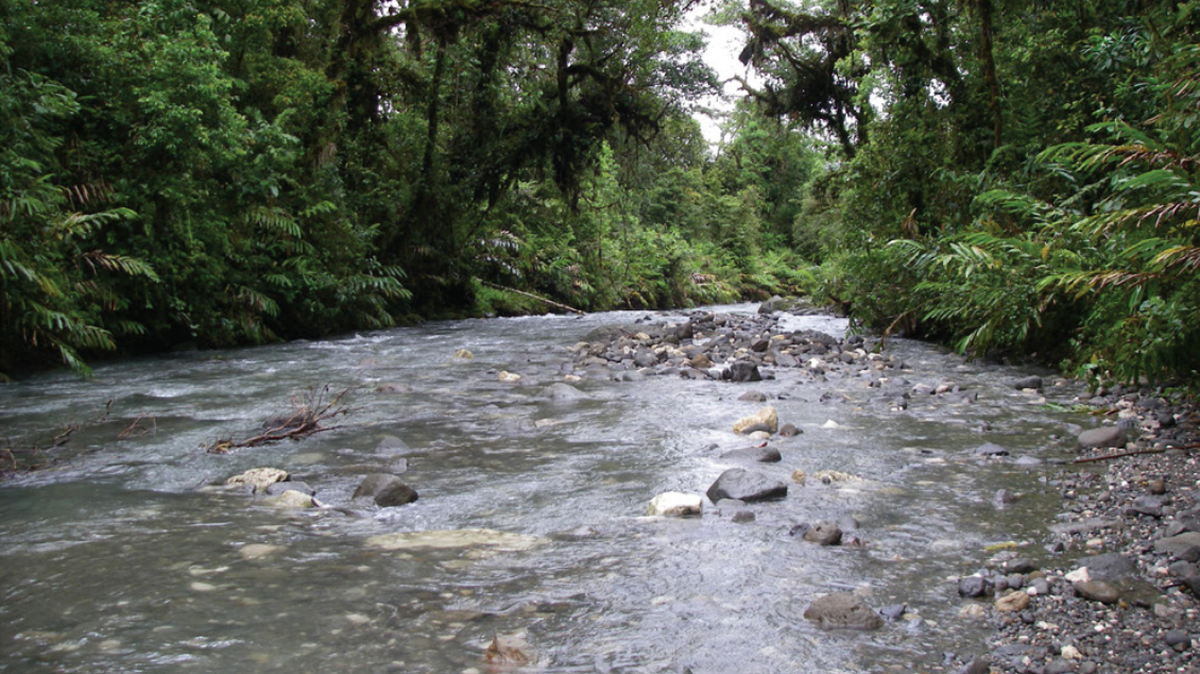
Hanwara tree frogs live in a mountain forest at an elevation of about 4,500 feet, Richards wrote. The frogs were found on plants or trees near the “narrow” part of “a fast-flowing rocky stream.”
One frog was found pregnant with five “large yellow” eggs, the study said. Other male frogs were heard calling and sounded like a “series of harsh notes” lasting “at least several minutes.”
Richards said he named the new species after the Melanesian pidgin word “hanwara,” meaning “stream,” because of its preferred habitat.
So far, the new species has only been found at one site in Hela Province, the study said. This is an inland region of western Papua New Guinea, an island country north of Australia.
The new species was identified by its call, eyelids, body shape, finger and toe webbing, thigh coloring and other subtle physical features, the study said. Researchers did not analyze the new species’ DNA because of a lack of comparable DNA data.
This story was originally published September 5, 2024 at 12:07 PM with the headline "Pregnant creature with gold, lace-like eyelids found near river. It’s a new species."