‘Large’-eyed creature with ‘heart shaped’ tongue found in swamp. It’s a new species

In a swampy forest of southeastern Brazil, a “slender” creature perched in a tree. Its “large” reddish-brown eyes scanned the surrounding landscape — but it wasn’t the only one looking around.
Nearby scientists spotted the brown animal. It turned out to be a new species.
Researchers visited Grande Sertão Veredas National Park in 2015 to survey wildlife, according to a study published Oct. 17 in the peer-reviewed journal Herpetologica. During their searches, they encountered unfamiliar-looking frogs.
Intrigued, researchers caught several of these frogs and, after taking a closer look, realized they’d discovered a new species: Nyctimantis diadorim, or the Brazilian backland casque-headed tree frog.
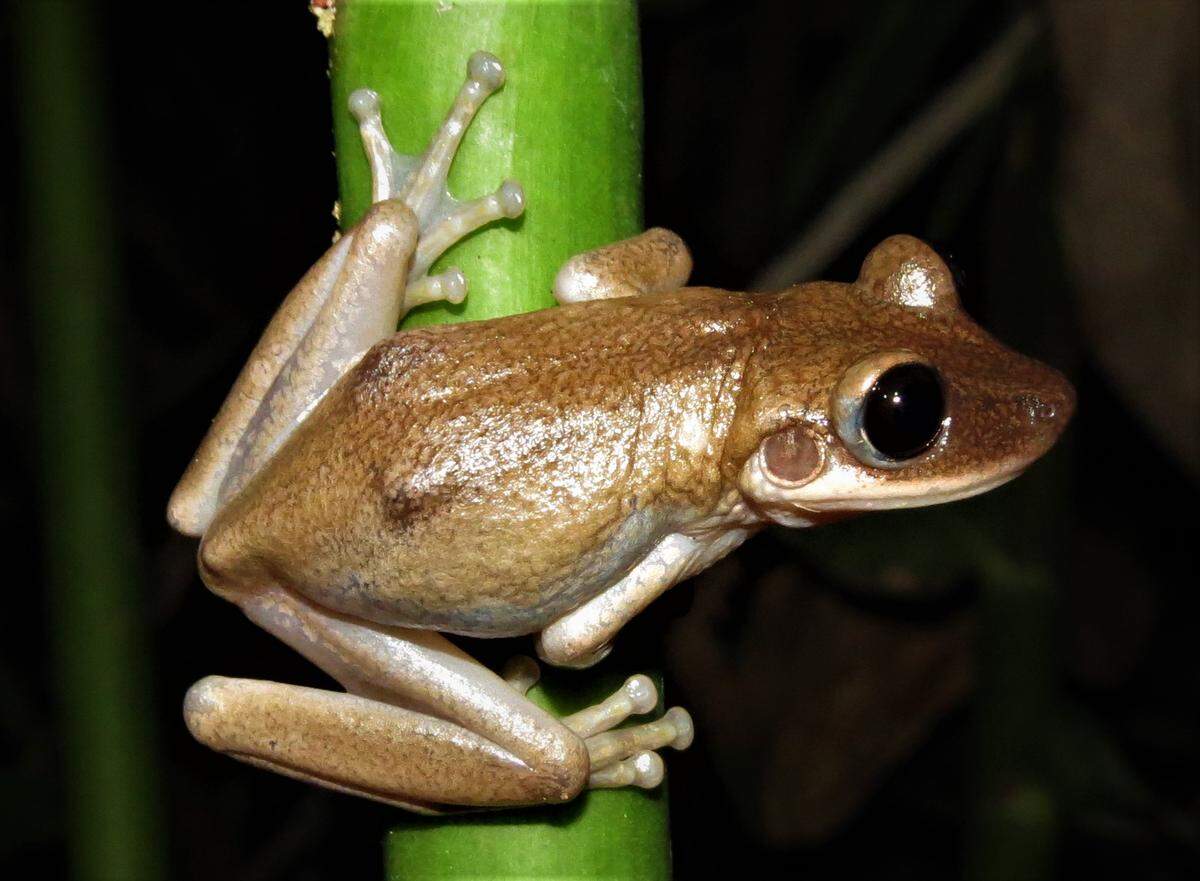
Brazilian backland casque-headed tree frogs are “slender,” reaching just over 2 inches in length, the study said. Their skulls have “small” bony protrusions, referred to as casques. Their “large” eyes are reddish-brown with diamond-shaped pupils, and their “large” tongues are “heart shaped.”
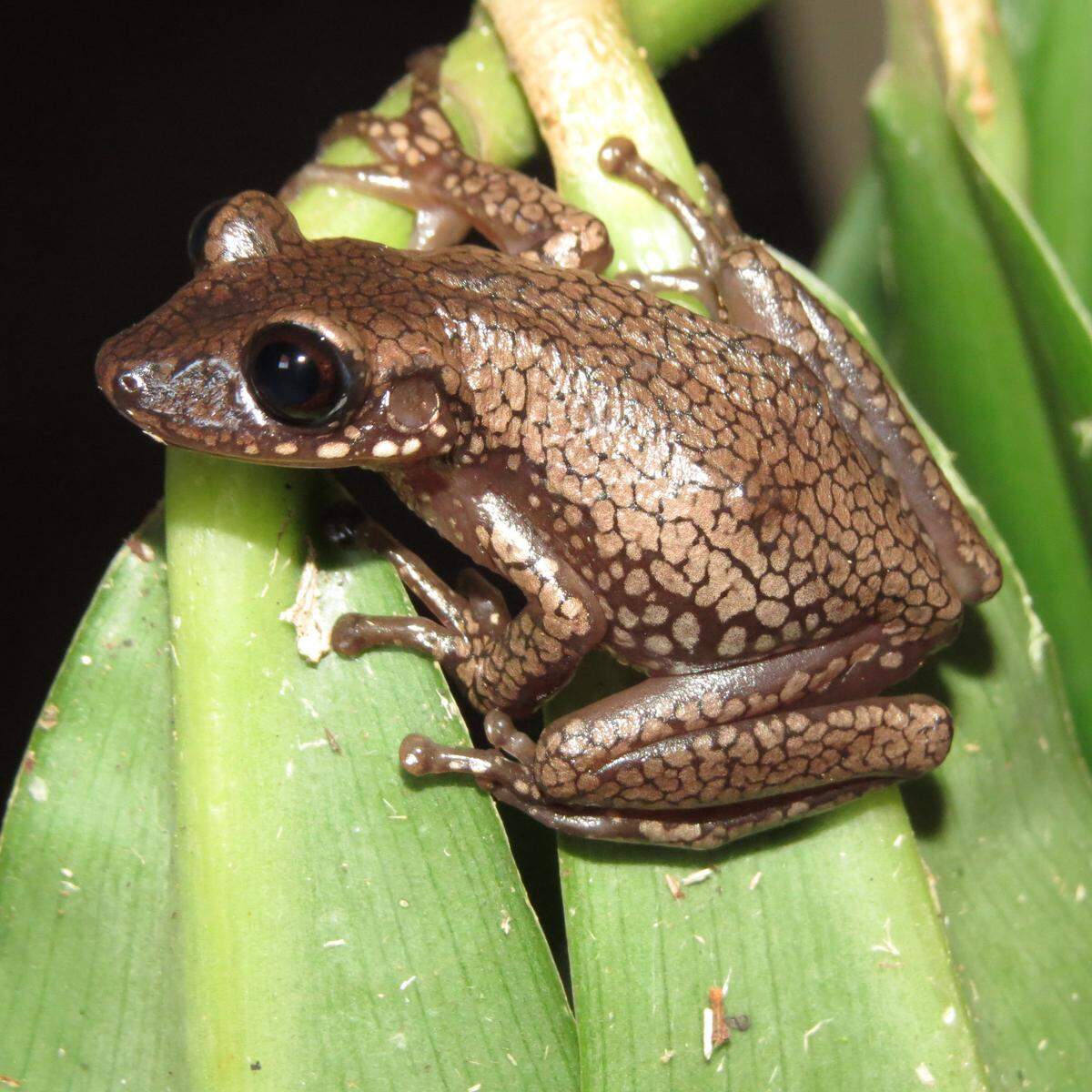
Photos show the various brown shades of the new species. These tree frogs can change color from day to night, the study said. Some have more “intricate” patterns with cream-colored blotches dotting their body.

Brazilian backland casque-headed tree frogs were found on “thin perches about 1.5 m (5 feet) in height in Cerrado swamp forests,” researchers said. When picked up, the frogs’ skin secreted a “milk white,” “sticky” substance. The goop did not smell or cause any “uncomfortable effect” on humans.
Researchers said they named the new species after Diadorim, a character in the 1956 Portuguese novel “Grande Sertão: Veredas,” known in English as “The Devil to Pay in the Backlands,” by Brazilian author João Guimarães Rosa. The classic book, set in Minas Gerais, inspired the name of the national park where the new species lives.
So far, Brazilian backland casque-headed tree frogs have only been found in Grande Sertão Veredas National Park in the southeastern state of Minas Gerais, the study said. The park is about 700 miles northwest of Rio de Janeiro.
The new species was identified by its DNA, body size, skull, eyes, toe webbing, coloring and other subtle physical features, the study said.
The research team included Reuber Albuquerque Brandão, Pedro Paulo de Queiroz, Paula Leão Ferreira, Guilherme Fajardo Roldão Álvares, Boris Blotto, Adrian Antonio Garda, Leonardo dos Santos Gedraite, Guilherme Ramalho Chagas Cataldi Santoro and Julián Faivovich.
This story was originally published October 23, 2024 at 9:47 AM with the headline "‘Large’-eyed creature with ‘heart shaped’ tongue found in swamp. It’s a new species."