‘Long’ purple sea creature — with 24 ‘feet’ — pulled from depths. It’s a new species

Several miles below the surface of the Pacific Ocean, scientists aboard a submersible scanned the shadowy seafloor for signs of life. Soon enough, a “long” purple sea creature caught their attention — and for good reason.
It turned out to be a new species.
A joint Chinese-New Zealand research team set out in October 2022 for a six-monthlong survey of the Kermadec Trench in the South Pacific Ocean, Yun-Lu Xiao and Hai-Bin Zhang wrote in a study published Jan. 22 in the peer-reviewed journal Zoosystematics and Evolution. They used a “manned submersible vehicle” to systematically survey the depths.
During one of their dives, researchers noticed an unfamiliar-looking sea cucumber resting on the seafloor about 3.5 miles deep, the study said. Its presence surprised them. Intrigued, they carefully collected the animal and brought it to the surface.
Taking a closer look at the sea cucumber, researchers soon realized they’d discovered a new species: Laetmogone multiradiolus, or the multi-rayed sea cucumber.
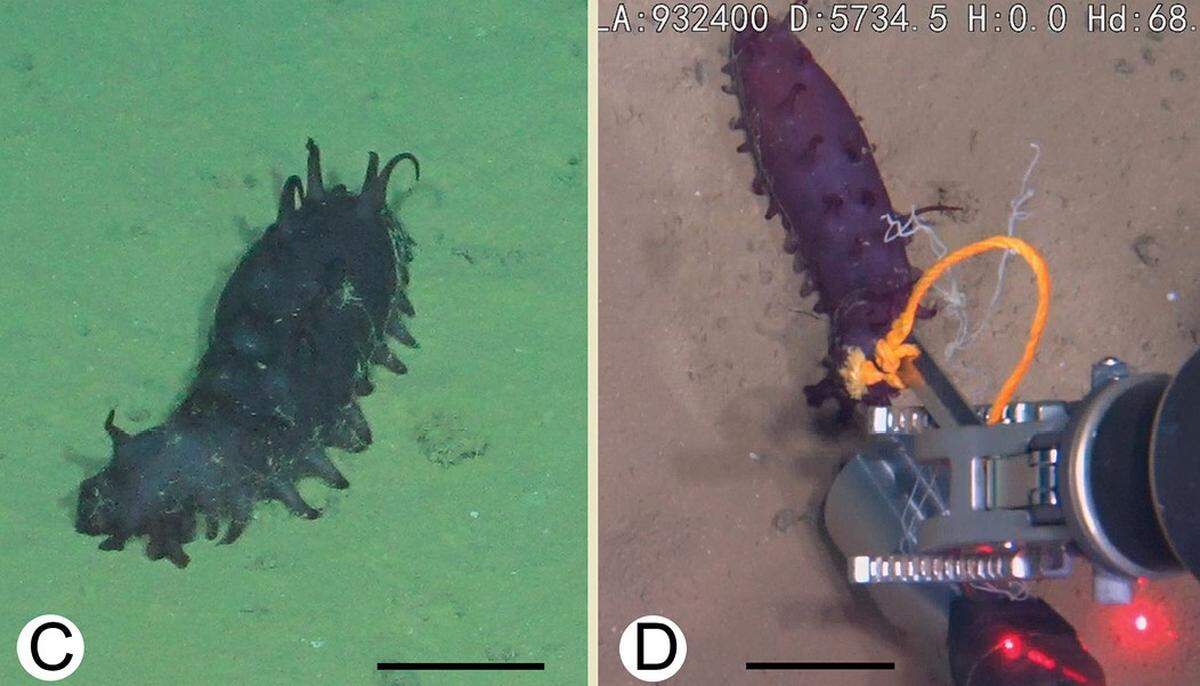
The multi-rayed sea cucumber measured about 1 foot long and 3 inches wide when alive but shrank after being preserved, researchers said. It had a “long,” “dark violet” body with 17 “large” tentacles and 24 “robust” tube feet.
Photos show the new species in its natural habitat and after being collected. Overall, it looks blob-like with appendages along its sides and ends.
Researchers said they named the new species after the Latin words “multi,” meaning “many,” and “radius,” meaning “ray or beam,” because of the spoke-and-wheel shape of its microscopic body structures, scientifically known as ossicles.
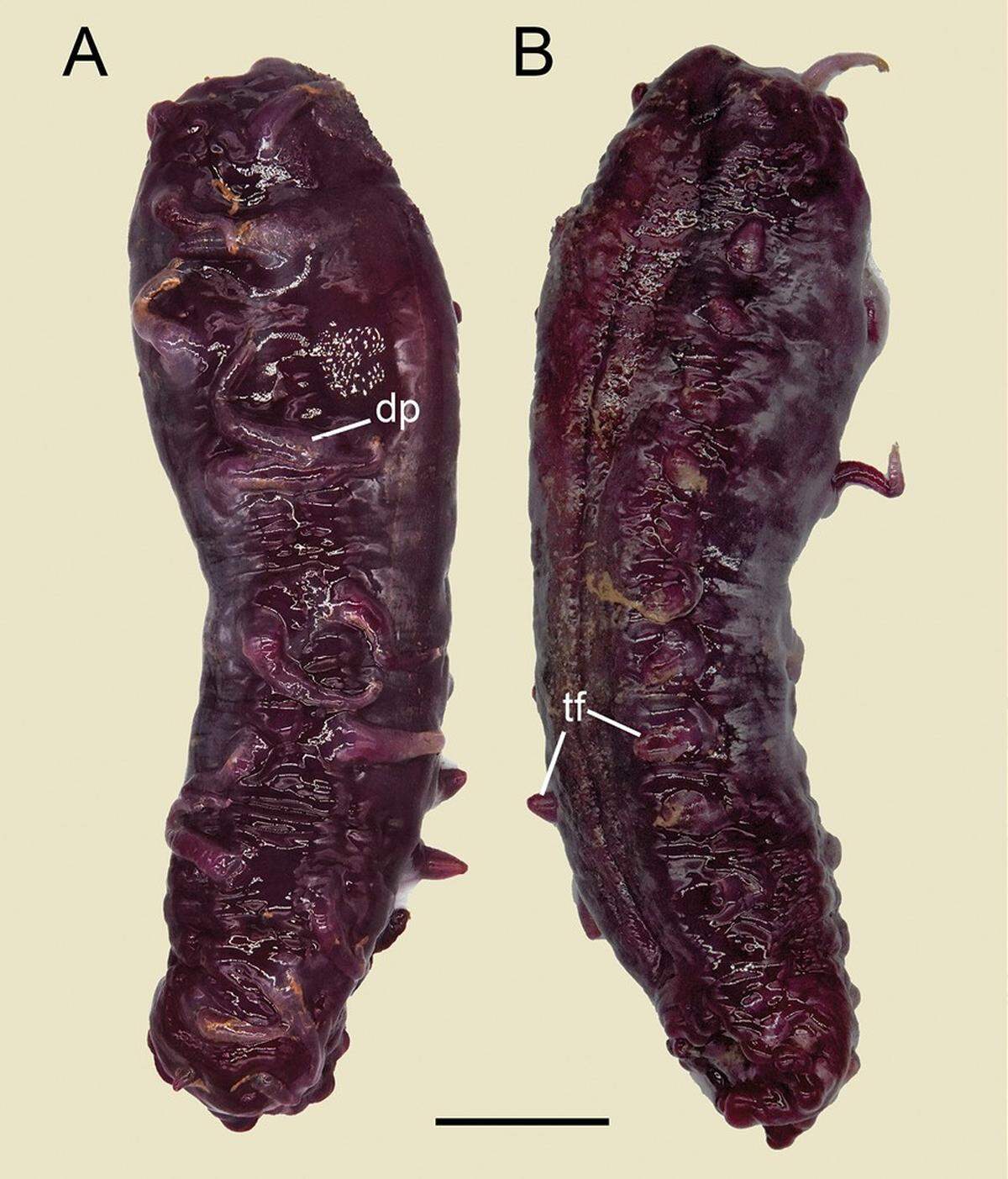
Researchers only found one multi-rayed sea cucumber in the Kermadec Trench, the study said. It was discovered “on flat sedimentary terrains” and set “the deepest record for this genus.”
The Kermadec Trench sits off the eastern coast of New Zealand and extends northeastward toward Tonga and other Polynesian islands of the South Pacific Ocean.
Researchers suggested follow-up surveys both for deep-sea sea cucumbers specifically and for exploring marine life in the region more generally. “Since many areas of the Pacific, including numerous seamounts, have not yet been systematically explored, many more species remain to be discovered,” the study said.
The new species was identified by its tube feet, microscopic body structures, tentacles and other subtle physical features, the study said. DNA analysis found the new species had at least 3% genetic divergence from other related sea cucumber species.
This story was originally published January 31, 2025 at 8:15 AM with the headline "‘Long’ purple sea creature — with 24 ‘feet’ — pulled from depths. It’s a new species."