Scuba diver spots ‘spaghetti’-like creature — and discovers new species in Bora-Bora
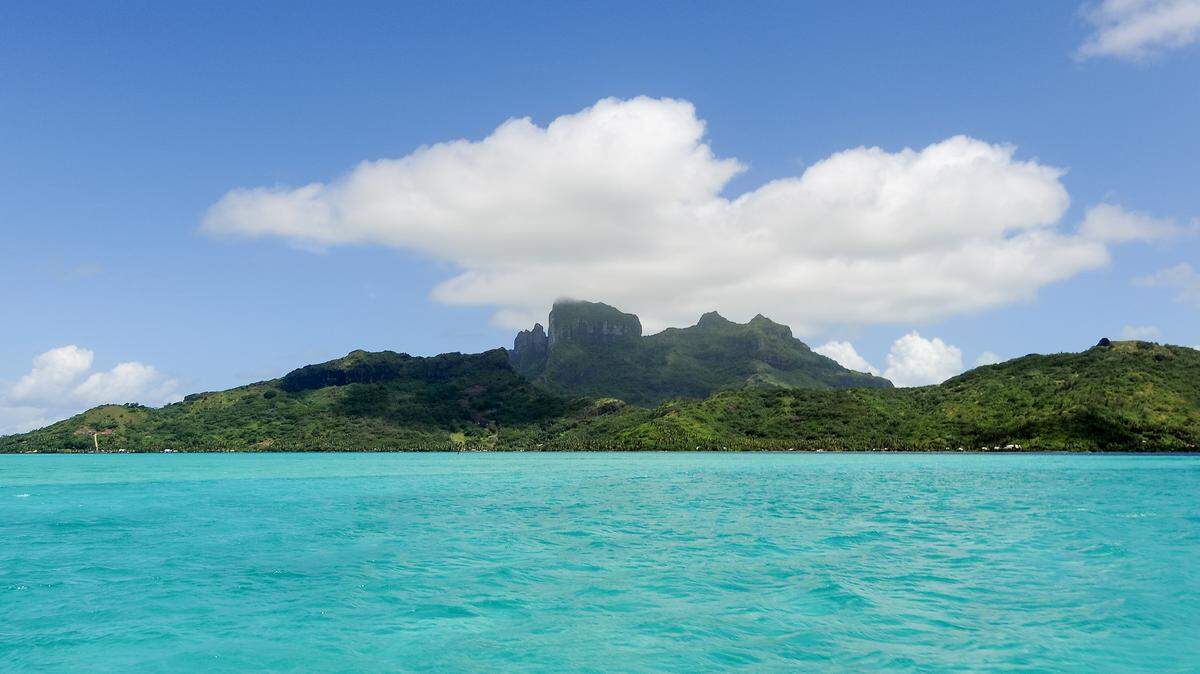
Plunging into the crystalline waters off a French Polynesian island, a researcher-turned-tourist swam around a coral reef. The “long white tentacles” of a “spaghetti”-like sea creature drew her attention.
It turned out to be a new species.
Pat Hutchings, a marine biologist focused on studying marine worms, visited Bora-Bora in 2015 while on vacation and decided to go scuba diving, she told McClatchy News via email. During the dive, some “long white tentacles” stretching out from under the coral reef “really caught my eye,” she said.
Hutchings knew the tentacles belonged to a marine worm and that “little if any” worm-collecting had happened in the area, so she decided to investigate. She carefully removed the worm from its hiding spot, stored it in her hotel room’s fridge and took it back to a laboratory in Australia.
But identifying the unfamiliar-looking sea worm took several years.
A team of scientists eventually matched the marine worm with another specimen collected in Hawaii in 2017 but couldn’t identify them as any known species, according to a study published Feb. 3 in the peer-reviewed journal Zootaxa.
Researchers soon realized they’d discovered a new species: Loimia poraporaensis, or the Porapora spaghetti worm.
Spaghetti worms are a “very distinctive” group of marine worms named for their “numerous long tentacles which they spread out over the surface” of the seafloor to feed, Hutchings and study co-author Nicolas Lavesque told McClatchy News. They live in self-constructed tubes, attach themselves to the underside of corals and, as adults, generally “do not move around.”
The new species’ body is “robust and compact,” measuring about 8 inches long, the study said. Its tentacles vary in length but can reach up to 3 feet long.
A photo shows the Porapora spaghetti worm. Its white tentacles look like a pile of noodles, while its partially visible underside has a “dark red” color. Its segmented body pokes out of its tube-like home, which is made of coral fragments “cemented together by a mucus sheath,” researchers said.
The new species was found “on patch reefs within the reef lagoon” at depths of about 30 feet, but much about its lifestyle remains unknown, the study said.
Researchers said they named the new species after Bora-Bora, the island of French Polynesia where it was first discovered. “Porapora,” or “Pōpora,” is the “island’s former name” in the Tahitian language.
A Porapora spaghetti worm was also found roughly 2,500 miles away near Oahu, Hawaii, suggesting the new species is likely widespread, the study said.
Spaghetti worms function as “ocean cleaners … by recycling organic matter” and, like other marine worms, “play a critical role” in marine ecosystems, Hutchings and Lavesque said. Still, their biodiversity remains “very unknown” and understudied.
The new species was identified by its DNA, body segments, coloring and other subtle physical features, the study said.
The research team included Hutchings (Australian Museum), Guillemine Daffe (University Bordeaux), Christopher Glasby (Museum and Art Gallery of the Northern Territory) and Lavesque (University Bordeaux). They also discovered a second new species of spaghetti worm in French Polynesia.
This story was originally published February 6, 2025 at 1:34 PM with the headline "Scuba diver spots ‘spaghetti’-like creature — and discovers new species in Bora-Bora."