Divers find ‘rare’ squishy sea creatures off Indonesia. It’s two new species
From the birds of paradise in the forests of Papua New Guinea to the monarch butterflies of Mexico, some creatures around the world are covered in vibrant colors.
Some use their colors to entice mates, while others have them as a sign of warning against potential predators.
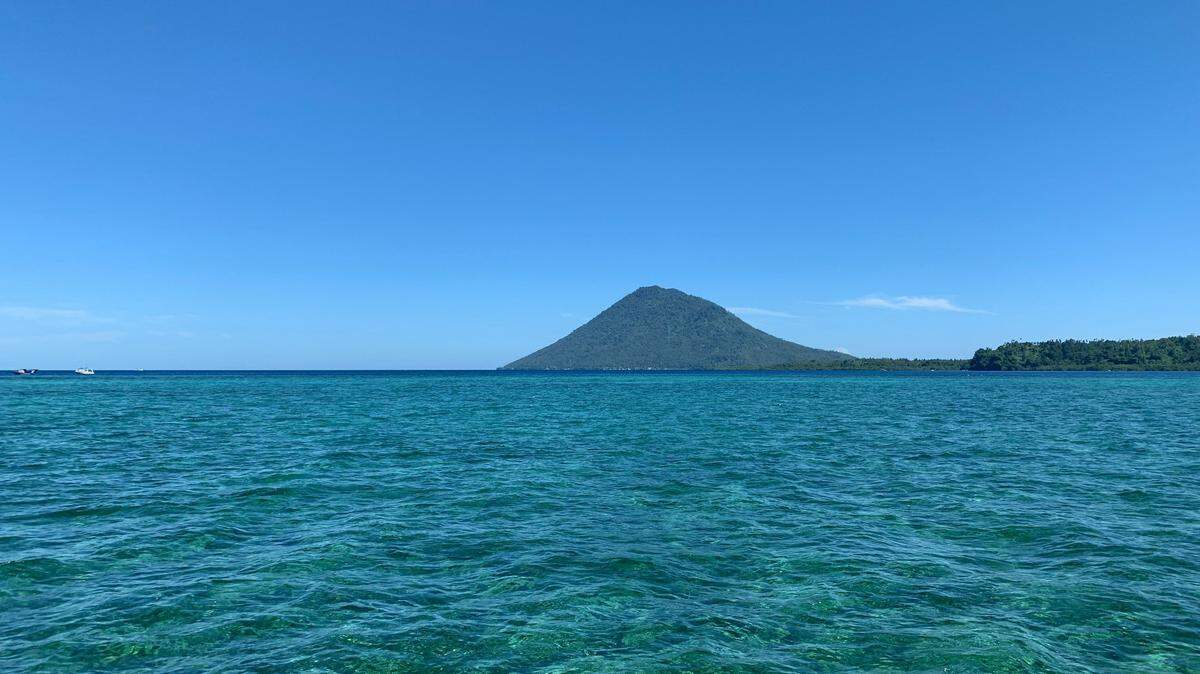
Off the coast of Bunaken Island, Indonesia, two creatures’ vibrant bodies made them stand out against their rocky reef environment as divers swam past, leading to their discovery as two species new to science.
Phyllidia ovata and Phyllidia fontjei were collected by scuba divers during expeditions between 2015 and 2017 in the North Sulawesi region of Indonesia, according to a study published July 14 in the peer-reviewed journal ZooKeys.
Both were “distinctive and can be easily recognized by their coloration,” as well as belonging to a “rare” family of nudibranchs, or sea slugs, researchers said.
Phyllidia fontjei was identified by its rings of orange, white and black, according to the study.
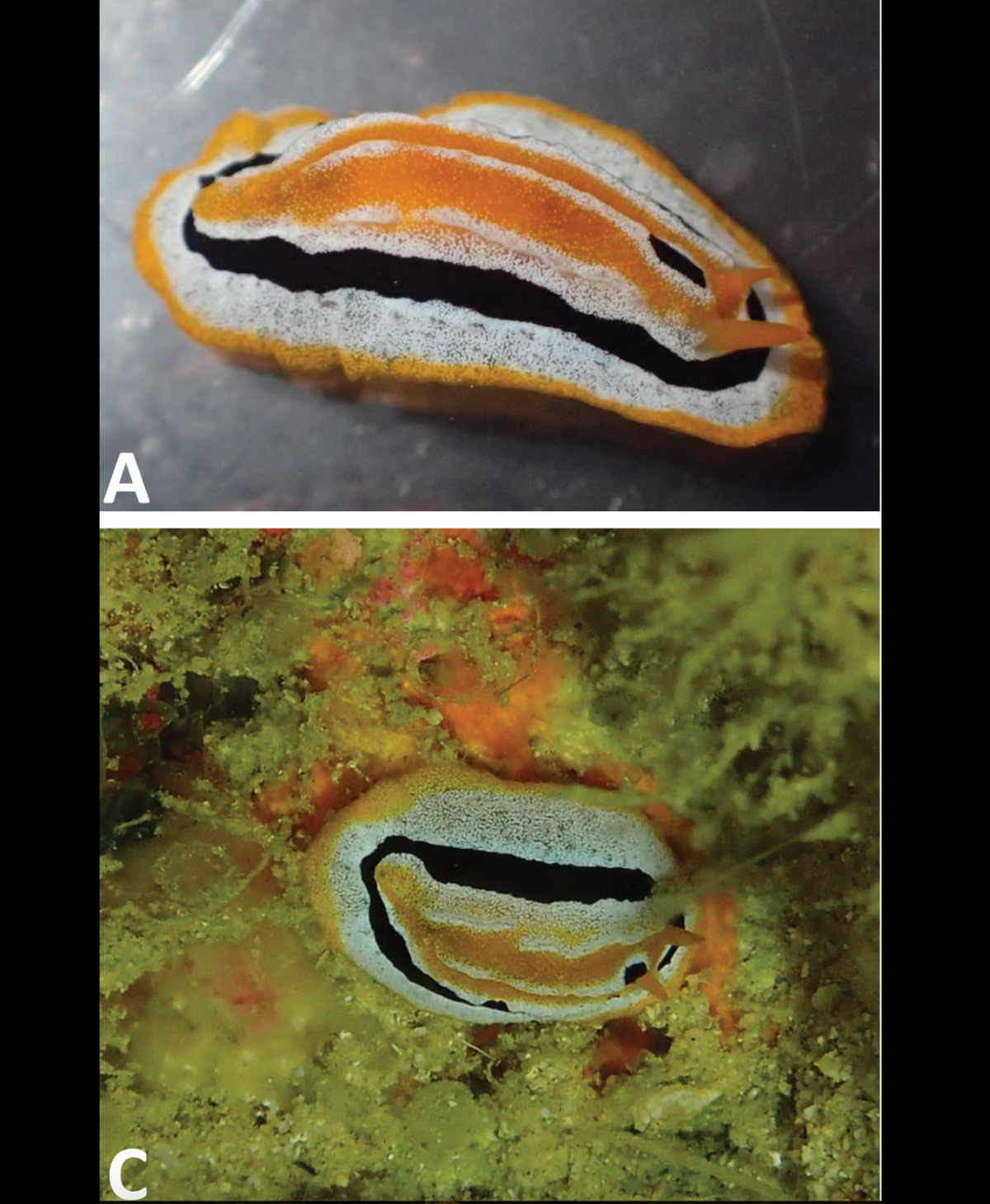
The outer ring of the animal is orange, followed by a thick white band, then a black band, another white band and a central orange oval-shaped color, photos show.
“Minute” specks are scattered across the white section of the creature’s body, researchers said. There are also “yellow/orange rhinophores,” or protruding sensory organs near, the front end of the animal.
The bottom side, or foot, of the animal is white with “yellow-tipped” oral tentacles, according to the study.
It is also partially transparent, allowing researchers to see a “reddish gut content that perhaps comes from the dark orange sponge on which the animal was probably feeding,” according to the study.
The species was named after the late Fontje Kaligis, a professor at Sam Ratulangi University who “initiated our Indonesian co-operation,” researchers said.
The second new species, Phyllidia ovata, was named for its egg-like appearance.
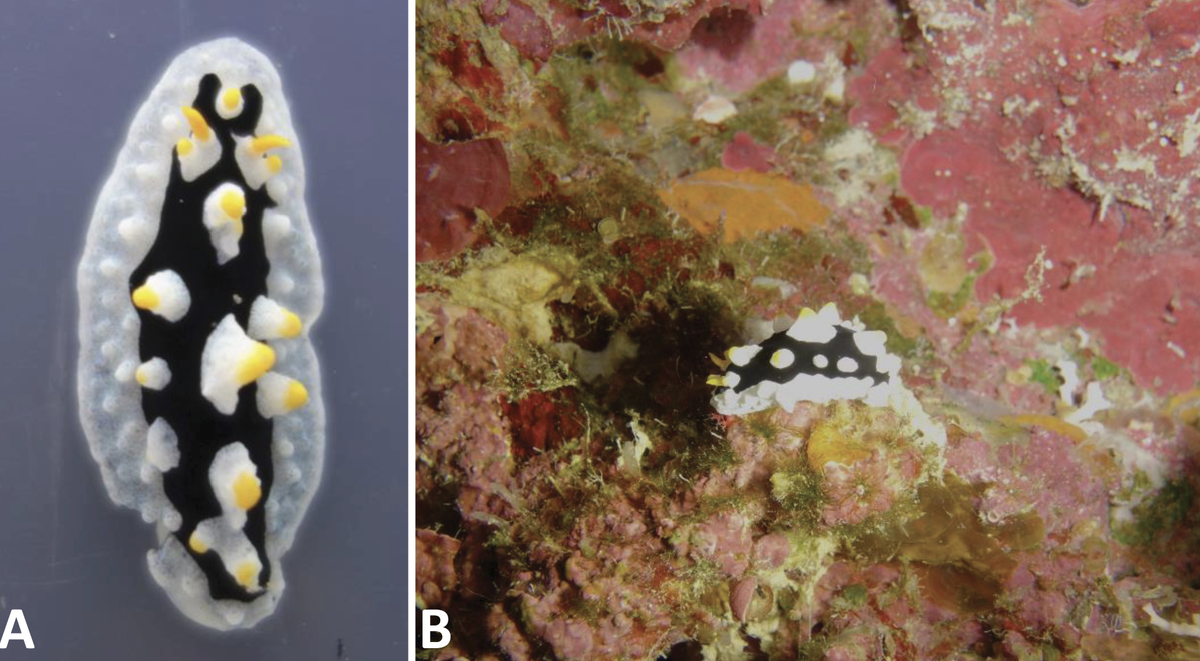
The animal is white along its mantle, or the fringe, and black down the center, photos show.
But down the center of the animal are “large white conical” protrusions with bright yellow tips, giving the illusion of a bright white outside and yellowy interior, according to the study.
Researchers said photos of the species have been posted online in various formats and on different platforms, but they were either incorrectly identified or not identified at all.
Now, because genetic testing confirmed the unique species, photos can be properly attributed, including an image recorded of P. ovata more than 20 years ago, according to the study.
Both animals come from a region called the “Coral Triangle,” a span of ocean between Indonesia, Malaysia, the Philippines, Papua New Guinea, the Solomon Islands and Timor Leste, according to the National Oceanic and Atmospheric Administration.
The zone includes about 2.2 million square miles of sea with some of the most diverse ecosystems on the planet, according to NOAA. Some evidence suggests this is where coral reefs originated before spreading to the rest of the world’s tropical regions.
Bunaken Island is off the northern tip of North Sulawesi in north-central Indonesia.
The research team includes Heike Wägele, Lina Marie Raubold, Adelfia Papu, Nani Undap and Nathalie Yonow.
This story was originally published July 14, 2025 at 2:36 PM with the headline "Divers find ‘rare’ squishy sea creatures off Indonesia. It’s two new species."