Ancient creature — named for crocodile god — unearthed in Egypt as new species
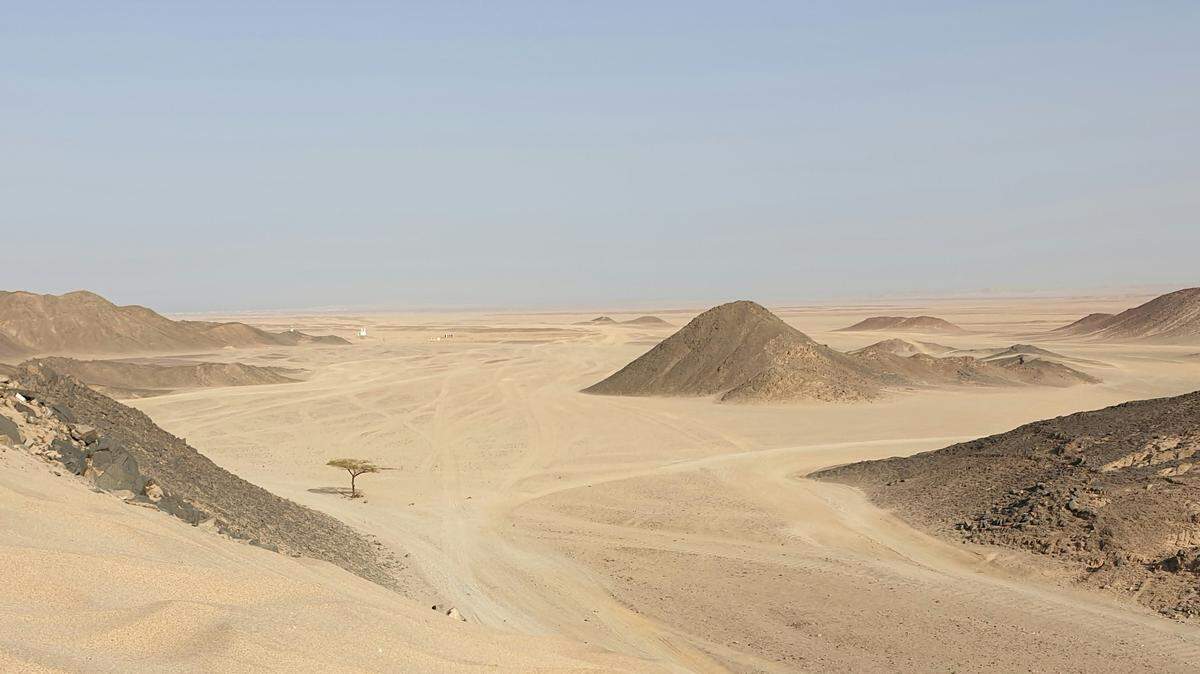
During the era of the late Cretaceous, the land that now sits in modern-day Egypt was far from an arid desert.
The region sat close to the planet’s equator, resulting in a greenhouse-like environment with high humidity and warm temperatures.
It was also home to one of the world’s earliest known crocodiles.
During ongoing fieldwork in the Quseir Formation of the Western Desert that began in 2008, researchers have uncovered two nearly complete skulls and two partial jawbones from a new species of dyrosaurid, a prehistoric crocodile ancestor, according to a study published Oct. 27 in the peer-reviewed Zoological Journal of the Linnean Society.
The Western Desert is described now as a place “where red sandstones and green shales rise above the arid plains of (the) Kharga Oasis,” but 80 million years ago it was the perfect spot for an aquatic reptile, researchers said in a news release from the Mansoura University Vertebrate Paleontology Center , shared by study author Sara Saber.
“Unlike today’s crocodiles, dyrosaurids thrived in coastal and marine environments, equipped with elongated snouts and slender, needle-sharp teeth ideal for seizing slippery prey such as fish and turtles,” according to the release.
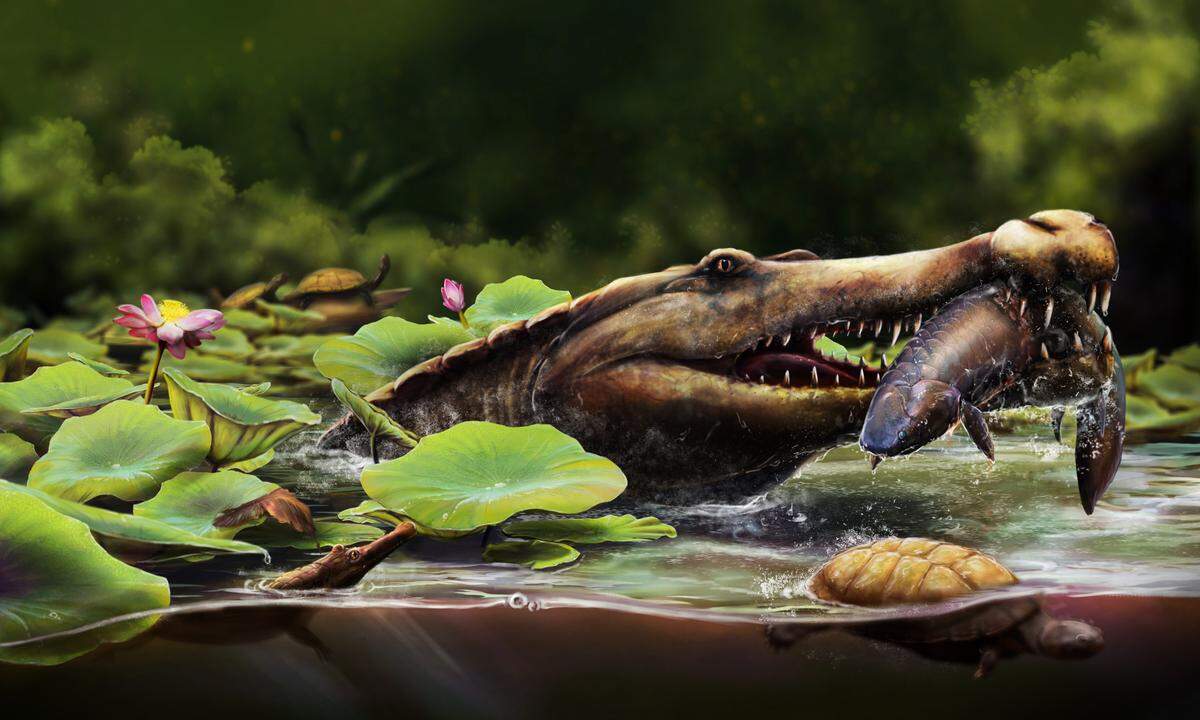
The new species moves the evolutionary clock on dyrosaurids back a few million years earlier than previously believed, an essential stepping stone in understanding crocodile evolution, Saber told McClatchy News in an email.
Wadisuchus kassabi is both a new species and the first member of a new genus, or group of species that share physical similarities and an evolutionary line.
The species was named after the valley where it was found, researcher Ahmed Salem Kassab and Sobek, the Egyptian god of crocodiles, according to the study.
“Wadisuchus kassabi was an (11- to 13-foot-long) crocodile-like reptile with a very long snout and tall, sharp teeth. It differed from other dyrosaurids, in having four teeth at the front of the snout instead of the primitive five, nostrils positioned on top of the snout for surface breathing, and a deep notch at the tip of the snout where the jaws met,” Saber said in the release.
The species also adds to other related animals found in northeastern and central Africa, suggesting dyrosaurids were widespread during this time period, and this region may actually be where the group originated, according to the study.
.jpeg "WhatsApp Image 2025-10-28 at 2.53.24 PM (1).jpeg")
The dyrosaurid lineage spread across the globe, and the group as a whole even survived the extinction that wiped out the dinosaurs, researchers said.
“The significance of Wadisuchus lies not only in what it reveals about the evolutionary history of this remarkable group of crocodiles—though that is a major achievement—but also in what it reminds us of: Egypt’s Western Desert still holds treasures that preserve the secrets of our planet’s deep past,” study author Belal Salem said in the release.
The Western Desert is part of the Sahara Desert located on the west side of the Nile River in Egypt.
The research team includes Saber, Salem, Khaled Ouda, Abdullah S. Gohar, Sanaa El-Sayed, Patrick M. O’Connor and Hesham M. Sallam.
This story was originally published October 31, 2025 at 11:12 AM with the headline "Ancient creature — named for crocodile god — unearthed in Egypt as new species."