
After a dramatic search, a mother finds her son, deported to Venezuela, dead.
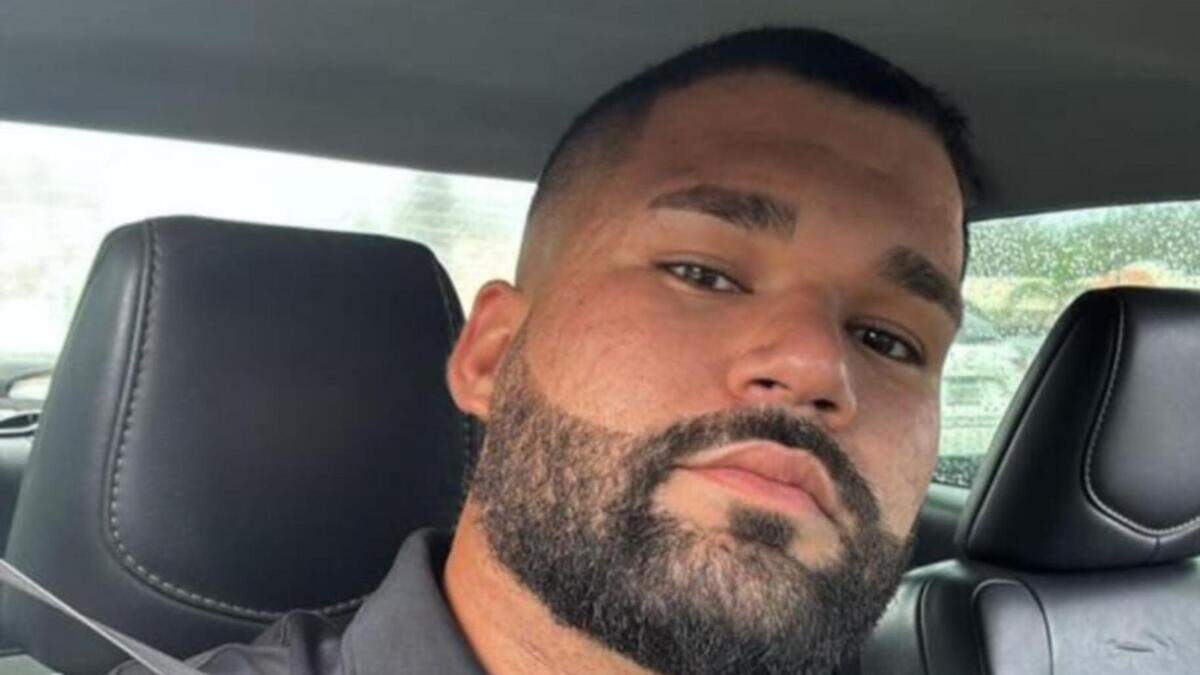
Oswadeliz Núñez Ramírez found her son dead following an intense five-day search throughout the areas of La Guaira and Caracas, Venezuela. The young man was part of a group of 146 migrants deported from the United States who arrived in the South American country on the same day two powerful earthquakes struck the country last week.
An officer with the Bolivarian National Intelligence Service, identified only as Jonathan, had informed her that he rescued her 28-year-old son, Daniel Alejandro Núñez Ramírez, from the rubble of the Santuario La Llanada hotel in La Guaira, where the migrants had been taken and which collapsed during the quakes.

However, the mother doubted the official account, having searched for her son in hospitals, clinics, morgues, and various areas of La Guaira and Caracas without finding a single clue.
She was right to doubt. Her son was still in the hotel rubble.
His body was recovered only after Núñez Ramírez and the relatives of other migrants from that flight pressured authorities to bring a second piece of heavy machinery to the site to clear the debris.
“A slab from the building fell on my son when the structure collapsed. He died instantly. What hurts me most is that they told me he had been rescued alive. Imagine what they put me through,” she told el Nuevo Herald.
Núñez Ramírez explained that her son was on the second floor and could not get out when the building buckled. Only those who were on the upper levels managed to escape.
According to Venezuelan figures, there are currently 32 survivors from those deported from the U.S.
After receiving the terrible news of her son’s death at 7:30 p.m. on Monday, she went to an improvised morgue at the port of La Guaira and opened the bag containing his body for official identification.
“We recognized him by a tattoo and his physical build. His body was already in an advanced state of decomposition. His face was unrecognizable and showed clear signs of the passing days. He no longer had a face; it was bone,” she said.
Paying so the body isn’t lost
The ordeal for the Venezuelan mother did not end with the discovery of her son’s body. She had to pay $700 to have him cremated as quickly as possible to ensure she received the correct remains or, worse, to prevent the body from disappearing entirely.
The medical examiner recommended she retrieve the body that same day; otherwise, there was a risk it could be lost during the identification process. She was also advised to hire a private funeral service to expedite the paperwork, as the process could take months due to the emergency situation caused by the earthquakes.
“They offered me free cremation services, but they even had the audacity to tell me that if I didn’t want it done quickly, they could give me any ashes. In other words, they could cremate a dog, give me those ashes, and say it was my son. There is no furnace in that place; the bodies are all just lying on the floor,” she said.
The medical examiner gave her two pieces of advice: “I recommend you take the body out today because it could get lost. And second, pay for a private service if you want to take him quickly, because otherwise, it will take I don’t know how many months.”
A final call
The last time Núñez Ramírez spoke with her son was on June 24, just 50 minutes before the twin earthquakes—which, according to figures released Tuesday by National Assembly President Jorge Rodríguez, have left at least 1,943 dead, 10,571 injured, and 15,866 displaced from their homes.
That same day, Daniel Alejandro Núñez Ramírez arrived in Venezuela on a flight with 146 migrants deported from the U.S. through the government program Vuelta a la Patria (Return to the Homeland). The plane landed at 12:30 p.m. at Simón Bolívar International Airport in Maiquetía near Caracas.
The Immigration and Customs Enforcement Flight Monitor, a project by Human Rights First, confirmed to the Herald that the flight was operated by ICE Air and chartered by Global X. It departed from Phoenix, Arizona, with stops in El Paso, Texas, and Miami before arriving in Venezuela.
The Venezuelan government announced the group’s arrival via the Vuelta a la Patria Instagram account. The official message noted that 146 passengers had arrived —including 120 men, 19 women, 5 boys, and 2 girls—and claimed they were welcomed with “dignity” and had followed “all necessary protocols to ensure a happy reunion in our nation.”
Núñez Ramírez said she learned of her son’s arrival, who had been living in Jacksonville, at 5:25 p.m. that same day.
“I only found out because an official gave him a phone, and he was able to notify me. Otherwise, I would never have spoken to my son again,” she said.
Daniel did not get a chance to tell her exactly where he was located. Shortly after, the earthquakes struck.
Eight-hour drive
It was only later that she learned several of the deportees had been transferred to the Hotel Santuario after landing. She set out the day after the earthquakes from El Tigre, in Anzoátegui state, northeastern Venezuela—about an eight-hour drive from La Guaira.
“When I arrived, the first thing I did was go to the hospitals. Then I went to the Hotel Santuario,” she said.
The hotel had almost completely collapsed, she said. She claims the few survivors, around a dozen people, managed to save themselves because some were able to pull themselves out from under the rubble on their own.
Núñez Ramírez, a lawyer by profession, said she plans to sue the governments of the United States and Venezuela.
She argued that in the U.S., her son and the other migrants were “treated like dogs there, and here in Venezuela too.”
She said that she will gather the families of the other migrants from that flight to file a class-action lawsuit.
A spokesperson for the Department of Homeland Security told the Herald: “This flight safely reached Venezuela and all illegal aliens on board were returned home. When an individual is no longer in ICE custody, ICE is no longer responsible for them.”
This story was originally published June 29, 2026 at 3:19 PM with the headline "After a dramatic search, a mother finds her son, deported to Venezuela, dead.."