
Fake accounts flooded a Sacramento County official’s Facebook poll. Here’s how it happened
A Facebook poll on a possible sales tax increase posted by Sacramento County Supervisor Sue Frost quickly became a cautionary tale of online manipulation, after hundreds of fake and suspicious profiles attempted to skew the results.
Frost, who regularly uses Facebook to informally poll residents about local issues, posted a poll Tuesday asking whether people would be in favor of a local sales tax increase, if the money were guaranteed to fund exclusively road improvements. For much of the day, as thousands of votes poured in, about 85 percent of poll-takers voted against a tax increase.
But overnight, the poll became overrun by votes supporting a tax increase coming from suspicious accounts: Profiles with zero Facebook activity besides a name and photo, or of people based in Bangladesh or otherwise outside California. Some of these fraudulent accounts even posted on their own pages about providing services to artificially inflate Facebook numbers such as likes or event attendance.
By the next morning, the results had dramatically changed, to about 60 percent of poll-takers voting against a tax increase. Of the roughly 2,500 people who voted in favor of the increase as of Wednesday, about 1,500 were determined to be fake by Frost’s staff.
“My initial reaction was that I’m flattered someone thinks so much about my opinion and what to influence me on,” Frost said. “But I guess they didn’t do a very good job because they got caught.”
Though they are not official elections or surveys, Frost said the Facebook polls online are an important tool to inform her policy decisions and get a temperature check. “I’m aggressive on Facebook, and the importance of that is it’s a venue where I can reach out to constituents quickly,” she said.
Facebook vote-scamming is not new, though it has usually been relegated to sweepstakes and contests. Dozens of companies are dedicated to offering droves of fake profiles to like or vote on posts for a price. At least two companies advertise online 1,500 votes for about $150, though vote-scamming services can cost significantly more.
And Facebook is flooded with fake accounts — the company said it disabled 2.2 billion fake accounts between January and March of this year alone, the majority of which were caught within minutes of registration. In comparison, Facebook reports 2.4 billion active users.
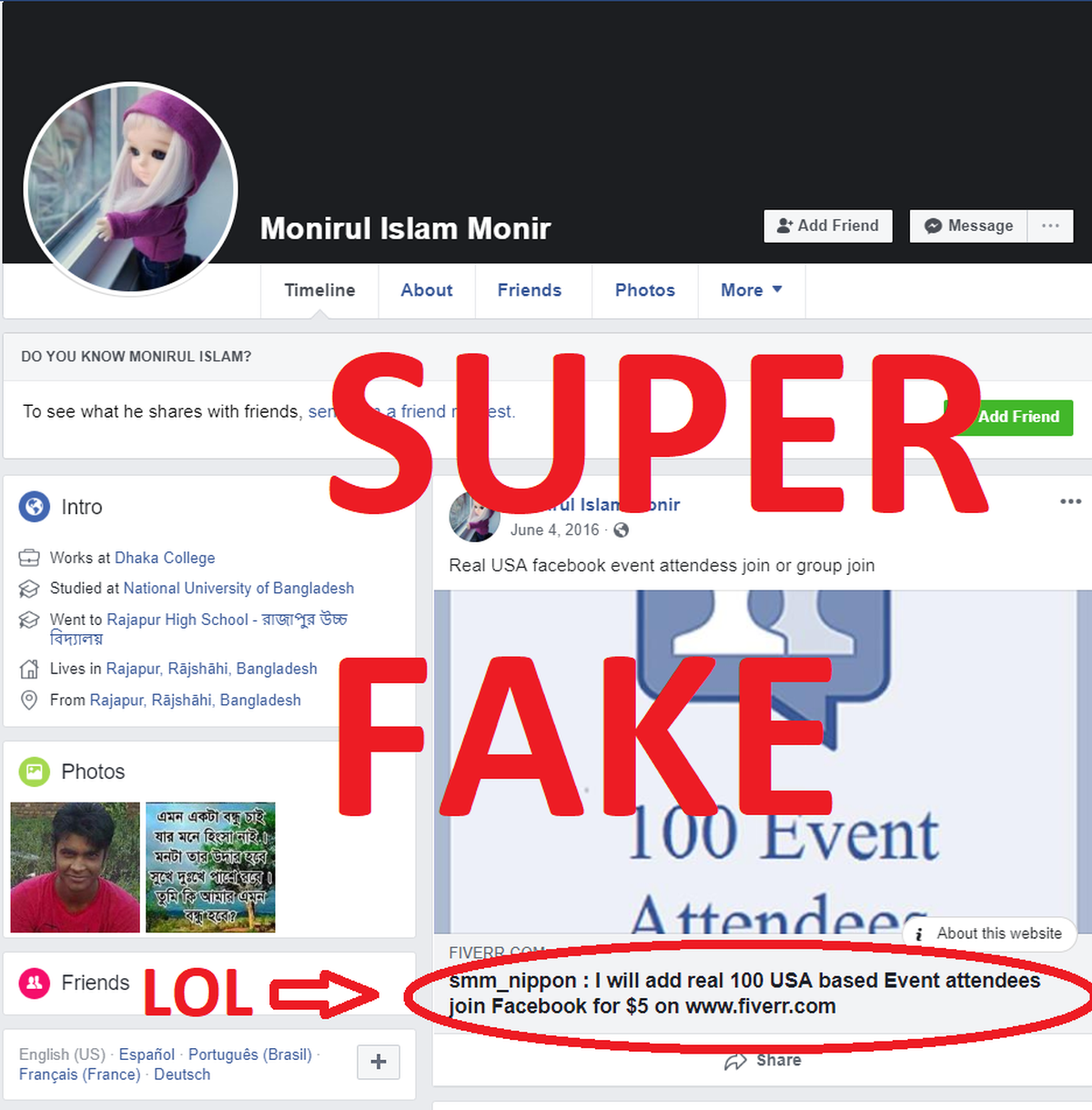
But it is the first time Frost’s staff has seen one of its polls taken over by fake Facebook profiles, said Frost’s chief of staff Matt Hedges.
“It evokes these emotions of outside players and manipulation, and at the local level it’s bizarre,” Hedges said. “(It’s) not illegal, but it’s definitely immoral and dishonest.”
There is virtually no way to trace who bought the fraudulent accounts, but Frost said her staff will remain vigilant about checking the results of future polls.
A conservative who has been vocal in the past against tax increases, Frost said at this point she is unsure how she would vote on a sales tax increase ballot measure coming before the board in the next few months. But the Facebook poll — sans scammers — is a step toward figuring that out.
“To whoever did this: try better next time!” she posted on Facebook.