
Will higher prices hurt California Democrats next year? Why Republicans see opportunity
Every incumbent politician’s nightmare is slowly becoming reality — prices are going up, up, up, and consumers are getting angry.
That’s a notable problem for Democrats, who run Congress and the White House as the 2022 midterm elections get closer.
“To the extent that inflation is noticeably bad in the coming months, that could contribute to a negative perception of the White House, which then may have negative electoral consequences or at least contribute to a poor performance,” said Kyle Kondik, managing editor of Sabato’s Crystal Ball, which analyzes congressional races.
Control of Congress next year is in play, as Republicans need only a net gain of one Senate seat and five House seats to win majorities. But Democrats see unusual opportunity in California, as four Republican-held seats — including the one held by Rep. David Valadao, R-Hanford — are in districts that President Joe Biden won last year.
Republicans are pushing hard in what they regard as swing districts. One they’re watching is California’s 10th, where Rep. Josh Harder, D-Turlock, unseated Republican Rep. Jeff Denham in 2018.
Incumbents are concerned because price increases are something that voters can’t avoid. Overall, prices are up 5.4% over the last 12 months, one of the steepest rises in 13 years. Prices for meats, poultry, fish, and eggs have gone up 10.5% over the year, with beef alone up 17.6%, according to the federal Bureau of Labor Statistics.
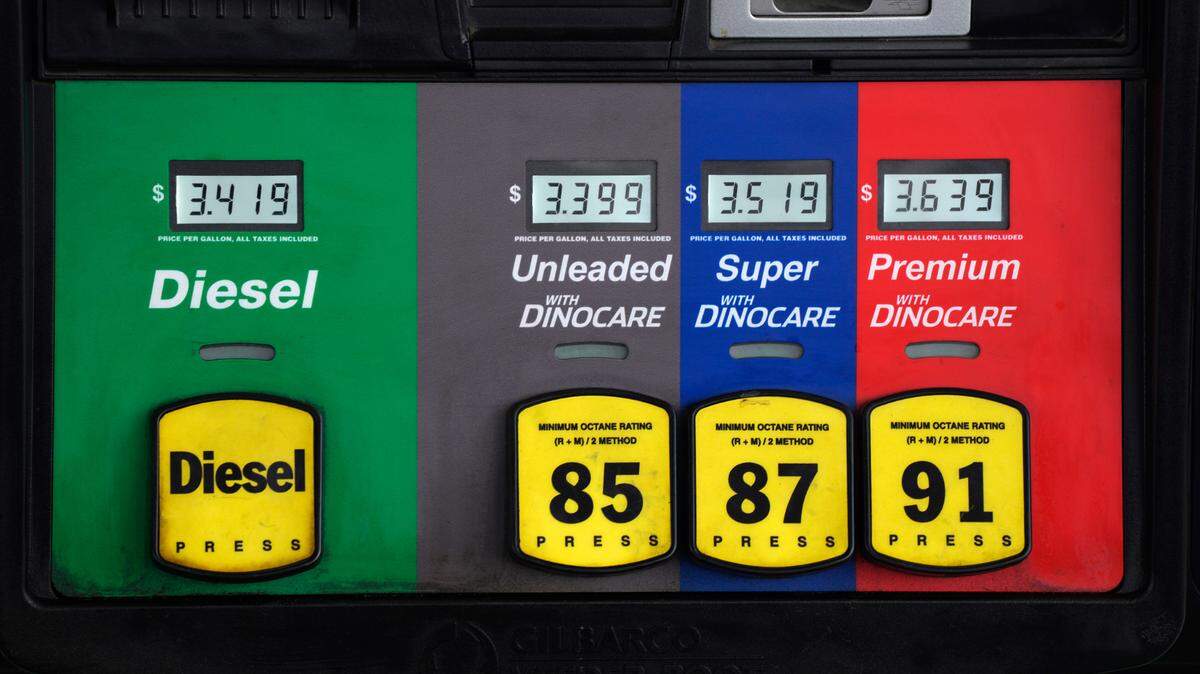
The price of oil and gas continues to spike. California has the highest per-gallon price in the country — $4.455 for regular, according to AAA.
California Democrats and inflation
Higher prices at the pump hurt agriculture-heavy regions like the San Joaquin Valley, the region that contains Harder’s and Valadao’s districts, more than other areas of the state.
Agriculture workers rely on gas to drive trucks and farm equipment. If a business is struggling to handle the costs of inflation, they may be more prone to raise the cost of their goods, and less likely to increase the wages of their workers.
“A lot of the agricultural valley workforces are relatively low income, which means that they’re ill equipped to deal with higher prices,” said Chris Tilly, an economist and professor of urban planning at UCLA.
“If I’m an agricultural worker, and possibly even an agricultural worker who’s dealing with supply chain problems in their own industry, so the work may be more irregular than usual, then I’ve got a problem,” he said.
Big employers in Harder’s district include E&J Gallo Winery, Bronco Wine, Del Monte and Frito-Lay. His district also includes Manteca and Tracy, where many residents buckle in for long commutes to Bay Area jobs.
According to Census data, the per-capita income in Harder’s district is $28,584 and workers travel, on average, 35 minutes to work every day, about 10% higher than the state average commute time.
Steve Maviglio, a longtime California Democratic consultant, doesn’t think Harder is particularly vulnerable, but said the state of the economy should raise alarms for the congressman.
“Water, inflation, unemployment, those things are all issues that should be raising concerns for (Harder),” Maviglio said. “I don’t think he’s going to take anything for granted and that’s why he seems to be very proactive on the water issues, for example.”
Republicans and higher prices
Republicans are trying to convince voters that Democrats are presiding over an economy out of control.
After the latest inflation news was released last week, the GOP’s national rapid response team blasted out a parody to the tune of Elton John’s “Rocket Man”: “He’s an inflation man, burning up your money out here with the help of Democrats in Washington.”
Thursday, the party sent out this message: “Inflation is out of control, but Joe Biden is either ignorant or doesn’t care..”
Voters understand why prices are going up, countered Democratic consultant Jesse Ferguson. “No one wants to see this, but if it’s a reflection of getting out of a once in a hundred year pandemic, it comes as a byproduct of what people want to happen,” he said.
Democrats fight back by painting Republicans as insensitive and irresponsible. One of their chief arguments is that the GOP refuses to deal with the nation’s debt limit. No Republicans this month voted to increase the limit, which Democrats argue was a dangerous ploy.
Valadao represents a swing district the Democrats are targeting, and they painted his vote as a prelude to an economic apocalypse.
“Rep. David Valadao chose economic catastrophe over protecting Californians and fulfilling his sworn obligation to protect the full-faith and credit of the United States,” the Democratic Congressional Campaign Committee said, and then listed the horrors that it claimed could ensue, such as cutting off Social Security funding.
Will high inflation persist?
When prices began to spike this summer, most economists blamed the surge on temporary conditions. Supply shortages would ease, they said, as the pandemic’s impact waned.
That hasn’t happened.
“Inflation is no longer ‘transitory,’” said Sung Won Sohn, professor of economics at Loyola Marymount University.
Experts are scrambling to predict the highly uncertain future of prices and supplies.
Sohn noted demand is strong, and the supply side is having trouble catching up. President Joe Biden last week took action to keep major ports in Los Angeles and Long Beach operating around the clock to get supplies moving.
But the prospect of Biden’s tax increases on the wealthy, and the Federal Reserve’s probable interest rate increase next year, can help ease a price spiral.
The key to the economy’s future rests largely with consumers, since if they don’t spend, people don’t provide services or make things. Consumer confidence is sluggish, according to the latest University of Michigan Survey of Consumers nationwide and people don’t like what they’re seeing in Washington.
Democrats are not in a panic at this point. A lot can happen between now and the 2022 general election. The post-pandemic recovery could ramp up and inflation could ease. And California congressional districts are likely to look different after redistricting.
Biden won Harder’s California district by 3.1 points in 2020. The district includes all of Stanislaus County, which went heavily against Gov. Gavin Newsom in last month’s recall election.
“If you had an election today, it could be problematic,” Democratic consultant Andrew Acosta said of rising inflation. “But so many things could change. (Harder) could be running in a different district next year.”
This story was originally published October 18, 2021 at 5:00 AM.
.jpg)