
CA Republicans call for parole board shakeup after sex offenders granted release
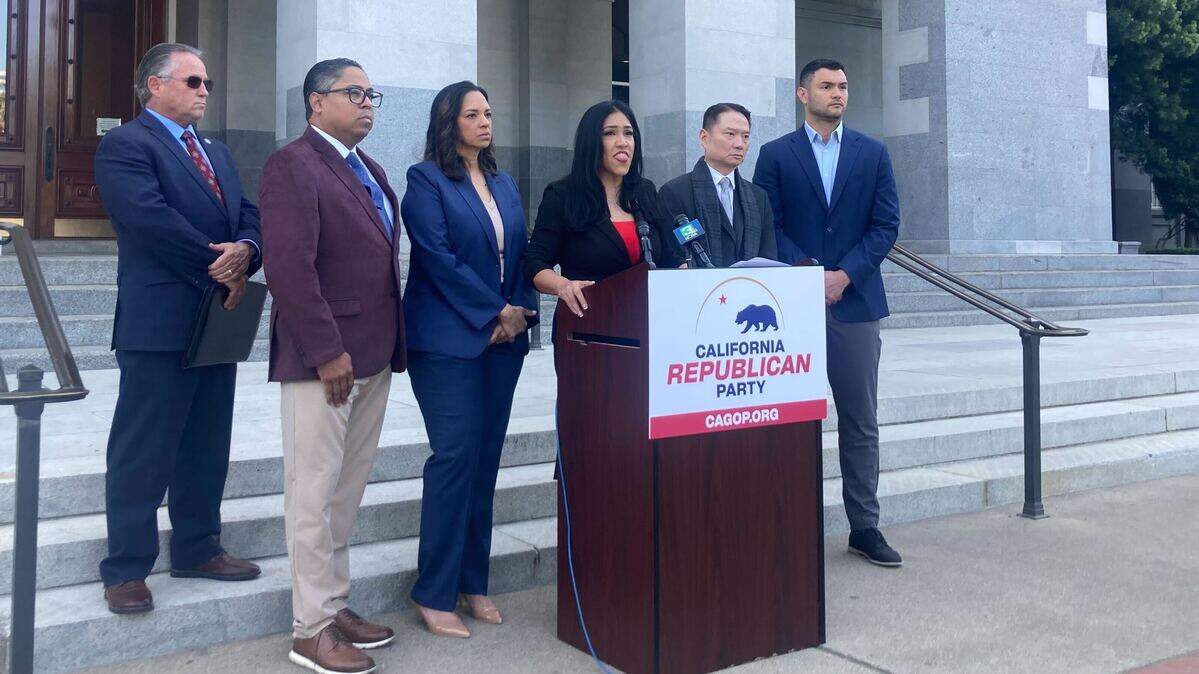
Several Republican lawmakers are pushing to remove commissioners on the California Board of Parole Hearings for their involvement in approving the recent release of two men convicted of sexual crimes.
At a news conference Tuesday, California Republican Party Chairwoman Corrin Rankin announced the launch of a petition to protest the release of David Allen Funston and Roberto Detrinidad, who committed their crimes in the Sacramento and San Francisco areas, respectively.
“We believe in second chances. People deserve second chances. But violent predators are a different story,” Rankin said.
The effort reflects growing Republican criticism of California’s parole process and comes after Gov. Gavin Newsom said he disagreed with the board’s decision to release Funston but lacks authority to overturn it. Advocates for incarcerated people say the parole process is rigorous and shouldn’t be politicized.
Funston was granted parole after serving 27 years of a triple life sentence given to him for 16 crimes, including kidnapping and molestation, perpetrated against seven young children in 1995. Detrinidad served 11 years for sexually assaulting a woman in her home in 2013 and remains in prison awaiting release.
Tuesday’s statements follow a letter that state Sen. Suzette Valladares, R-Santa Clarita, sent late last month to Newsom, calling for him to remove the commissioners who approved the decision to release Funston and “appoint commissioners who will prioritize public safety and victim protection, rather than siding with dangerous felons who repeatedly prey on California’s children.” That letter was signed by several of Valladares’ colleagues, including Senate Republican Leader Brian Jones, R-Santee.
Funston, 64, was eligible for a parole hearing under the state’s Elderly Parole Program, which was created by court order in 2014, codified in 2018, and expanded in 2021. After an outcry from victims and law enforcement, new charges against Funston were filed by the Placer County District Attorney in connection to a child sexual abuse case from 1996. Funston pleaded not guilty to the new charges on Monday.
Su Kim, senior policy manager of UnCommon Law, an organization that represents incarcerated people in parole hearings, said the board is “notoriously stingy” with granting parole, and Funston went through a multi-layered process.
“Removing commissioners for applying the law and weighing the evidence on public safety as they’re required sets a very dangerous precedent,” she said. “It signals to every future panel: Ignore the data, ignore the expert assessments, and deny parole to avoid political blowback.”
Through a spokesperson, Newsom told The Sacramento Bee last month that he did not approve of the Funston decision. He asked the board in January to review its Sept. 24, 2025 decision. The board reaffirmed its decision on Feb. 18, 2026. The Governor’s office said he can only reverse a parole grant in murder cases.
CDCR spokesperson Kyle Buis said commissioners are appointed for three-year terms, and advised that the transcript for Funston’s hearing would hold more information about the decision that was made.
“Commissioners for the Board of Parole Hearings take many factors into consideration when determining a candidate’s release suitability. This includes the Comprehensive Risk Assessment, the candidate’s central file, parole plans and impact statements.”
Neither Newsom’s office nor Buis commented on the Detrinidad decision. Newsom’s office also did not respond to a question about whether he planned to take any action against the commissioners.
Funston’s parole hearing
For over three hours on Sept. 24, 2025, Funston recounted to Commissioner Patricia Cassaday and Deputy Commissioner Michael Mette the reasons he committed his crimes and what his plan was to prevent future criminality. He told them he was still attracted to female children, but that he had strategies to control his urges and planned to stay away from children.
After less than 20 minutes of deliberation, Cassaday told Funston the board would grant him parole.
“Your testimony seemed forthright and honest to this Panel, and that reflects on credibility. You do take full responsibility for your actions. And on more than one occasion, you expressed remorse and shame,” she told him, according to a transcript of the hearing.
Funston said he had completed several rounds of rehabilitative programming focused on sex offending, had hired outside clinicians to help him, and understood he had ruined his victims’ lives.
“I have read the statements of the harm I caused my victims and their families, and today their words penetrate deep into my soul,” he told commissioners. “I am disgusted and ashamed of my behavior and have great remorse for the harm I caused my victims, their families in the community of Sacramento.”
The transcript shows commissioners weighed multiple factors when assessing whether Funston still posed a danger to the community.
“We believe the present self awareness, self-control attitude, and mental state on insight into past and present character defects and causative factors such as your alcohol use, domestic violence, criminal thinking, childhood traumatic -- traumas, excuse me, dysfunctional relationship and pedophilic disorder have been addressed and no longer remain the same type of concern,” Cassaday said.
On Tuesday, Valladares said Funston’s admission to the board that he is still attracted to children should be reason enough to deny him parole.
“Despite hearing that admission, the California parole board hearing still approved his release. That’s not just alarming, it’s a gross failure of judgment,” she said.
Jones announced Tuesday he wanted to roll back the state’s elderly parole program through a new bill.
“If they’re going to let monsters like this out of prison early, despite no signs of true rehabilitation and little of their lengthy sentences actually served, then we have a duty to act, and that’s what this bill does,” said Jones. “The Parole Board has proven time and again it is incapable of acting in the best interest of Californians and it’s painfully clear that the legislature needs to intervene at this point.”