
Gavin Newsom stops short of statewide lockdown + Pressure on flavored tobacco + New FPPC task force
Hello there, California. The times are hard. Everything is strange and the unknown makes us uneasy and, at times, quite afraid. Keep calm, take care of yourself, wash your hands and keep the faith. We’re in this together.
UPDATES
To start — California has recorded 335 confirmed cases and six deaths as of Sunday at 5:30 p.m. We’re closing in on 12,000 people who are self-monitoring for symptoms.
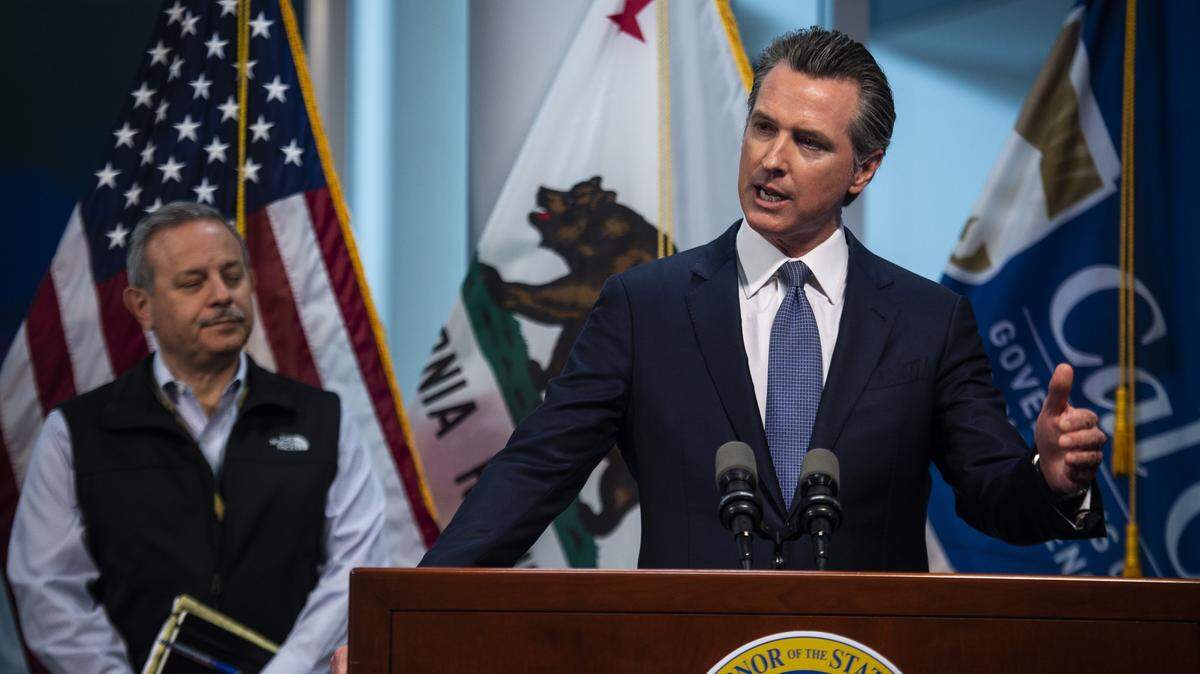
Faced with mounting coronavirus infections, California Gov. Gavin Newsom on Sunday issued sweeping new restrictions in California, calling for home isolation of everyone in the state over age 65 and people with chronic disease, both high-risk populations. He’s asking bars to close, and restaurants to reduce their occupancy. And, he’s putting more resources into protecting the homeless by acquiring hotels to shelter them.
“We recognize that social isolation for millions of Californians is anxiety-inducing,” he said. But, “we need to meet this moment head on, and lean in and own this moment ... and take actions we think are commensurate with the need to protect the most vulnerable Californians.”
In an example of the partisan divide over the virus, U.S. Rep. Devin Nunes, R-Hanford, had earlier on Sunday urged people go out to local pubs. That’s against the advice of the Trump administration. The Centers for Disease Control and Prevention on Sunday advised people to avoid groups of 50 or more.
- The Assembly is allowing older legislators to miss session, according to the speaker’s office. “If members 65 or older would like to stay home, they can,” said Katie Talbot, spokeswoman for Speaker Anthony Rendon, D-Lakewood. “If they would like to come to session, they can. It is up to them to decide what they want to do.” There are 12 members 65 or older.
- The Senate has canceled all public hearings this week, and many have been postponed in the Assembly.
The Capitol building in Sacramento was closed to the public for the weekend and public tours have indefinitely ended.
- On Friday, the California Teachers Association called for closing all California schools as the coronavirus spreads. Newsom has stopped short of that request, but signed an executive order Friday to ensure schools that do close still get money from the state to fund remote education, food for needy students and childcare. He said at his Sunday news conference that more than half of the state’s school districts have announced plans to close this week and he does not want to force others to shut down before they are ready.
- Dozens of schools have already closed their doors for the next month in an effort to stymie COVID-19’s spread. But the federal government’s top health officials say it likely won’t make much difference.
President Donald Trump has invoked the Stafford Act, a declaration that gives FEMA authority to respond to the COVID-19 pandemic as the death toll rises and more Americans become infected.
- Add another postponement to the list: The Sacramento Press Club announced this week that it is postponing a planned March 30 luncheon discussion of AB 5 as a precaution against the spread of COVID-19. The event would have featured AB 5’s author, Assemblywoman Lorena Gonzalez, D-San Diego, Assemblyman Vince Fong, R-Bakersfield, California Labor Federation Executive Secretary-Treasurer Art Pulaski and California Business Roundtable President Rob Lapsley.
“We hope to reschedule it as public health concerns permit,” wrote Sacramento Press Club President Dan Morain.
- And amid economic uncertainty, the California Budget and Policy Center released a set of fact sheets last week that show how expanding the CalEITC and Young Child Tax Credits to immigrant families could boost each Senate and Assembly district’s economy.
“Many Californians who earn little from their jobs live with economic uncertainty every day, unsure how they will afford the costs of housing, child care, health care, food, and other basic necessities,” the announcement read. “With the coronavirus epidemic likely to have widespread and lasting health and economic consequences in our communities, workers in low-wage jobs and immigrant workers are especially at risk of economic hardship.”
You can view how each district could benefit from the expansion, according to the center, here.
FLAVOR TOBACCO BAN
Could flavored tobacco’s days be numbered in the Golden State?
That’s what people like Tim Gibbs of the American Cancer Society - Cancer Action Network are hoping.
Gibbs joined Lindsey Freitas, of the Campaign for Tobacco-Free Kids, CSU Long Beach professor Mohammed Forouzesh, UC San Diego med school student Isaac Sada and others recently in meeting with California lawmakers to discuss Senate Bill 793, which would prohibit the sale of flavored tobacco.
Specifically, Gibbs and company were looking to combat the argument that hookah should be exempted from the flavor ban because it carries cultural significance with certain communities.
“I’ve yet to see where ‘Sex on the Beach’ is a cultural use,” Gibbs said, referring to the myriad flavors that one can find in most modern hookah lounges.
Advocates for SB 793 argue that hookah is exceptionally dangerous (one hour of use is equivalent to smoking 100 cigarettes, Freitas said). And with tropical and candy-like flavors, hookah can be appealing to young people.
“Just because it smells like banana doesn’t mean there’s no nicotine in it,” Forouzesh said.
The proponents said that they aren’t trying to take away hookah, just to ban those flavors which can lure young people into a lifetime of tobacco addiction.
SB 793 is set to be heard by the Senate Committee on Health on April 1.
LET’S BE FAIR
The Fair Political Practices Commission announced last week that it was forming a Digital Transparency Task Force to study political advertising and social media. The task force will use that information to help the commission determine what regulations need to be “updated, enhanced, added or strengthened.”
“California voters should be able to know who is responsible for each ad they receive, and we need to find a way to stay ahead of or even shape this fast-changing digital political media environment,” said FPPC Chair Richard C. Miadich.
QUOTE OF THE DAY
“In some way, #Covid_19 may be the Universe’s way of slowing the world down. Non stop cycles of bullying, hysteria, & outrage in our news and politics shows we have gotten away from important things, like love, compassion, rest, stillness and spiritual connectivity. #RESET”
- Assemblywoman Sydney Kamlager, via Twitter.