
What happened to California’s public health labs? + Uber, Lyft press AB 5 initiative
Yes, it’s still March.
Set your clock: The Governor’s Office on Sunday said we should expect daily press briefings on coronavirus at noon.
THE LATEST
- More than 5,000 Californians have contracted the new coronavirus, and more than 100 have died.
- First the feds sent incomplete coronavirus testing kits to California, then they sent non-functional ventilators to Los Angels. The state sent the machines to Bloom Energy in San Jose, which is getting the ventilators ready for use. Gov. Gavin Newsom visited the company on Saturday, where he said the state needs an additional 10,000 ventilators to prepare the peak of the outbreak.
- Social distancing pays off: Check out this data visualization comparing what happened after Italy and California separately handed down stay-at-home directives to fight coronavirus. California issued the order after 19 deaths; Italy waited until 827. Here’s the story.
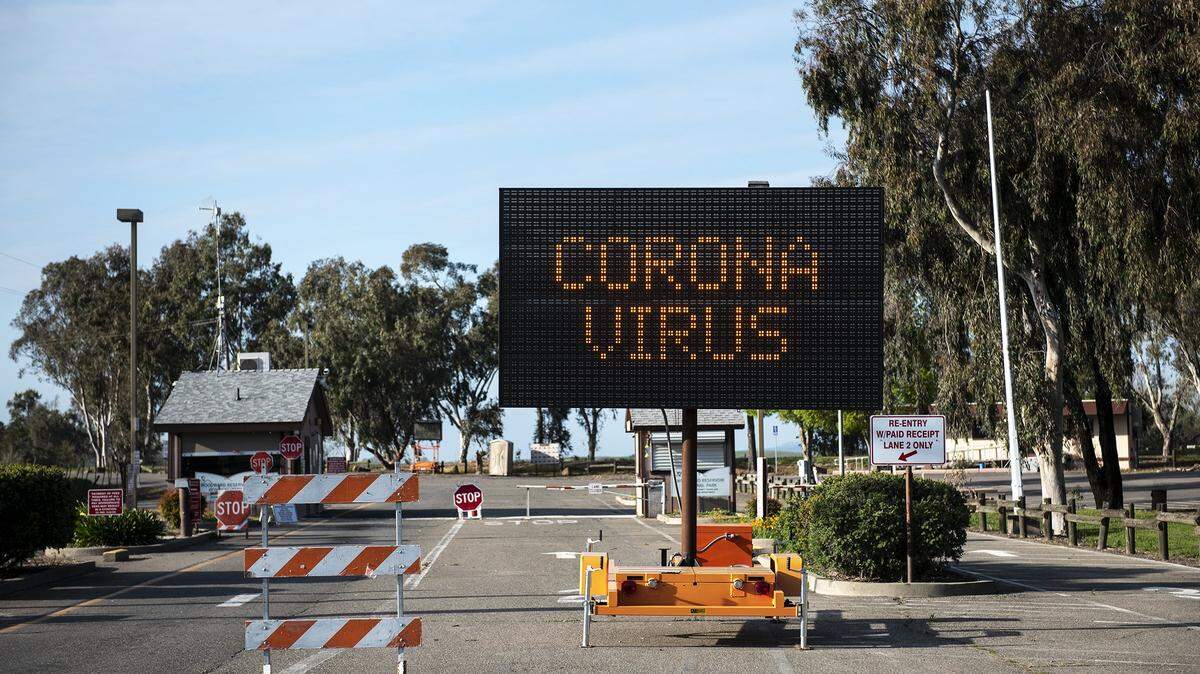
- Why we can’t have nice things: The Newsom administration on Sunday announced it closed parking lots at all 280 state parks. From Folsom Lake to Malibu, state parks saw record visitation since the stay-at-home orders took effect. As a result, Californians could not practice social distance to slow the virus even in the great outdoors.
PUBLIC HEALTH LABS CLOSED
Gov. Newsom has called for “targeted testing” of the new coronavirus, arguing a strategic approach will help public health officials find hot spots and determine how and where the pandemic is spreading.
But in the two decades leading up to the COVID-19 outbreak, 11 of California’s public health labs designed for the focused testing Newsom wants closed their doors.
California now relies on 29 county and city public health labs, along with the California State Laboratory in Richmond, to serve 40 million people.
It’s around “the same number we had in 1950,” said Kat DeBurgh, executive director of the Health Officers Association of California, “when the population was a little more than 10 million.”
Public health laboratories don’t have the resources to run thousands of tests a day like the privately run labs recently brought on line for coronavirus testing, but they have expertise for close surveillance and testing of potential disease outbreaks.
That kind of information could have provided the Newsom administration with a fuller picture of where coronavirus clusters would emerge, said Rick Greenwood, an epidemiology and environmental health sciences adjunct professor at UCLA.
“Doing 10,000 tests at some place with people who drive through who may not even be sick doesn’t help as much as doing 20 samples when people are out in the field looking at clusters, interviewing people,” Greenwood said. “It’s the same test, but different in the sense of where the data goes.”
Public health funding, however, has largely stalled since the Great Recession, and many local jurisdictions don’t have the dollars needed to maintain laboratory equipment and highly trained staff.
They’ve shuttered their labs, partnered with their neighboring counties and have learned, until COVID-19, to mitigate disasters through a more regional approach to testing.
Check out Hannah Wiley’s full report on the shuttered labs here.
ANTI-AB 5 BALLOT MEASURE SIGNATURES GET TURNED IN
The group behind a ballot measure intended to undo the changes of Assembly Bill 5 announced Friday that it has begun to submit petition signatures to qualify for the November ballot.
The group Protect App-Based Drivers & Services, funded by corporations including Uber, Lyft and DoorDash, seeks to preserve rideshare and delivery drivers as independent contractors, after AB 5 classified them as regular employees.
“The recent pandemic has highlighted just how important app-based services and drivers are – delivering food, medicine and supplies to those who are stuck at home, driving seniors and others to medical appointments, and helping workers who perform essential services get to their jobs,” said rideshare driver Pam McClammy in a statement put out by the group. “But recent legislation threatens the very availability of these services for hundreds of thousands of app-based drivers who rely on them during this economic slowdown, and millions of Californians who increasingly depend on them to get through the pandemic. This ballot measure will protect app-based drivers and services by ensuring what’s enabled their model to be so essential remains intact.”
According to the group, 80 percent of app-based drivers use platforms like Uber or DoorDash to supplement their regular income.
“This is an especially vital lifeline for those who have been laid off, furloughed without pay or seen their hours cut at their primary job. An overwhelming majority of app-based drivers want to maintain their independence and flexibility and do not want to become employees,” the group said.
The group must collect 623,212 signatures in order to qualify for the ballot, according to the California Secretary of State’s Office. The group previously announced that it has collected 1 million signatures.
AG CALLS FOR PAUSE ON TITLE IX REGS
California Attorney General Xavier Becerra has called on the U.S. Department of Education Secretary Betsy DeVos and Office of Management and Budget acting director Russell Vought to suspend all Title IX rule-making for the duration of the COVID-19 pandemic.
“During this pandemic, we need to do everything in our power to help our students, parents and schools get through these unprecedented times,” Becerra said in a statement. “Now is not the time to advance a proposal that would increase burdens on schools fighting to protect our children. We urge Secretary DeVos and Acting Director Vought to delay finalizing these rules at this time. It’s going to take all of us working together to keep our students safe during this crisis.”
Title IX states that “no person in the United States shall, on the basis of sex, be excluded from participation in, be denied the benefits of, or be subjected to discrimination under any education program or activity receiving federal financial assistance.”
DeVos and the President Donald Trump administration have submitted proposed changes to the Title IX process that would substantially change how the law is enforced, something Becerra previously has challenged.
Becerra joined 17 other attorneys general in sending a letter to DeVos and Vought.
The letter said that 93 percent of America’s K-12 schools have either closed or will be closing soon in response to the COVID-19 pandemic, and that likewise more than 1,100 colleges and universities have also shut their doors.
“With everything our schools and students are facing right now, we strongly urge you not to impose further substantial regulatory burdens. To ensure that our schools can focus on serving our communities, we ask the Department and OMB to announce that they are suspending the rule-making process for the proposed Title IX regulations until the national emergency has ended and our schools have resumed their regular operation,” the letter read in part.
QUOTE OF THE DAY
“During this crisis, our grocery store clerks, delivery drivers, transit and utility workers—along with so many others—have been selflessly getting up every day to make sure we have the things we need. And for that, we say thank you.”
- Former President Barack Obama, via Twitter.
Best of the Bee:
California, you’re doing a great job staying home, tracking data show. (Except these places), via Ryan Sabalow and Phillip Reese
- Some tenured state employees have weeks, or even months, of accrued leave saved up that they can rely on during the coronavirus emergency, via Wes Venteicher.
California landlords can’t evict tenants while the state fights coronavirus under an executive order Gov. Gavin Newsom issued Friday, via Sophia Bollag.