
Six COVID-19 cases now reported by California Assembly. Legislature’s return date unclear
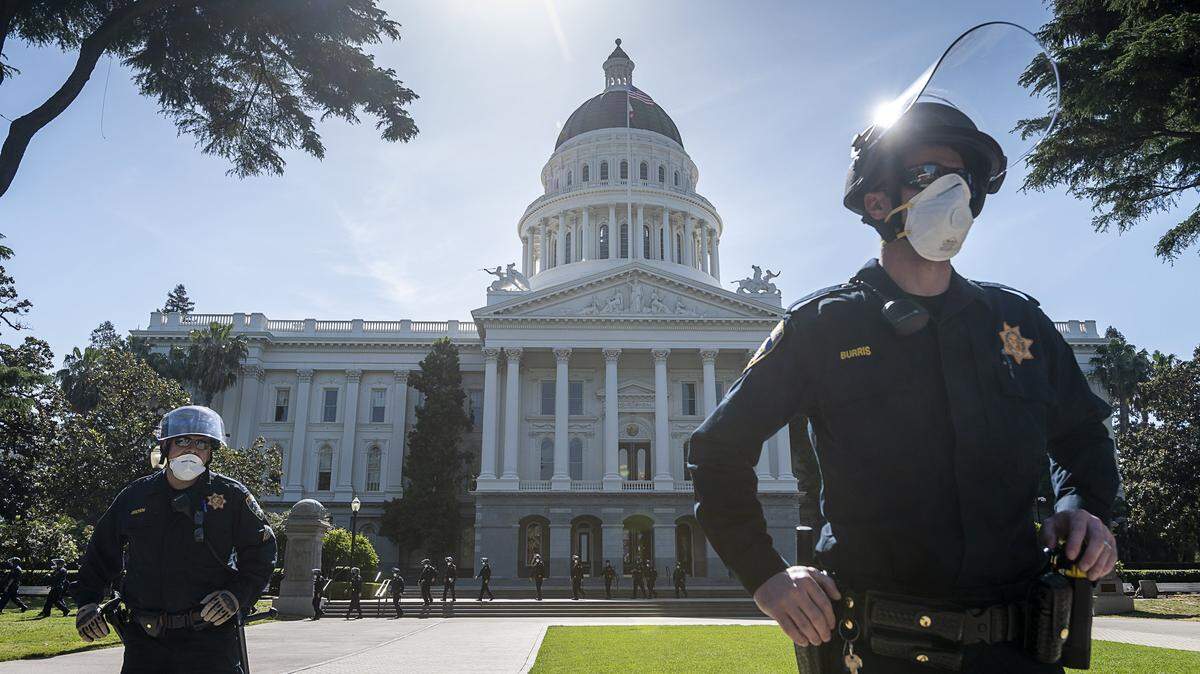
The California Legislature has seven weeks to process 700 bills. But with COVID-19 cases rising in the Capitol, it’s unclear when lawmakers will return to the chambers.
Both houses were supposed to resume legislative hearings on Monday, beginning the last leg of the legislative calendar that ends August 31.
But the Assembly is now “closed until further notice” following six confirmed COVID-19 cases among lawmakers and employees, said John Casey, a spokesman to Assembly Speaker Anthony Rendon.
It’s unclear if the Senate will reconvene next week as scheduled, according to a memo sent to its staff on Monday.
“In light of the increase in COVID-19 cases within the Capitol community, and the Assembly’s announced postponement of their return to session, the Senate must now adjust our committee schedule to account for this change,” Secretary of the Senate Erika Contreras wrote in the memo. “We are in communication with Assembly leadership, and as soon as we are able, we will provide a revised schedule.”
Uncertainty about when — or if — the Legislature will return to in-person sessions presents challenges for a lawmaking process that runs on a tight deadline. The Senate has to process 500 Assembly bills in the next month and a half; the Assembly, 200 bills from the Senate.
Rendon’s staff is currently developing a schedule that will allow lawmakers to “conduct our work but minimize the days in the Capitol building,” the speaker wrote in a July 6 email to members. It remains unclear when the Assembly will return, he said, adding that the building will undergo deep cleaning this week.
The break is the second extended recess for California lawmakers this session. They previously recessed from March 20 until May 4 because of the coronavirus outbreak.
The decision to again delay the session has sparked criticism from some lawmakers, who have advocated for further precautions that allow legislative business to continue.
“Shutting down the legislative work for the people of CA is not the solution,” Assembly GOP Leader Marie Waldron, R-Escondido, wrote on Twitter. “Protocols and safety measures (including technology) can be added to ensure better safety but not allowing the legislative business to go on is basically handing more power to the Governor.”
Remote voting could help, but the houses have split over whether California’s constitution permits the practice.
The Senate in March passed an emergency resolution that allows members to participate in committee meetings even if they can’t be present in the Capitol. Senate President Pro Tem Toni Atkins, D-San Diego said in a May 6 press release that remote participation does not include remote voting but that remote voting “remains a viable option for the Senate.”
The Assembly, however, concluded that remote voting could be unconstitutional. On June 10, it advanced a proposed constitutional amendment that would ask voters to allow remote and proxy voting in a state of emergency as declared by the governor or president.
But the Senate did not approve the measure, meaning that remote voting will not appear on the November ballot.
Assemblyman Kevin Kiley, R-Granite Bay, said the Legislature can still conduct a large share of its business using technology or implement tougher in-person restrictions, such as removing staff from the building altogether. A temporary closure for deep cleaning “makes sense,” he said, but an indefinite recess does not.
“The one thing that we cannot do is simply say, ‘Well, we’re just not gonna have a legislative branch this year,” Kiley said. “That is gonna be harmful to the state as a whole in a way that far surpasses the marginal risk that we as legislators are taking by being present in the building.”
Others have defended Rendon’s decision. Assemblywoman Lorena Gonzalez, D-San Diego on Twitter called Waldron’s remarks “alarmist” and praised Rendon for “taking every precaution so we can safely return and finish our legislative session.”
Those infected in the Assembly include Assemblywoman Autumn Burke, D-Inglewood, who tweeted on Monday that she tested positive for COVID-19 on July 4 after “mask to mask” exposure on June 26. That was the same day that an Assembly employee, who was wearing a face covering at all times, was last in the Capitol before testing positive, according to the Assembly Rules Committee.
Burke spokeswoman Tish Rylander told The Sacramento Bee that “mask to mask” exposure means “both (Burke) and the infected individual were wearing masks the day they interacted.”
Still, Rylander noted, there’s no way to trace transmission with absolute certainty — for example, it’s possible that Burke contracted COVID-19 after touching a contaminated surface.
Sources told The Sacramento Bee that a second legislator has also been infected.
This story was originally published July 7, 2020 at 4:50 PM.