
Californians back BLM + Latinos ‘struck’ from redistricting spots + Dems weigh in on initiatives
Greetings and happy Tuesday! As always, thank you for reading!
CALIFORNIANS SUPPORT BLM, WEARING MASKS
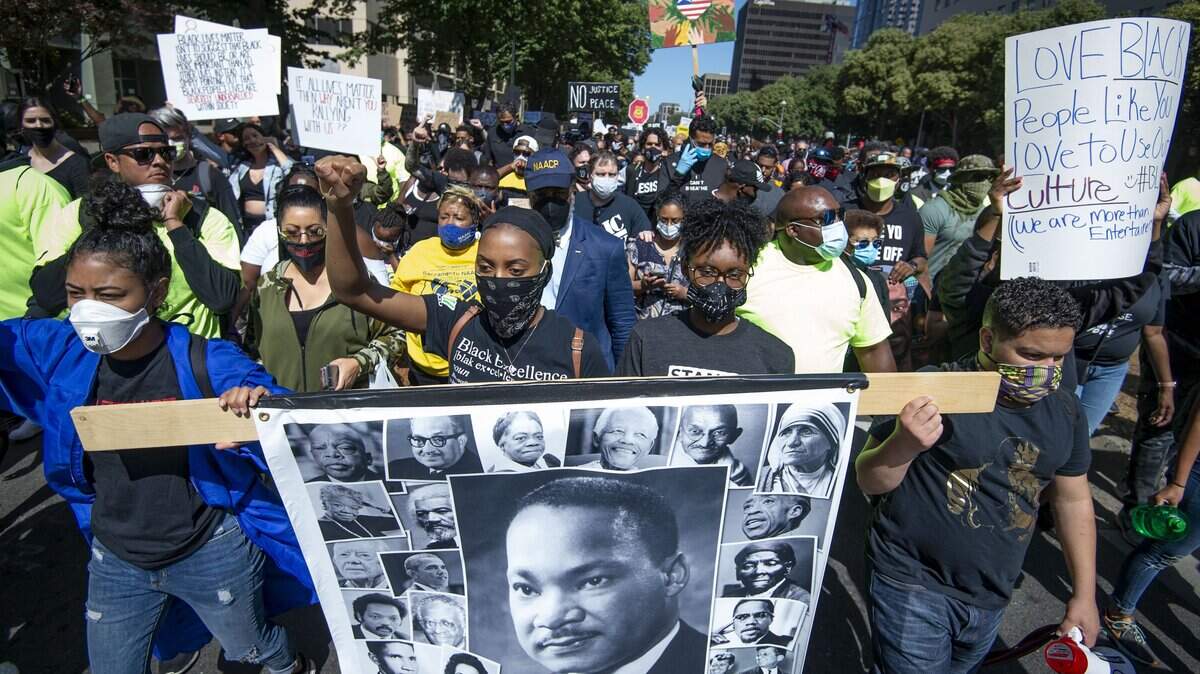
The Public Policy Institute of California will release its latest statewide survey results later this week, but in a preview post published Monday PPIC found that strong majorities of Californians support both the Black Lives Matter movement and the wearing of masks while in public to cut down on the spread of COVID-19.
According to the survey, 68 percent of Californians either somewhat support or strongly support the Black Lives Matter movement. Black (85 percent) and Latino (79 percent) Californians were more likely to support the movement than were Asian Americans (69 percent) or whites (58 percent).
On a related note, a majority of Californians (85 percent) said that racism is either somewhat of a problem or a big problem in the the United States.
When it comes to wearing a mask, Californians are decisively in favor: 74 percent of those surveyed said that people in their area should always wear a mask in public, while 77 percent said that they were worried at some level that either they or their family members would get sick with COVID-19.
You can read the preview yourself by visiting here.
WHO STRUCK LATINOS FROM REDISTRICTING CANDIDATE POOL?
Via Mackenzie Hawkins...
California’s independent redistricting commission — created by 2008 and 2010 ballot propositions with the goal of addressing gerrymandering — drew widespread criticism earlier this month when the randomized selection process did not choose a single Latino applicant despite Latinos comprising 40% of California’s population. Authors of a USC report on the results say that California’s legislative leaders are to blame.
The commission consists of fourteen members — five Democrats, five Republicans and four members with other party affiliations — who make it through a complex selection process that narrows a general applicant pool to 60 finalists chosen by a review panel. State legislative leaders then have the power to strike finalists from the group before the state auditor randomly selects eight members, who then choose the remaining six and are required to consider diversity imbalances in making their decisions.
With zero Latinos among the randomly selected group, it’s highly likely that some of the six remaining members will come from Latino communities.
The initial group includes three African-American members, two Asian-American members and two members who identify as LGBTQ+.
Across the board, traditionally underrepresented groups increased their share of applications and representation improved in every stage of the application process, the USC report found: Of the 60 finalists, 14 were Asian-American or Pacific Islander, 14 were Latino, nine were Black and three were Native American or another race.
But after legislative leaders made their strikes, there were only seven Latinos remaining. None were chosen.
Had leaders in Sacramento not cut so many Latinos, the report says, that outcome would have been “extremely unlikely.” The report’s authors, Rep. Alan Lowenthal, D-Long Beach and Common Cause National Redistricting Director Kathay Feng on Monday called for legislative leadership to reveal who was responsible for which cuts and proposed long-term reforms to the process.
“Right now, one of the things we can do is demand that the legislature reveal who made what strikes,” Feng said. “In the long term, I think we need to look at the very nature of including those strikes at that point.”
According to Feng, who helped author the bill-turned-ballot measure that created the commission ten years ago, legislative strikes were originally intended as an opportunity for leaders to conduct “opposition research.” Instead, leaders have used that power to strike qualified candidates, Feng said.
Besides eliminating legislative strikes altogether, panelists said on Monday, reforms could include reducing the number of members chosen through the initial process and engaging in more front-end outreach to ensure that more Latinos apply for the commission in the first place.
CDP WEIGHS IN ON BALLOT MEASURES
With the November election less than 100 days away, the California Democratic Party Executive Board has weighed in on the propositions set to appear on the general election ballot.
In a statement released over the weekend, the party announced its official support for most of the ballot measures. Of the 12 measures appearing on the ballot, the California Democratic Party is endorsing all but three of them.
Here’s a look at what the California Democrats aren’t endorsing:
- Proposition 20, a “tough on crime” ballot measure that would restrict parole for non-violent offenders and allow prosecutors to charge certain kinds of crimes, such as thefts of property valued between $250 and $950, as either misdemeanors or felonies at their discretion. The proposition also would require people convicted on certain misdemeanors to submit their DNA to the state database. The California Democratic Party is recommending a “No” vote on this proposition.
- Proposition 22, which would re-reclassify rideshare and delivery drivers as independent contractors, after AB 5 reclassified them as regular employees. Under Prop 22, rideshare drivers would not be entitled to certain state protections, such as minimum wage, overtime and workers’ compensation. Instead, rideshare companies like Uber and Lyft would be required to offer minimum compensation and health care subsidies to drivers based on engaged driving time, as well as vehicle insurance, safety training and sexual harassment policies. The California Democratic Party is recommending a “No” vote on this proposition.
- Proposition 24, which would further strengthen California’s consumer privacy laws by preventing businesses from retaining personal information “for longer than reasonably necessary,” according to the Attorney General’s Office summary of the measure. The proposition also would allow consumers to prevent businesses from sharing personal information and limit businesses’ use of “sensitive personal information” such as race, ethnicity, religion, genetic data or union membership. The California Democratic Party is neutral toward this proposition.
QUOTE OF THE DAY
“Today I stood on the CA Senate floor to adjourn in memory for @repjohnlewis - ‘A man who demonstrated on a daily basis that love will conquer all! John Lewis sat down so we could stand up & he stood up for us so we could enter places we couldn’t before!’ Rest in Power”
- Sen. Steven Bradford, D-Gardena, via Twitter.
Best of the Bee:
The California Highway Patrol on Monday arrested about a dozen protesters who chained themselves together in front of Gov. Gavin Newsom’s Fair Oaks home, imploring him to release prison inmates and halt inmate transfers from prisons to U.S. Immigration and Customs Enforcement custody, via Kim Bojórquez.
Gov. Gavin Newsom is sending three coronavirus strike teams and $52 million in federal money to California’s Central Valley as the region battles a spike in COVID-19 cases, via Sophia Bollag.
A surge of California public workers called CalPERS to check their retirement options as Gov. Gavin Newsom and the state Legislature talked about pay cuts last month, according to call data, via Wes Venteicher.