California’s food banks will get a shake-up on Jan. 1. Will it interrupt supply?
Come Jan. 1, many of California’s food banks will get food distributed from a new organization, which promises cost savings that could result in more supplies for the facilities, more frequent delivery and a “produce mobile” with fresh fruits and vegetables.
But Sacramento-based California Emergency Foodlink, the current entity in charge of distributing the food, is asking the federal government to stop the change. The state used a flawed and biased method to pick the new organization, a Foodlink representative said in his October letter to the federal government.
Some food banks, meanwhile, are anxious about the distribution system’s first major shake-up in years. While the head of the new organization assures the transition will be smooth, any disruption in the system could mean that people go without food in the middle of the coronavirus pandemic.
“It’s such a critical time in food access. Food security is a top priority for every community,” said Nicole McNeely, executive director for the Food Bank of Nevada County. “If anything, I’m concerned about it happening right now.”
A new organization
Every month or so, food banks across California get a shipment of surplus food from the federal government, under the Emergency Food Assistance Program.
Large food banks get the food directly. But smaller food banks from the Oregon border to the Central Coast can’t take in truckloads of food every month.
“We have four parking spots. How do you turn around a semi there?” McNeely said of her facility in Grass Valley.
So, for those food banks, the federal government ships supply first to Foodlink’s Sacramento warehouse, where the organization divides and repackages the supplies to deliver. Foodlink has been partnering with the state since 1984, the organization said in its letter to the federal government.
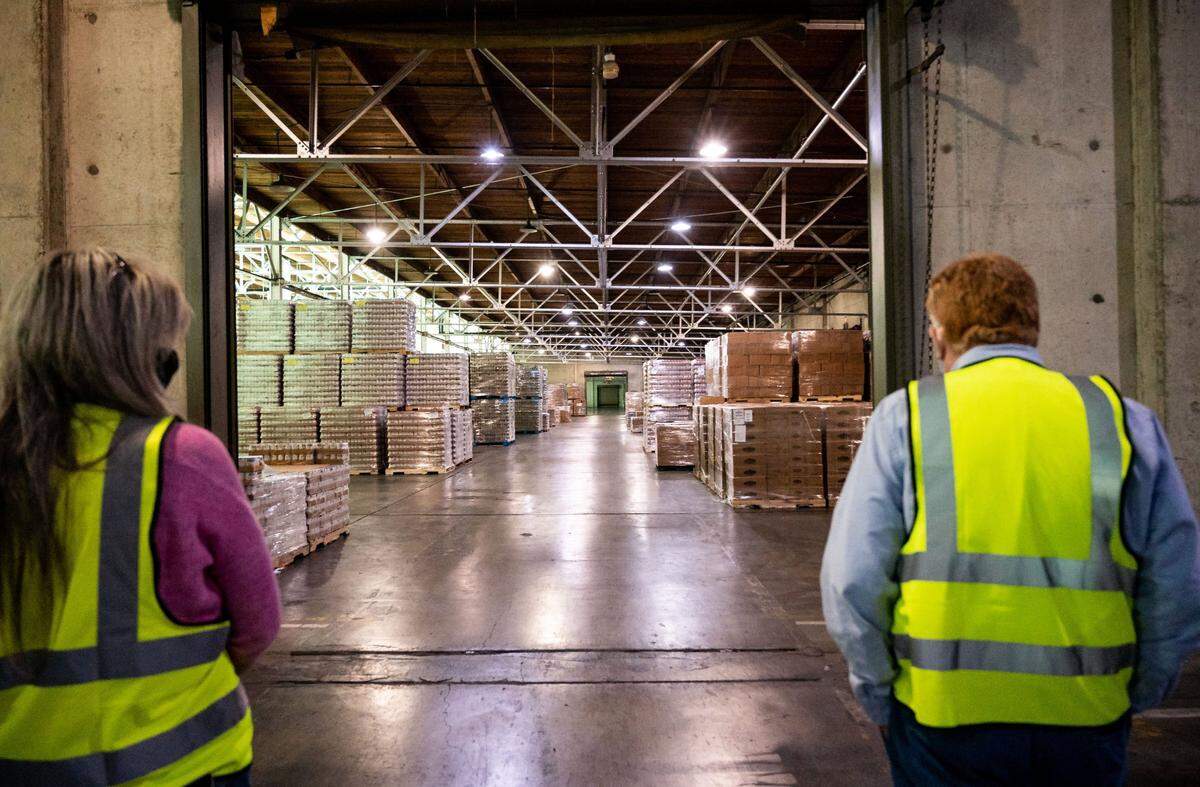
But on Jan. 1, Cal Foods Logistics will be the state’s new partner.
The nonprofit incorporated just a few months ago in May. CEO Steve Linkhart said he worked very closely with the state delivering emergency food boxes as part of a different program this year.
“I gave them a lot of confidence that I am really good at logistics,” said Linkhart, also the director of the California Association of Food Banks’ Farm to Family program. “It’s my background.”
Cal Foods Logistics has put together its staff for a warehouse based in Woodland. The nonprofit plans on using a third-party logistics company rather than having its own truck. That means only paying for a one-way trip, Linkhart said.
He said the nonprofit could save more by eventually moving its warehouse to Chico, which will be closer to more food banks that his organization will serve.
Scott Murray, spokesman for the Department of Social Services, said in an e-mail that the change will save $1 million in annual administrative costs.
The organization will have a “produce mobile,” loading a 24-foot refrigerated box truck with fresh fruits and vegetables. The truck will travel for tailgate distribution in Northern California communities in partnerships with the food banks in the area, Linkhart said. The nonprofit also plans to go to food banks every week or every other week, rather than once a month, he said.
The nonprofit is also hoping to partner with Sysco, which delivers food to restaurants. Since Sysco is used to delivering food in bad weather, the partnership means food banks can get their supplies even in inclement conditions, Linkhart said.
Flawed process?
Officials at Foodlink, however, say the state is making the switch suddenly. Foodlink was informed of the change just in late September, the organization’s leaders said.
“The abrupt, drastic, and ill-conceived changes to California’s plan will result in a logistical debacle in less than three months, starting on January 1, 2021, for which the CDSS is woefully unprepared,” said John Moffatt, who represents Foodlink, in his letter to the federal government, which has yet to respond. “It will jeopardize the most vulnerable Californians’ access to emergency food assistance in the middle of the winter, and during an unprecedented global health and economic crisis.”
The state would be walking away from investments it has made to Foodlink, and paying to move food from Sacramento to Woodland, said John Healey, Foodlink’s CEO and Board Chair.
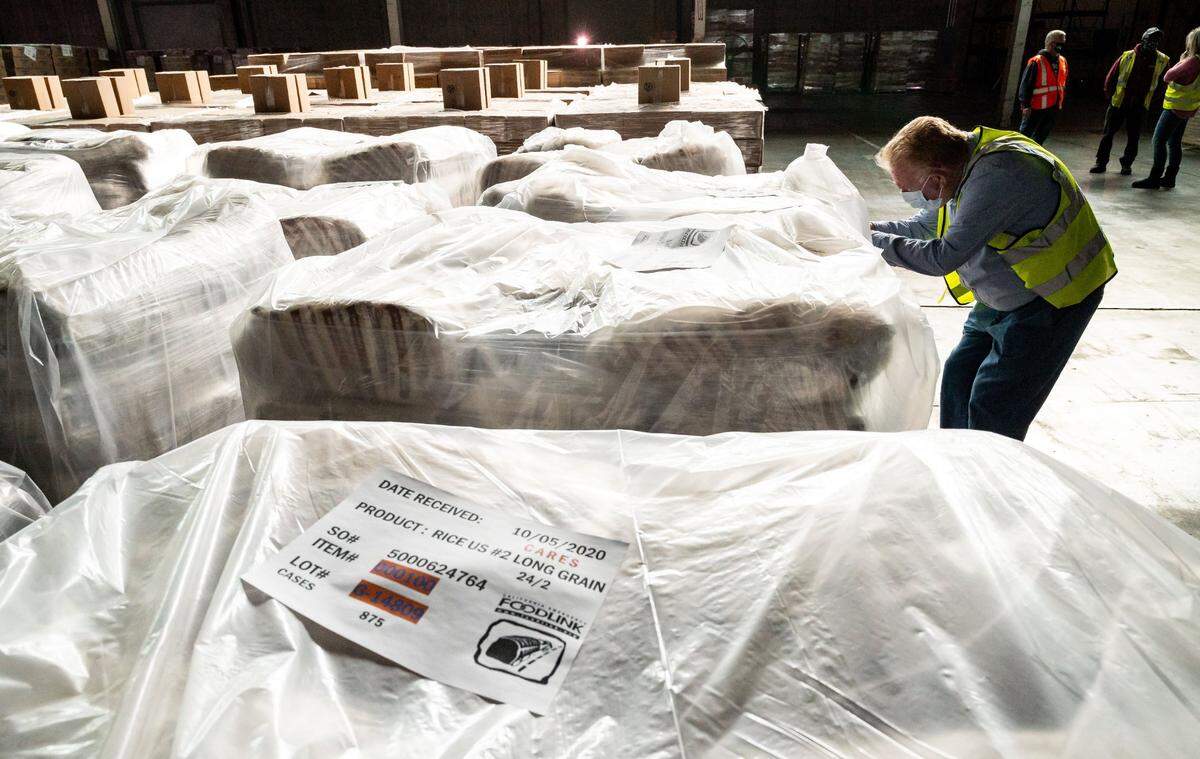
The organization also raised a slew of objections to how the state decided on its new partner. The state is relying on a study that didn’t consider the cost of providing service to food banks in the Central Valley or the Central Coast, nor the cost of leasing warehouse space as well as trucks and other equipment, Foodlink officials said in their letter to the federal government.
Healey, in a letter sent to CDSS on Oct. 28, said the $1 million a year in savings may be overestimated. The state asked Foodlink to overestimate its budget for the coming year, which it did by $1 million, Healey said.
“The flaws in the study just go on and on,” Healey said. “It’s a misuse of the state’s resource and funds.”
The possible relocation of the distribution hub to Chico could also mean the system may not be as protected against wildfires and power shutoffs, Moffatt said.
Healey noted Linkhart was in the Department of Social Services’ advisory group and its subcommittee tasked with advising the state on this issue. The state switched its partner without giving Foodlink an opportunity to make a competitive bid, he said.
Responding to Foodlink, Murray said the Woodland facility “is meeting all food bank and food supply needs.” Regardless of the location of the distribution hub, contingency plans are in place for emergencies, he said.
Murray also noted Foodlink has had its representatives in the advisory group.
Waiting for what’s to come
In parts of Lassen and Modoc counties, some food bank volunteers said they are receiving less supply. Foodlink stopped delivering to those counties because the state switched its partners for those counties in Oct. 1.
““It means instead of getting enough for four, five meals, they may have gotten enough for just one meal,” said Donna Hinkle, a volunteer distributing the food in Milford in Lassen County. “We’re just sitting and waiting.”
The state says no supply shortages for food exist there, with other places such as a local Salvation Army stepping in to help. The California Association of Food Banks is delivering emergency food boxes, which aim to feed three to four people for three to four days, to locations in Lassen and Modoc counties, the organization’s spokeswoman Lauren Lathan Reid said in an e-mail.
Still, some food banks are restless.
Shurla Lovejoy, manager of operations for the Dignity Health Connected Living’s food bank in Shasta County, said her facility is at the mercy of whoever delivers the food.
“With an untested company, I don’t know how this is going to work,” she said. “I don’t know anything about it. It’s brand spanking new.”
McNeely said her food bank has about two to three weeks of supplies, but not more than that. “We would be put into a position where we would have to be creative.”
“We can’t have service be interrupted,” said McNeely, whose food bank serves over 2,500 people every week. “It would be catastrophic.”
This story was originally published November 18, 2020 at 5:00 AM.