
Why the border problem could affect California more than any other state
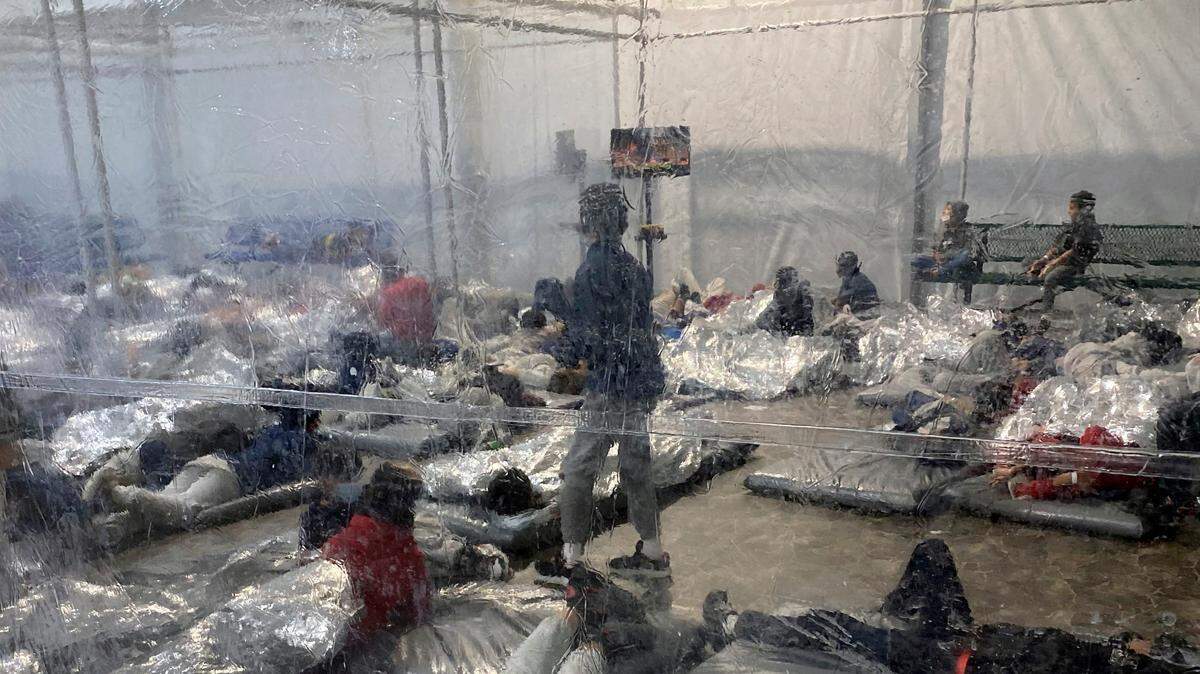
As an uptick of migrants, including unaccompanied children, arrive at the U.S.-Mexico border, the most immigrant-populated state in the nation is “likely to be affected more than other states by what’s going on at the border,” according to Kevin Johnson, dean of the UC Davis School of Law.
“Many want to come to California,” he said. “Many have family members here. So, we as a state are more impacted than some other states.”
As of March, according to The Associated Press, more than 15,000 migrant children remain in U.S. custody.
Here’s what you need to know about what’s going on at the border and how it’s impacting the state.
What’s happening at the border?
Many migrants, including children, are seeking asylum to escape gang violence and domestic violence in their communities, according to Johnson. Other factors include seeking relief from two hurricanes that occurred in November 2020 that left hundreds of thousands of Central Americans without resources or shelter.
But recent reports highlight that immigration officials were not prepared to process the latest surge of migrants at the U.S. border amid the coronavirus pandemic. During an ABC News interview last week, Biden advised asylum seekers: “We’re in the process of getting set up ... don’t leave your town or city or community.”
On Monday, the White House deployed senior officials to Mexico to develop a plan to manage migration in the area and Guatemala to “address root causes of migration in the region.”
Is it a crisis?
Recently, House Minority Leader Kevin McCarthy, R-Calif., called the situation a “Biden border crisis.”
Jacqueline Martinez Garcel, CEO of the Latino Community Foundation, was adamant that the situation is not “a crisis at the border.”
“What we’re seeing are families that are seeking asylum in a country,” she said. “These are people that are fleeing horrific situations back home.”
Johnson said it’s common during this time of year to see a spike in asylum seekers traveling to the U.S.-Mexico border, because it’s not as dangerous or hot to go through the desert.
“Annually, you’ll start seeing increases around this time, for a while,” he said.
That, joined with the COVID-19 crisis, natural disasters and turmoil in Central America and a backlog of migrants waiting to enter the country prior to the Biden administration, has caused what’s expected to become the largest surge of migrants coming to the U.S. in the last 20 years, said Department of Homeland Security Secretary Alejandro Mayorkas in a statement last week.
Who are the unaccompanied minors?
Migrant children under the age of 18 who are not accompanied by a parent or legal guardian upon arrival to the U.S. are considered unaccompanied minors. Mayorkas said border patrol officials have encountered unaccompanied minors as young as six or seven.
Many children are coming from countries like Guatemala, El Salvador and Honduras, according to Johnson.
“It’s a sad, sad set of choices some parents are making and some children are making that it’s less dangerous to risk your life trying to come to the United States than it is to stay home,” he said. “It’s not a Democrat or Republican issue. It’s been an issue for Democrat and Republican administrations.”
After the children enter the U.S., according to Mayorkas, they are brought to a Border Patrol facility and are required to be transferred to the U.S. Department of Health and Human Services within 72 hours of apprehension. But Mayorkas said that time frame is not always met.
“HHS has not had the capacity to intake the number of unaccompanied children we have been encountering,” he said, adding that the Federal Emergency Management Agency is assisting with capacity issues.
How does this affect California?
In February, the state committed to spending $28 million to provide aid and hotel rooms to quarantine asylum seekers entering the U.S. through the San Ysidro Port of Entry in San Diego while they await their court trials, according to the California Department of Finance.
It’s possible that California will support the federal government efforts, perhaps by responding to requests to help with detention, Johnson said. “But that’s something for the federal government and state governments to work out,” he said.
San Diego Mayor Todd Gloria and San Diego County Board of Supervisors Chair Nathan Fletcher on Monday announced the San Diego Convention Center would be used to shelter unaccompanied migrant children. The temporary shelter is expected to be used for three months and will be operated and funded by the U.S. Department of Health and Human Services.
“I’m really proud of the fact that the County of San Diego is working with our Secretary of HHS Xavier Becerra to ensure these kids have a safe landing spot before they go to a family or a sponsor in the United States,” said Assemblywoman Lorena Gonzalez, D-San Diego, adding that some of the children are coming from facilities in Texas and Arizona.
Brian Ferguson, a spokesperson for the California Governor’s Office of Emergency Services, said the state is in contact with the federal government and working with local nonprofits to support their efforts.
“We are in regular communication with the federal government who lead all immigration operations on the southwest border including the processing, sheltering and release to family or sponsors for unaccompanied minors,” he told The Sacramento Bee in an email. “Additionally, California continues to work closely with our local communities and non-profit partners to find ways to support these federally led efforts.”
This story was originally published March 24, 2021 at 5:00 AM.