
California reparations task force begins review of racist policies, how to make amends
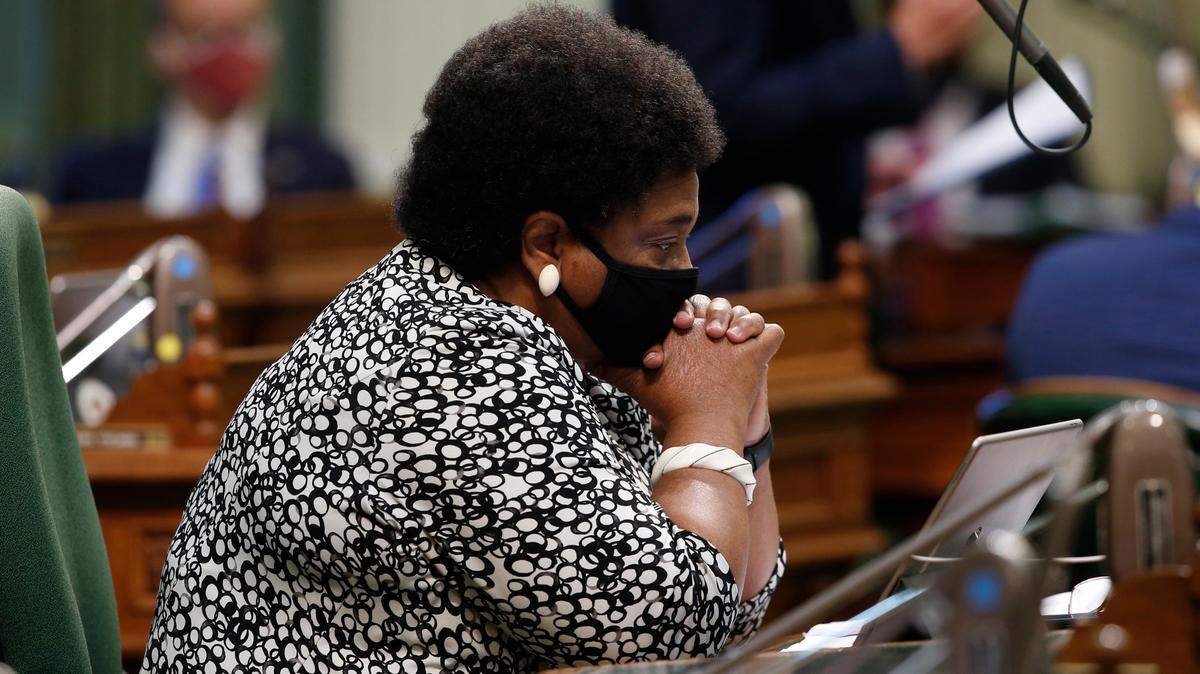
A California task force charged with studying the generational effects of slavery and historically racist policies convened for the first time on Tuesday, beginning a state-backed dialogue on reparations for Black Californians.
The nine task force members, appointed by Gov. Gavin Newsom and legislative leaders, are expected to spend the next two years collecting data on the long-term effects of slavery and laws that led to sharecropping, education inequalities, criminal justice discrepancies, eminent domain and housing segregation.
The task force, created by a 2020 law written by Secretary of State Shirley Weber, will then publish reports that include its findings and recommendations.
California entered the union in 1850 as a free state, but there’s historical evidence of enslavement within its borders, such as Black slaves working in Gold Rush mines.
At the start of the task force meeting, Weber urged the members to determine not just if there was harm against Black Californians, but to measure the depth of the damage and the compensatory requirements of certain missteps.
“What does it feel like to live in a country that never says, ‘I’m sorry,’? What does it feel like to be in a country where you are continually abused, misused, ignored, and no one ever stops and says, ‘Gee, we were wrong?’” Weber said. “What does it feel like for folks not to try to repair the damage done to you? How does it feel to live in a place where you feel you may never actually get your justice, your due, your support, your respect?”
Members of the task force include civil rights activists and attorneys, religious leaders, academics and state and local elected officials. Attorney Kamilah V. Moore was voted in as chair of the task force, and San Francisco NAACP President Dr. Amos Brown will serve as vice-chair.
The California Department of Justice’s recently formed Racial Justice Bureau will provide the task force with technical and legal assistance.
Attorney General Rob Bonta called slavery “this country’s original sin,” and encouraged members to identify and help dismantle state policies that pushed Black residents out of the housing market and allowed for the destruction of middle-class neighborhoods in communities of color.
“You are charged with helping California acknowledge that,” Bonta said. “This task force is the first step, but a step we should all be proud of.”
The members pointed to a spectrum of historical and current policies like redlining, the construction of highways through Black neighborhoods and decades of police brutality that they said rendered a need for the task force.
But comments made in an online discussion during the first meeting revealed how complex a topic like reparations and who’s qualified to receive them can become. Several chat participants demanded any redress to include direct cash payments that are limited only to descendants of slaves.
“CASH PAYMENTS, policies, protections,” one user wrote. “Specifically for descendants of U.S. slavery. Let’s make it simple. We don’t need a bunch of speeches.”
The law establishing the task force does not dictate what reparations should look like. Past compensation programs in the United States included limited payments to sterilization victims who were part of eugenics programs, Native Americans who had their land taken, Chicago police torture victims and Japanese internment camp survivors.
“These are complicated things,” said task force member and UC Berkeley professor of geography Jovan Scott Lewis. “And to count them as forms of repair, reparations, we have to make sure we are all speaking the same language on what they are.”
This story was originally published June 2, 2021 at 5:00 AM.