
5 dead children led to California’s assault weapons ban. Survivors are fighting to keep it
The building hasn’t changed much since Thao Ha, now 41, was a student.
The front has a new black metal fence and a modern cement walkway, but the same stone sign reading “Cleveland School” still stands as it did in 1989.
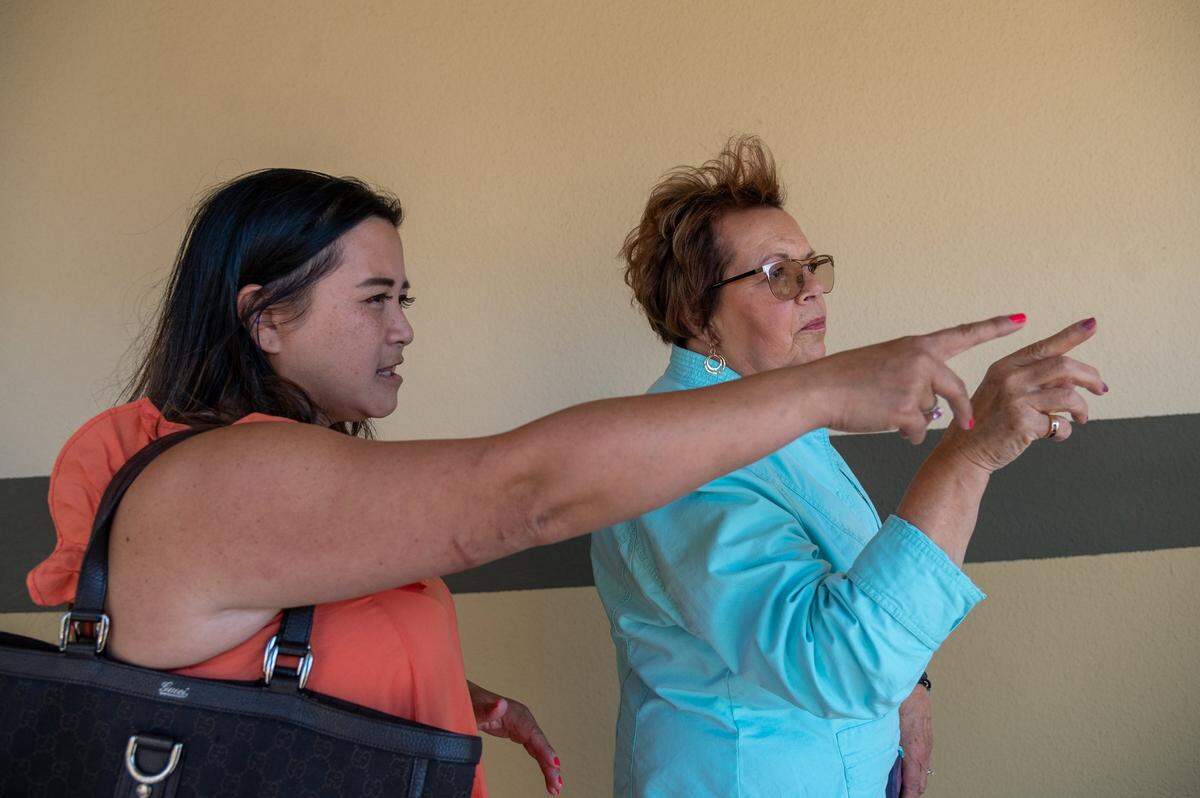
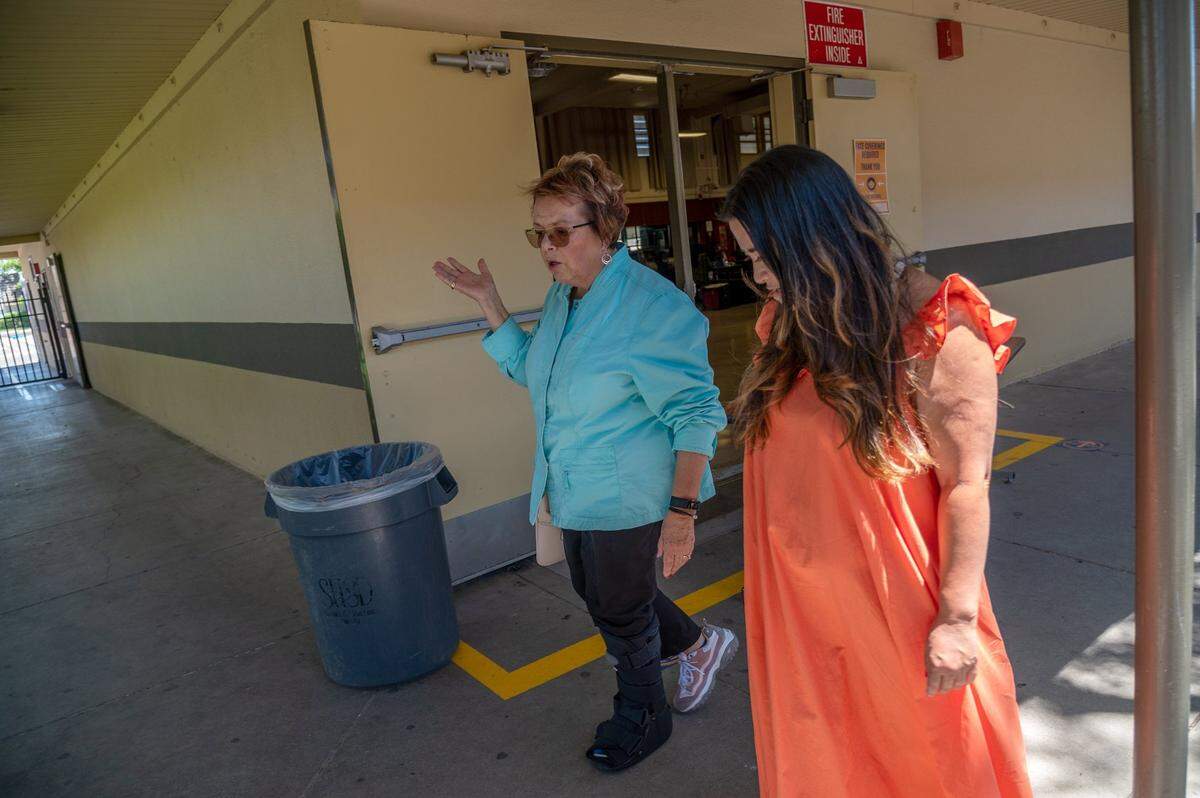
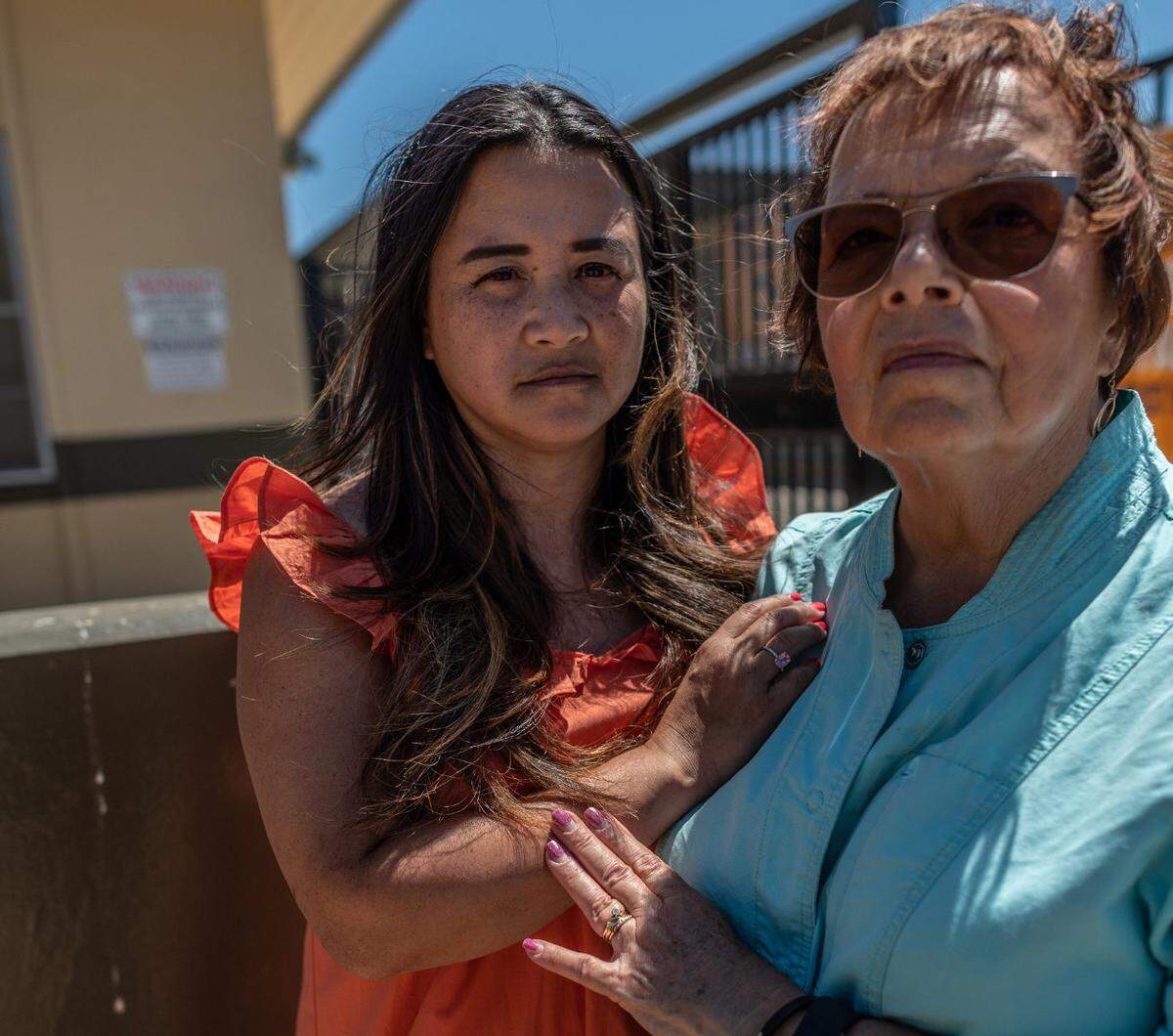
Judy Weldon taught at the school through 2012. She recently visited it with Ha, taking her hand as they toured. They pointed out the multipurpose room, where teachers gathered the students to wait for parents.
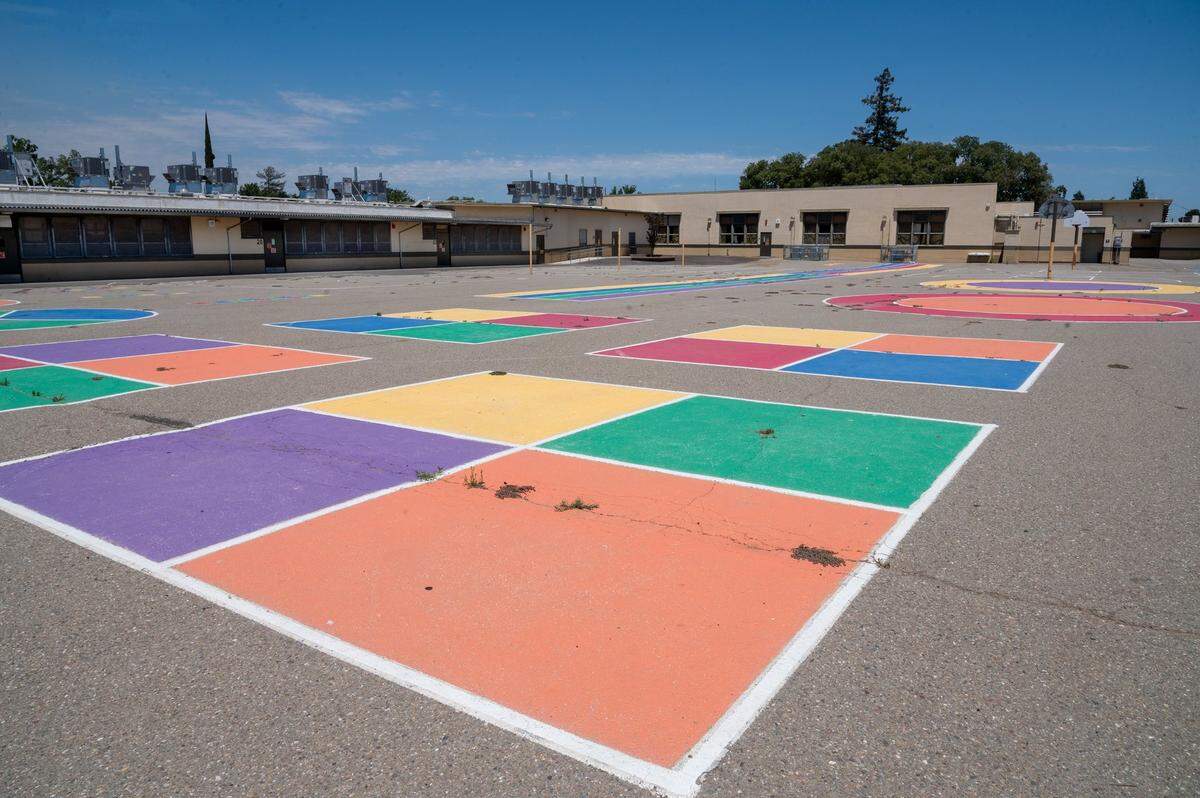
In the back is the wide-open slab of concrete, with the same tetherball poles and basketball hoops Ha and her sisters played with as kids. It’s empty today, but on Jan. 17, 1989, more than 400 students filled the schoolyard.
More than 32 years ago, Ha stood at the window of her third-grade classroom as a 9-year-old, watching 24-year-old Patrick Purdy walk onto the yard with an AK-47 and open fire on her classmates.
Five students, ages 6 to 9, were killed that day. Thirty-one more, including a teacher, were injured. Countless others, like Ha, bear invisible scars.
“I think no matter how much you move forward and grow … there’s always going to be that dark day,” she said.
The deaths were the most at any elementary school in the U.S. to that point. The tragedy prompted the California Legislature to pass the nation’s first assault weapons ban, an effort to keep something of that magnitude from happening again.
Five years later, the federal government would, temporarily, instate a similar ban. Seven other states eventually followed California’s lead.
Now, a decision by a federal judge in San Diego threatens to undo the landmark law California passed in response to the deaths of young Rathanar Or, Ram Chun, Sokhim An, Oeun Lim and Thuy Tran.
For those who saw what happened on the cold Tuesday morning in 1989, it was one more reminder of gun brutality that never seems to end.
Ha sat on the edge of the grass field where she played soccer and picked fruit with her cousins.
“You have this guilt, when you think about the kids that couldn’t come home,” she said. “Especially if you see more violence … you watch the news and see all the mass shootings, all the gun violence, and you just feel so sad. Because you’re like, ‘Why does that happen even more? Why does it continue?’”
Did assault weapon ban work?
Experts will tell you that calling California’s gun law an “assault weapons ban” is something of a misnomer. The reality is, there’s not a clear definition of what makes something an assault weapon.
The law, the Roberti-Roos Assault Weapons Control Act of 1989, prohibited the sale, manufacture, possession and importation of more than 50 types of semiautomatic rifles, shotguns and pistols, including the Uzi, AK-47, AR-15, MAC 10 and AR-70.
The law also allowed the California attorney general to ask a Superior Court judge to prohibit other guns that are facsimiles of the listed weapons, a tool meant to catch manufacturers who tried to dodge the law by making similar guns under a different name.
Garen Wintemute, director of the Violence Prevention Research Program at UC Davis, said assessing how effective the act has been is difficult.
During the last 25 years, Wintemute said California has reported a downward trend in firearm violence compared to Oregon and Washington, two states that don’t prohibit assault weapons.
Whether the Roberti-Roos legislation deserves any credit for the downtrend is unclear, however.
California has also implemented laws regulating gun sales, imposing comprehensive background checks and preventing sales of guns to those with misdemeanor violence. In 2000, the state also banned large-capacity magazines (those holding more than 10 rounds) which researchers say is helpful in reducing fatalities.
Still, California has experienced mass shootings with assault weapons since they were outlawed in 1989.
“I think the implications are that, as a group, the laws are probably working,” Wintemute said. “And if we overturn them, they’ll stop working, and we will suffer the consequences.”
The June decision by Judge Roger Benitez of the U.S. District Court for the Southern District of California outraged gun control advocates.
Benitez, an appointee of former President George W. Bush, argued that the state’s current restriction on assault weapons unfairly limited state residents’ ability to exercise their Second Amendment rights.
He likened the semiautomatic AR-15 rifle to a Swiss Army knife, calling it “good for both home and battle.”
The group that filed the lawsuit back in 2019, the Firearms Policy Coalition, argues that the law prohibits weapons that are constitutionally protected, no more lethal than some other weapons, and commonly used for lawful purposes in the vast majority of the United States.
FPC attorney George Lee, in a statement, called Benitez’s decision a watershed moment for civil rights that will “restore liberty to countless Californians that have been subjected to gross tyranny for years.”
Craig DeLuz is a gun rights activist and publisher of 2A News. He said the California law is arbitrary and too broadly applied. Those who pass gun control laws often don’t understand the nuances of the firearms they’re restricting, he said, which leads to an unfair burden on constitutional rights.
“Firearm technology has not significantly changed or increased or improved over the last few years,” DeLuz said. “It’s been people. So what we’re dealing with is a violence issue, not a gun violence issue.”
California Democrats have appealed the ruling to a higher court, which granted a stay on Benitez’s decision to allow appellate proceedings to continue.
“This ban was enacted after a shooting that took the lives of five schoolchildren and injured countless more,” Gov. Gavin Newsom said in response to the opinion. “My administration will do whatever it takes to continue protecting Californians and leading the nation in gun safety laws. This is a fight California will never back down from, period.”
Guns are more popular than ever in California. In 2020, purchasing surged, likely due to anxiety heightened by the pandemic, racial injustice and the election, Wintemute said. The California Department of Justice recently reported handgun sales in 2020 grew a record 65.5%, and long gun sales increased 45.9%, a spike second only to 2016.
Homicides went up 31% in 2020, according to the state.
The National Rifle Association, which has long criticized California for laws it says burden law-abiding gun owners, praised Benitez’s decision. Attorneys general from 22 Republican states filed a court brief supporting the judge’s decision to strike down the law.
Weldon, the school teacher who witnessed students run from a spray of bullets in 1989, was shocked by the judge’s views.
“His words must be devastating to survivors,” she said of Benitez’s ruling. “It’s grossly irresponsible. It’s an egregious ruling. It’s just not appropriate.”
California’s gun history
California has a long history of restricting access to firearms, and the effort to take assault weapons off the streets was underway long before the Stockton shooting.
Former Assembly Speaker Mike Roos, who now resides in the Palm Springs area, remembered he had a tough time convincing his colleagues.
In 1987, then-Assemblyman Arthur Agnos proposed an assault weapons ban, but failed to rally the votes. Roos, trying to be clever, proposed an amendment to create a holding period for assault weapons, similar to the protocol for purchasing handguns at the time.
“To use an old saw: I got my ass kicked,” Roos said.
After the end of the 1988 session, Roos and Senate President pro Tempore David Roberti began meeting with chiefs of police, who warned them that assault-style weapons were becoming a problem on California streets. As the session opened in 1989, Roos and Roberti had an assault weapons bill ready to go. Still, lawmakers were wary.
Then they received the news of the Stockton shooting.
Around lunchtime on Tuesday, Jan. 17, 1989, Purdy pulled his Chevrolet station wagon into a parking lot behind the Cleveland School, set fire to it with a Molotov cocktail, and walked onto the playground with an AK-47 he had purchased the previous August.
He fired more than 100 rounds in three minutes before taking his own life.
“It was truly an ‘Oh my God’ moment,’” Roos said. “Here we had this legislation, and here is one of the top weapons that we had in mind, the AK-47, which was used in that killing.”
The tragedy shook Californians, including lawmakers. But gun laws were still contentious issues. Those who showed support for preventing possession or sale of assault weapons were bombarded with complaints.
“I was getting, God knows, 50 to 60 letters a day, a couple of death threats,” Roos said. “You had an all hands on deck by the NRA. It was a hornet’s nest that had been unleashed.”
One of the holdouts was Republican Assemblyman Chuck Quackenbush. Roos tried setting up op-eds in newspapers in Quackenbush’s district to publicly shame him into a ‘yes’ vote. He did not budge.
In a last-ditch effort, Roos spent $10,000 to call all the homes within a 10-block radius of Quackenbush’s house in San Jose. Constituents were encouraged to call the assemblyman’s Sacramento office, district office, or, if that didn’t work, his home telephone number.
The calls went out on a Friday. On Monday morning, when Roos walked into Quackenbush’s Capitol office, the Republican lawmaker had a smile on his face and was waving a white handkerchief.
“His staff later said that from Friday night on, he didn’t go in either of those three places without the phone ringing off the hook,” Roos said.
The bill passed on May 19, 1989. The Los Angeles Times reported supporters broke out in “jubilant” applause. Days later, Republican Gov. George Deukmejian signed it into law.
“Citing the Jan. 17 slayings of ‘five beautiful young children’ in a Stockton elementary school … Deukmejian expressed hope that the Roberti-Roos legislation and the other bills he wants will help ‘save innocent lives,” the Los Angeles Times wrote that day.
Stockton shooting survivors
Weldon can’t forget the gruesome aftermath of the shooting.
In addition to the five who died, 30 children were injured by bullets that day. After the building had been cleared out, blood still smeared the walls of the hallway where wounded students had scrambled inside. Custodians from other schools were called in to help clean. Outside, they spackled and painted the bullet holes in the side of the building.
Weldon sat in the teachers’ lounge well into the evening, unable to return home to her two daughters, who were in kindergarten and second grade at the time.
“That was my thought: I get to go home to them. Brush their hair and read them a story and put them to bed,” she said. “But all these parents whose children died will never do that. Never ever be able to do that again.”
Ha remembers going to bed with her parents that night, but she was unable to sleep. When she closed her eyes, she saw the shooter. When she opened them, she saw the windows of her house, reminding her of the windows in her classroom.
After that, her memory is blank. Ha can’t recall anything about the rest of third grade, or any of fourth. Only when she moved to a different school for fifth grade did her memory return.
Many of the children at Cleveland School were from Vietnamese and Cambodian refugee families. Students and school staff struggled to grieve together across the cultural divide.
Dozens of people have those stories, like Weldon and Ha, full of grief and futility. The students who fled from danger. The teachers who months later found bullets lodged in books. Crime scene techs who worked into the night, marking the spots the bullet casings landed on the playground.
Shelley Hudson was a 23-year-old crime scene technician in Stockton at the time. She had been doing the job for only a few months when she was called to Cleveland School. In addition to processing the crime scene, her job was to fingerprint the victims at the morgue the next morning.
Hudson, now 55 and working for the state, recalls it was one of the hardest things she’s ever done.
“I think if people had a clear picture of holding the hand of a deceased child in their hand, they would really see things differently,” she said.
Cleveland School remembers
Ha’s parents risked their lives to bring her to Stockton as they escaped war in Vietnam. She has since spent her life trying to do good.
She works for a security company that develops technology to protect people from fire, theft and even shooters. She spent the last two decades traveling around California for school and work and recently returned to Stockton. She is launching two businesses focused on community building.
Ha believes in gun control and responsible gun ownership. But she understands that certain things — such as a strong community, mental health support, social resources — can also make a difference.
“I always feel like, because this happened, everybody should just be kind to your neighbors,” she said. “Be kind to your family. Be kind to your community.”
The only teacher who was wounded, Janet Geng, founded the Children’s Museum of Stockton in 1994 as a tribute to the tragedy. The museum is now a space where kids can learn and play safely.
But few reminders of the shooting exist at the Cleveland School. No plaques or memorials adorn the building.
For many years following the Cleveland shooting, Weldon and others were not politically active. They had lives to live, she said. Children to raise.
The 2012 Sandy Hook massacre changed that, she said. After hearing news of the 20 schoolchildren shot in their classrooms in Newtown, Connecticut, Weldon and other retired teachers formed “Cleveland School Remembers,” which advocates for an end to gun violence. The group is a chapter of the national Brady Campaign to Prevent Gun Violence.
California has asserted itself as one of the strictest states for gun laws, but more needs to be done, Weldon said, including at the national level. She wants federal background checks, a national assault weapons prohibition and a crackdown on ghost guns.
When she sees mass shootings on television — the Pulse nightclub tragedy in Florida, the Las Vegas shooting, the recent shooting in San Jose, to rattle off a few — she mourns for the families of those who are killed.
But she also thinks of those who survived. She thinks of those who were wounded and lived. The ones who had to run from bullets.
“I want it to end,” Weldon said of gun violence. “I want it to change. It’s a passion. I love life, and I want children and adults to experience it as much as they can.”
This story was originally published July 11, 2021 at 5:00 AM.