
Get a vaccine at McDonald’s? How California is shifting outreach as Delta variant spreads
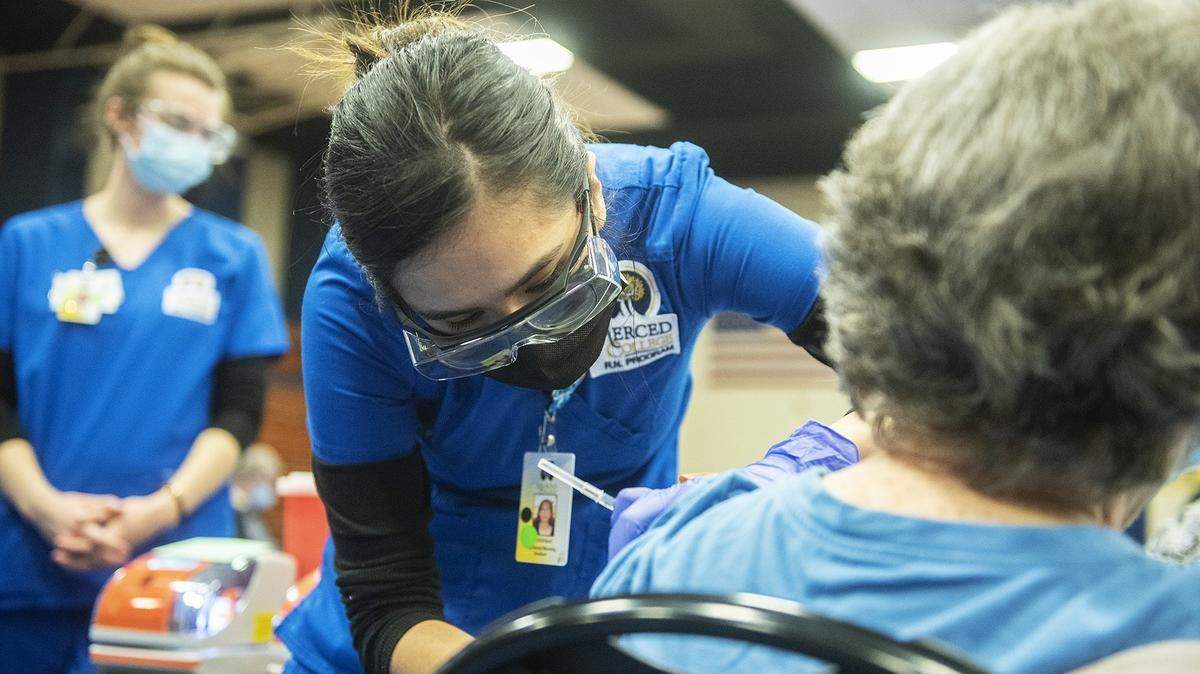
Right before a San Jose soccer tournament this month at PayPal Park Stadium, a pre-game event offered sports fanatics food, music, family activities — and COVID-19 vaccines.
The event, organized by the California Department of Public Health and Santa Clara County, is an example of the state’s target outreach efforts to convince unvaccinated Californians to roll up their sleeves.
Since the first round of COVID-19 doses began to be distributed to California’s medical professionals in December of last year, over 21 million residents have become fully vaccinated.
But the state still struggles to inoculate millions more as a more transmissible and deadlier COVID-19 variant spreads.
“We’re doing things that make (receiving) vaccines radically convenient for Californians – putting them where they are, whether it’s at their workspace, at their favorite restaurant or at an event that they’re interested in attending,” said Sami Gallegos, a spokeswoman for the California Department of Public Health’s COVID-19 task force.
Black and Latino vaccinations
Vaccination rates among Black and Latino Californians still lag behind other groups, state data show. Latinos, for example, account for about 40% of the state population, but represent 28.3% of those who have received their first dose of the vaccine.
Kiran Savage-Sangwan, executive director of the California Pan-Ethnic Health Network, said the Delta variant is spreading quickly among unvaccinated Californians, which includes low-income communities of color.
“It’s really scary,” she said. “We are seeing rising cases. We’re seeing more people being hospitalized.”
It’s why Savage-Sanwang is calling on state leaders to reconsider an indoor mask mandate to stem the variant’s spread.
Savage-Sanwang added that a lack of access to vaccines is still a main barrier for communities of color.
“We need to go door-to-door, answer people’s questions, provide opportunities for people to get vaccinated where they are,” she said.
Lourdes Baezconde-Garbanati, the associate dean for community initiatives at the Keck School of Medicine at the University of Southern California, said misinformation is rampant about COVID-19 vaccines.
She said some community members are still reluctant to take the vaccine because they believe it causes infertility or that it was developed too quickly. The Centers for Disease Control and Prevention has stated there is no evidence to suggest the COVID-19 vaccines cause infertility issues.
Baezconde-Garbanati said it’s critical for state officials to relay to the public that the benefits of receiving a dose outweigh potential, mild side effects associated with the vaccine.
“The Delta variant is really attacking those that are not vaccinated yet,” she said. “We have larger numbers of unvaccinated people in the African American and the Hispanic community.”
Baezconde-Garbanati said she fears increased hospitalization or death rates among communities of color, who have already borne the brunt of the pandemic, if they don’t get vaccinated.
“If we don’t get them vaccinated, it doesn’t look good,” she said.
Other reasons some Californians remain hesitant to get a dose include government mistrust, language barriers, immigration status or a lack of health insurance, according to Rachel Rios, executive director of La Familia Counseling Center in Sacramento.
California vaccination efforts
In California, a door-knocking campaign has already begun.
Multiple McDonald’s locations now will offer vaccines as part of a partnership with the state.
Gallegos said another aspect of the state’s strategy to increase vaccination rates among Californians is to provide funding to smaller doctors’ offices to distribute doses.
Under the program, CalVaxGrant, the state plans to provide grants of up to $55,000.
“COVID-19 is still a real threat for unvaccinated Californians,” Gallegos said. “The vaccines are our best tool at ending this pandemic.”
This story was originally published July 21, 2021 at 4:45 AM.