
Unemployment benefits end for millions. California leaders say state can’t extend them
The unemployment benefits that ended Saturday won’t be revived anytime soon in California.
In Sacramento, as in Washington, the message is the same: The economy is recovering, jobs are plentiful and lots of other help is available if needed.
“What we’ve seen is there just has been no conversation or political will to extend these benefits,” said Jenna Gerry, senior staff attorney at the National Employment Law Center, which follows unemployment issues.
Maintaining the benefits, which served an estimated 2.2 million people in California, would be okay with the Biden administration.
Treasury Secretary Janet Yellen and Labor Secretary Marty Walsh wrote a letter to key congressional leaders August 19 saying states could use some money from the federal pandemic relief to continue the benefits.
“There are some states where it may make sense for unemployed workers to continue receiving additional assistance for a longer period of time, allowing residents of those states more time to find a job in areas where unemployment remains high,” they said.
California’s July unemployment rate was 7.6%, which trailed only Nevada’s 7.7%. The national rate was 5.4%.
California received $27 billion in the latest round of federal pandemic relief. The funds have been allocated to a wide variety of uses, including education and training programs, help for small businesses, help for water systems, help for emergency responses to the COVID-19 crisis, legal aid to renters and homeowners facing eviction and financial aid to community college students.
“There are no remaining funds available from that federal appropriation to be allocated,” said H. D. Palmer, spokesman for the state’s Department of Finance.
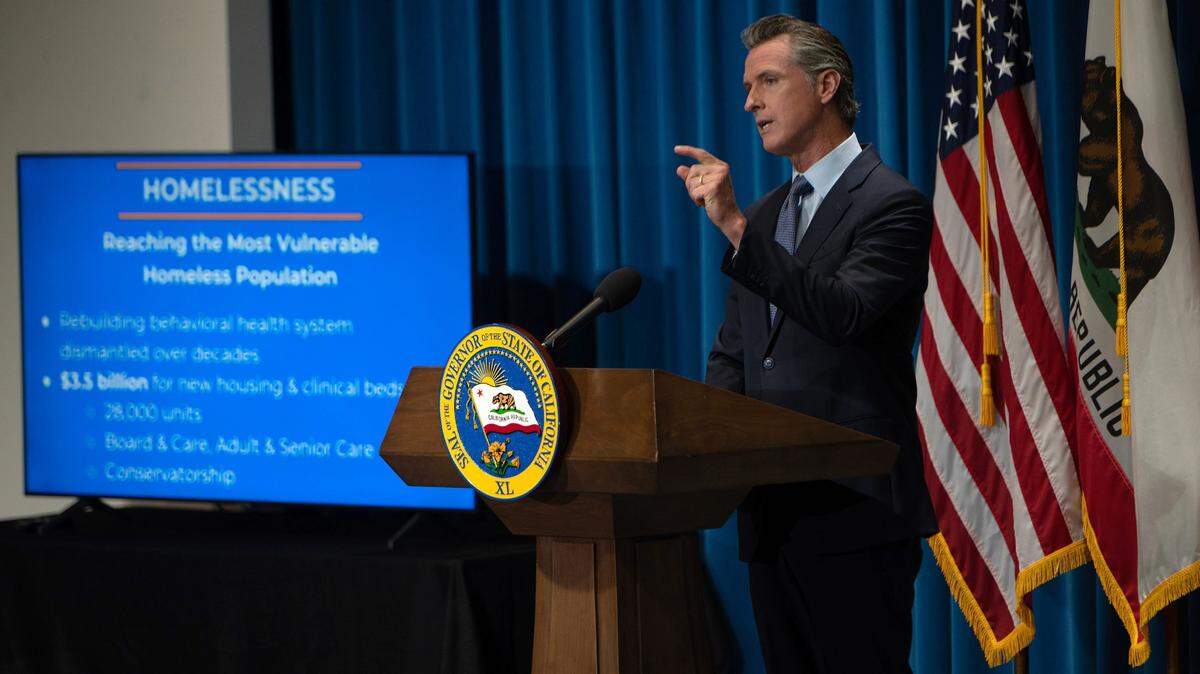
Earlier this summer, the Newsom administration touted the state’s unprecedented $80 billion budget surplus, which the governor and Democratic Legislature used in part to shore up the state’s social safety net.
State Assembly budget writers have said California does not have the resources to spend billions of dollars more each quarter to continue the expiring federal programs, which include Pandemic Unemployment Assistance, Pandemic Emergency Unemployment Compensation and the supplemental benefits.
No state money for California extension
Since the pandemic began in March 2020, the state and federal government paid out $169 billion to Californians, according to the Employment Development Department.
Pandemic Unemployment Assistance provided payments to people such as independent contractors and gig workers who traditionally did not qualify for regular unemployment insurance. Pandemic Emergency Unemployment Compensation provided extended benefits to those who have exhausted their regular benefits.
Also available since late December was an additional $300 per week for standard unemployment insurance, bringing the maximum state jobless benefit to $750 weekly. People who have earned both regular pay through an employer as well as a minimum of $5,000 in self-employment income could have received another $100 weekly.
“The state of California is unable to extend federal pandemic benefits, but state unemployment insurance, disability insurance and paid family leave programs will not be affected by the September deadline,” said Assemblywoman Wendy Carrillo, D-Los Angeles, budget administration subcommittee chair, in a statement.
She and others listed several safety net programs that remain available, such as CalWORKs, CalFresh, and Medi-Cal. A second round of state-funded stimulus checks of up to $1,100 checks are being sent to lower and middle income Californians.
No federal benefit money
Washington could extend the unemployment programs it created starting 18 months ago. But no one at the Capitol is seriously considering doing so.
At the Senate Health, Education, Labor and Pensions Committee, Chairman Patty Murray, D-Washington, said she would have preferred a more gradual wind down to the benefits.
But “the truth is we wouldn’t be able to renew these benefits in the short term without Republican cooperation, which they’ve made clear isn’t going to happen,” she said.
Many Republicans have long been wary of the programs, particularly the boost in payments. “For many people it was paying them more to work than they made working and it tragically contributed to unemployment across the country,” said Sen. Ted Cruz, R-Texas.
Overall, the sense is that the economy is recovering and Congress needs to turn its attention to strategies that help people return to work — better child care, help training for jobs, stronger health care coverage.
Andrew Stettner, senior fellow at the Century Foundation, has attended several Capitol Hill meetings on unemployment insurance. “There is a feeling that it took all the political attention and now Congress needs to work on other things,” he found.
When the Senate returns Sept. 13, it will begin considering a $3.5 trillion economic package that includes several safety net enhancements.
At the Senate Finance Committee, which considers unemployment legislation, Chairman Ron Wyden, D-Oregon, is urging a close look at the entire system, such as raising base benefits and tying them to economic conditions.
“If we finally bring unemployment insurance into the 21st century, there won’t be the same drastic need to temporarily patch the system in the midst of the next recession,” he said.
“In addition to delivering whatever relief we can as quickly as possible we need to ask why and fix those structural problems in our economy, whether it’s providing child care, or paid leave, or training via free community college — so we solve this problem for the long term and not just in the moment,” added Murray. “That’s exactly what I’m working on right now.”
This story was originally published September 7, 2021 at 5:00 AM.
.jpg)