
California EDD looks at ending facial recognition technology in unemployment verification
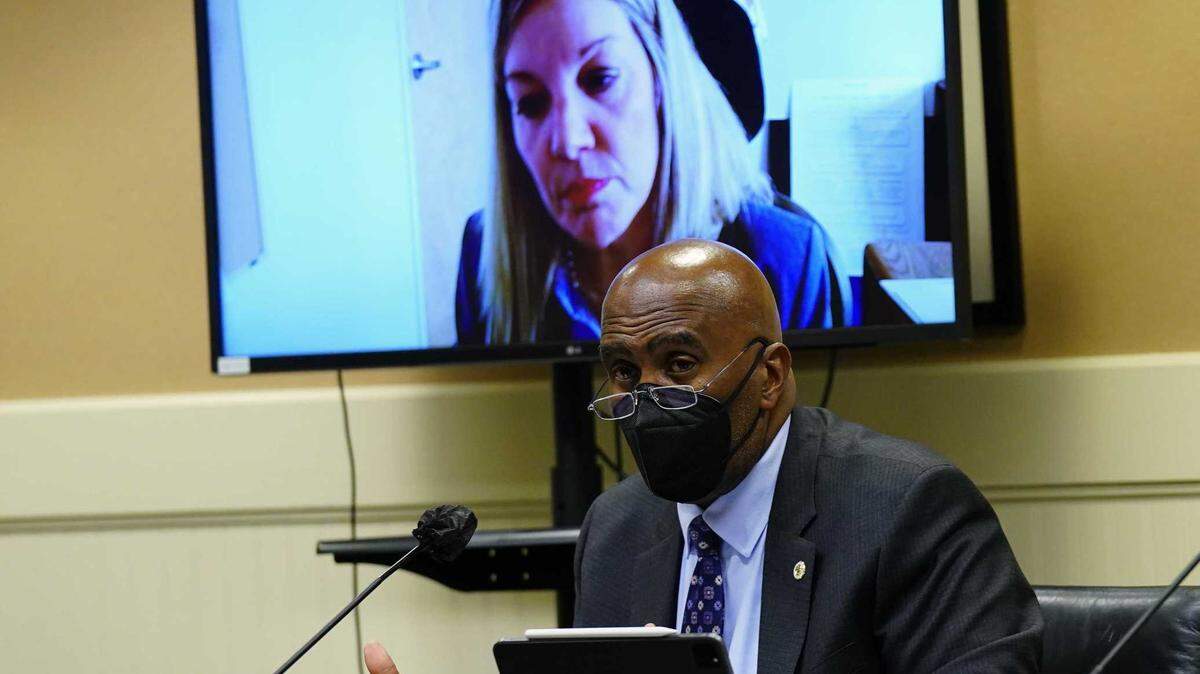
The state’s Employment Development Department is “certainly looking” at different ways to verify identities other than facial recognition, Director Nancy Farias told an Assembly subcommittee Tuesday.
EDD’s ID.me, regarded as highly effective in helping with the verification process as the agency was overwhelmed with unemployment claims, has come under scrutiny recently.
Part of the reason involves privacy concerns, but some lawmakers in Sacramento and Washington have questioned whether many without access to sophisticated technology could use the process–and thus found their benefits were delayed.
The state’s nonpartisan Legislative Analyst’s Office raised questions last week about ID.me. Its analysis “brings up serious questions regarding the application of AI (artificial intelligence) driven facial recognition, technology, its implications on privacy (and) its potential for harmful racial bias,” said Assemblywoman Wendy Carrillo, D-Los Angeles, who chairs the Budget subcommittee on state administration, which conducted Tuesday’s hearing.
She said the Legislature will “engage with EDD,” as well as the public and others involved in the process to “to determine the best approach to quickly and efficiently deliver critical benefits to Californians while safeguarding their fundamental right to privacy.”
After making that comment, she asked Farias if EDD plans to continue using facial recognition technology.
Farias, who became director earlier this month, suggested EDD could follow the lead of the Internal Revenue Service, which earlier this month said it was moving away from using facial recognition technology..
“We certainly are looking at different ways to use ID.me without facial recognition. We see no reason why we can’t follow what the federal government is now doing,” Farias said.
Carrillo emphasized concerns about people unable to easily access technology.
She recalled hearing throughout the COVID-19 pandemic about how people in some low-income communities did not receive government benefits on time because they did not have a smartphone or other access to technology.
“Being able to use an application on the phone is still incredibly difficult for many communities across the state,” Carrillo said.
In Washington, IRS said it was taking action because it understood privacy concerns. Several members of Congress have raised questions about facial recognition.
The day after the IRS announcement, Blake Hall, ID.me CEO and founder, said that after March 1, all ID.me users will be able to delete their selfie or photo at account.ID.me.
“In recent weeks, we have modified our process so government agencies can empower people to choose to verify their identity with an expert human agent without going through a selfie check. Agencies can now select this configuration,” he said.
As much as $20 billion was paid in fraudulent claims in California, most of it federal money through unemployment programs that ended last year.
Gov. Gavin Newsom lauded ID.me when the system was introduced in California. as an important way of detecting fraudulent claimants.
The legislative analyst said in its report that use of ID.me was warranted during the height of the COVID-19 pandemic in 2020 and 2021, “when the magnitude of the claims backlog called for prompt and decisive action.”
But with the federal program over, and the state unemployment system full of safeguards that have limited fraud, the analyst urged a fresh look at ID.me.
This story was originally published February 22, 2022 at 4:40 PM.
.jpg)