
California voters agreed to give prisoners shorter sentences. Did they mean violent ones, too?
California voters in 2016 wholeheartedly approved Proposition 57, a measure that promised to help prison overcrowding by letting nonviolent inmates seek parole sooner and shave down their sentences with credits for good behavior and rehabilitation programs.
At the time, the California District Attorneys Association warned it could cause trouble.
“The authors of Proposition 57 claim it only applies to nonviolent crimes ...” they wrote in the opposition ballot argument. But, they argued, it also would authorize “state government bureaucrats to reduce many sentences for ‘good behavior,’ even for inmates convicted of murder, rape, child molestation and human trafficking.”
Six years later, association representatives are comfortable saying, “I told you so.”
The measure has come under new scrutiny since The Sacramento Bee reported that Smiley Martin, one of the suspects in an April mass shooting in downtown Sacramento, received a combination of California Department of Corrections and Rehabilitation pre- and post-sentencing credits that allowed him to serve five years of a 10-year prison sentence.
Proposition 57 gave CDCR the power to increase the amount of credits all prisoners can earn, including violent offenders. The agency has done this for both violent and non-violent offenders since the measure passed, through policy updates in 2017 and 2021.
Under a controversial change CDCR began to implement in 2021, many inmates convicted of violent crimes could reduce their sentences by one-third. They could even cut their prison time by half by participating in firefighting camps.
Overall, Proposition 57 has helped decrease overcrowding in California’s prisons and has given inmates incentives to participate in rehabilitative programs.
But Greg Totten, who worked in opposition to Proposition 57 as Ventura County District Attorney, still feels justified in saying the analysis he and others did “has proven to be completely accurate now.”
“One of the things that it accomplished that it promised was to reduce prison population,” Totten said. “It did accomplish that, because it’s let incredible numbers of people who are exceedingly dangerous out in our communities to prey on those communities once again.
“And the promises that they made, that the proponents made, have largely proven to be untrue.”
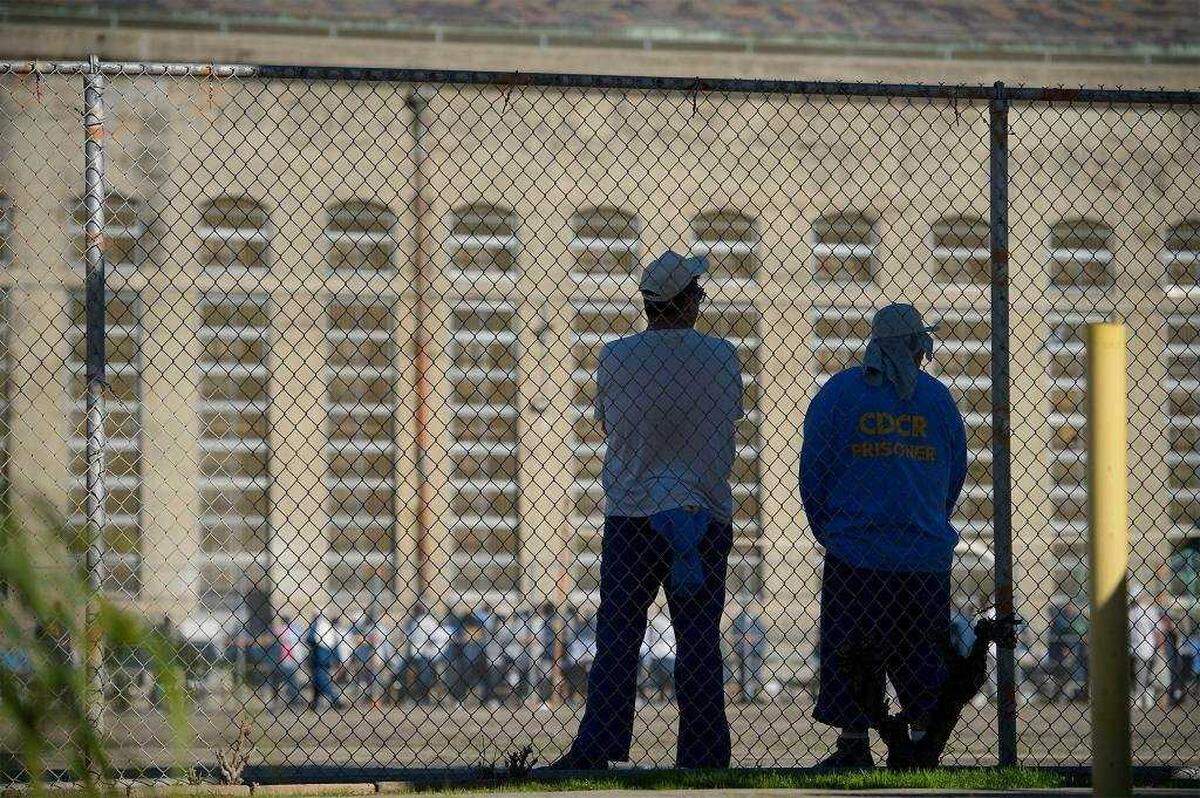
What does Proposition 57 do?
The Proposition 57 description voters saw when they opened their ballots said: “Allows parole consideration for nonviolent felons. Authorizes sentence credits for rehabilitation, good behavior, and education.”
By approving Proposition 57, voters agreed to allow early parole opportunities for certain inmates convicted of nonviolent crimes. The parole board isn’t required to let them out — it can just consider their cases sooner.
Some nonviolent offenders were already eligible for parole consideration after they’d served at least half their sentences. But Proposition 57 lets them come before the parole board after they’ve served the full prison term for their primary offense without enhancements.
Another, lesser-known, portion of the measure included language that gave CDCR the power to make changes to the credit-earning system. This affected inmates convicted of violent crimes, as well as those serving time for nonviolent ones.
It allows prisoners to shorten their sentences by participating in various CDCR programs, including drug rehabilitation, work and training courses.
Before Proposition 57, inmates could earn credits for similar reasons, although prisoners convicted of violent crimes could only cut their sentences down by 15%.
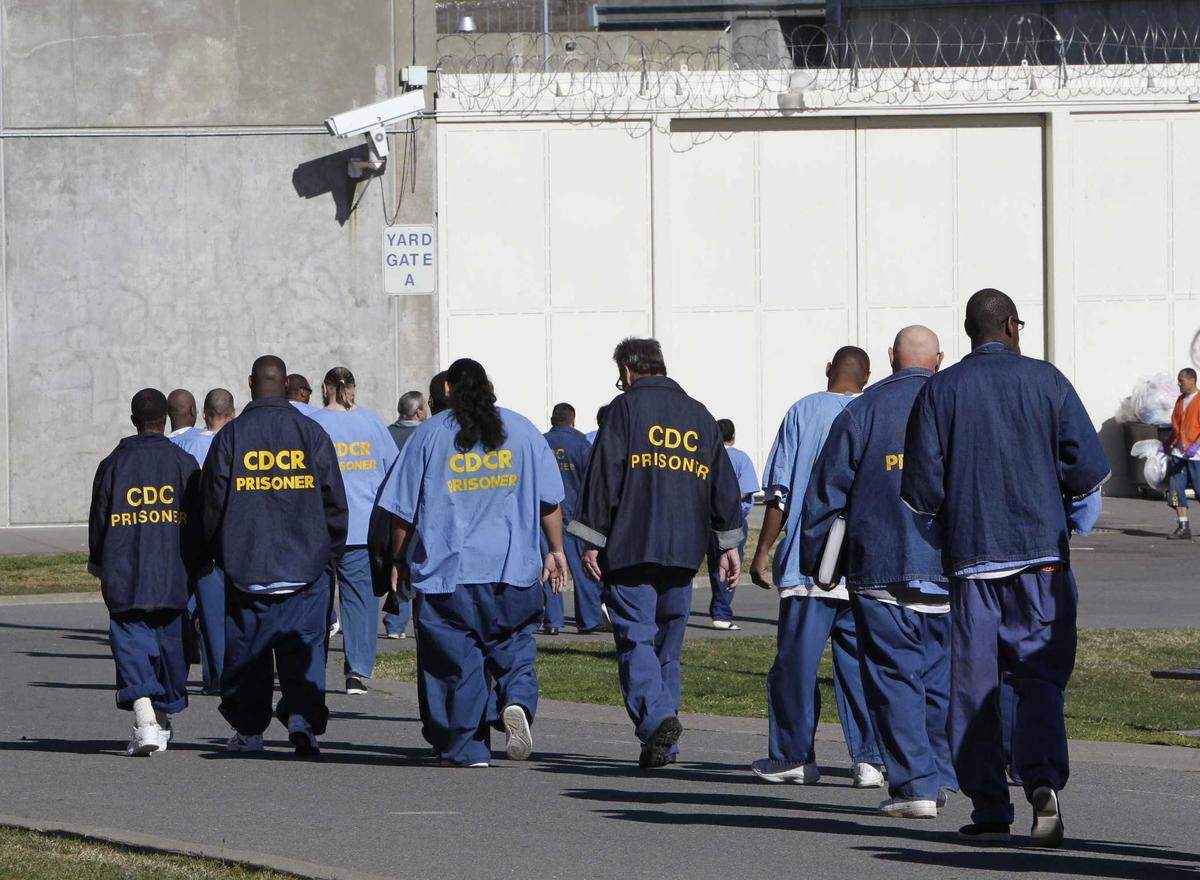
California and prison overcrowding
If you took a time machine back to 2016 — before the election of former President Donald Trump, before Gavin Newsom became governor — you’d find prison overcrowding was one of California’s biggest problems.
The state’s prison population ballooned in the 1980s and 1990s — it was seven times higher in 2006 than it was in 1980, according to the Public Policy Institute of California. A federal court in 2009 ordered California to reduce the number of inmates in its state facilities to 137.5% of design capacity.
The U.S. Supreme Court upheld this decision in 2011, saying the state’s prison overcrowding led to conditions that constituted cruel and unusual punishment.
These court cases prompted a series of policies to reduce the prison population. Assembly Bill 109, also known as prison realignment, shifted some prisoners convicted of crimes that weren’t serious, violent or sexual to county jails.
State voters also helped enact a series of changes.
Voters in 2012 approved Proposition 36, which allows inmates serving more prison time as a result of California’s “three strikes” law to get their sentences changed.
In 2014, Californians passed Proposition 47, which decreased penalties for low-level illegal substance and property crimes, such as drug possession and theft.
These changes caused the state’s prison population to dip, but slowly. By late January 2015, the state’s facilities were at 137.2% of capacity — down from 200.2% of capacity in November 2006, but just three-tenths of a percentage under the required number, The Bee reported.
Jerry Brown’s Proposition 57 pitch
Gov. Jerry Brown pitched Proposition 57 as a way to clean up the mess of prison overcrowding that he helped create in the 1970s, during his previous term in office.
A law he signed back then created determinate sentences, which gave inmates a specific date on which they’d get out. This was different from previous indeterminate sentences, which ended when a parole board said prisoners were ready to re-enter society.
Today, most inmates serve determinate sentences, although some still receive indeterminate sentences. For example, some inmates serve sentences with a certain minimum — like 25 years — to life. Others serve life sentences with the possibility of parole.
Since Brown first signed determinate sentencing into law, the state has continually added time for enhancements — like gun use or gang affiliation — or for previously committing serious crimes. Over decades, this led to California’s overcrowded prison crisis, as inmates served lengthier sentences with fewer opportunities to get out sooner.
“You have the discretion of the parole board now shifting to the prosecutor and the Legislature,” Brown told The Bee’s Editorial Board in 2016. “The Legislature is the new parole board, in effect. They write the laws.”
Brown wanted to give inmates the chance to earn their way out of prison earlier, thinking the hope of a shorter sentence would make them more likely to comply with CDCR rules and improve themselves through rehabilitative programs.
“Most of the people this initiative (addresses) will get out anyway,” Brown said. “I assert that if they earn their way out by positive behavioral change, by education, by drug treatment, mental health, cognitive therapy — all sorts of things we will develop — they’ll be better.”

Prop. 57 opposition says violent criminals will go free
Much of the campaign against Proposition 57 centered around the lines between violent and nonviolent crimes.
The measure didn’t define “nonviolent” crimes, and a Legislative Analyst’s Office report from 2016 “(assumed) a nonviolent felony offense would include any felony offense that is not specifically defined in statute as violent.”
Opponents like the District Attorneys Association seized on this to point out that some allegedly nonviolent criminals could get out of prison sooner under Proposition 57.
For example, the list of violent felonies under California law does not include domestic violence — the crime for which Martin received his sentence — or rape of an unconscious person.
A 2016 video ad from No on 57 urged voters to “stop the early release of violent criminals.” It showed news footage of incidents in which police officers were killed or seriously injured before displaying cards with a handful of well-known inmates’ faces under the words “meet your new neighbor.”
“Prop. 57 allows thousands of violent criminals out of prison early to rape, to murder, to kill more cops,” a voiceover said. “With crime rates spiking, Prop. 57 is a disaster for California. Vote no on 57.”
All of the prison inmates whose faces were shown in the ad, however, remain behind bars six years later, according to CDCR records. And No on 57 materials saying such prisoners could be released “immediately,” were inaccurate, given the parole board’s discretion and the time it would take to earn credits.
But Totten, who is now retired from his role as DA and is the CEO of the District Attorneys Association, still feels confident that Proposition 57 has been an “unmitigated failure.”
“They said most fundamentally that it would make California safer because these rehabilitated inmates do better once they’re released,” Totten said. “The non-rehabilitated inmates — we believe in rehabilitation, but people who are not being rehabilitated are being released under this law. And California is much less safe today than it was prior to the enactment of Proposition 57.”

Criminal justice reformers still back Prop. 57
Criminal justice reformers and policy experts continue to back Proposition 57, saying it has helped decrease prison overcrowding while giving inmates who will eventually get out of prison anyway an incentive to change their behavior.
“Once they’ve served their time, they are released, right?” asked Scott Graves, director of research for the California Budget and Policy Center. “They get a bus ticket, they get their gate money, and they are out of prison, and they’re being sent back to their communities. And so it’s not as if when someone is released from prison, it’s a big shock, right? We knew that they would be released because they had a determinate sentence. They were going to be released at some point.”
A combination of prison overhaul policies like Proposition 57, along with COVID-19 pandemic releases, has significantly decreased the state’s prison population. California’s facilities are still over capacity at 111.7% but house far fewer inmates than 10 years ago, according to CDCR data from March 9.
The agency reported that 1,653 inmates released in February — the same month Martin got out — earned an estimated average of 251.3 days of additional credit to shave down their sentences.
Graves said California has historically over-incarcerated people in a way that is out of step with justice system research. It has led to wasteful state spending and poor prison conditions that didn’t make communities safer, he said.
Graves thinks voters were well-informed about Proposition 57. They had a chance to listen to the opposition’s arguments and vote against it, he said, but they went a different way.
“Voters were told, ‘This is an opportunity for the state to further its criminal justice reform, California voters. Are you for or against that?’” Graves said. “So voters had a very clear choice to make. And in 2016, not that long ago, they said, ‘We want to further advance justice system reforms in California,’ and that is why they voted yes. They heard all the arguments opposed to it. There were the standard TV ads, there was the rebuttal in the voter guide. There were lots of ways in which opponents were able to get their argument across, and voters did not buy it.”
This story was originally published May 5, 2022 at 5:00 AM.