
Judges allow companies to conceal damaging details about products. Could that change in CA?
Amy Cooper’s son Jon was living the California dream in 2014. At 26 years old, he was working at a startup and living on his own in Silicon Valley.
Then, his girlfriend found him dead on the back patio.
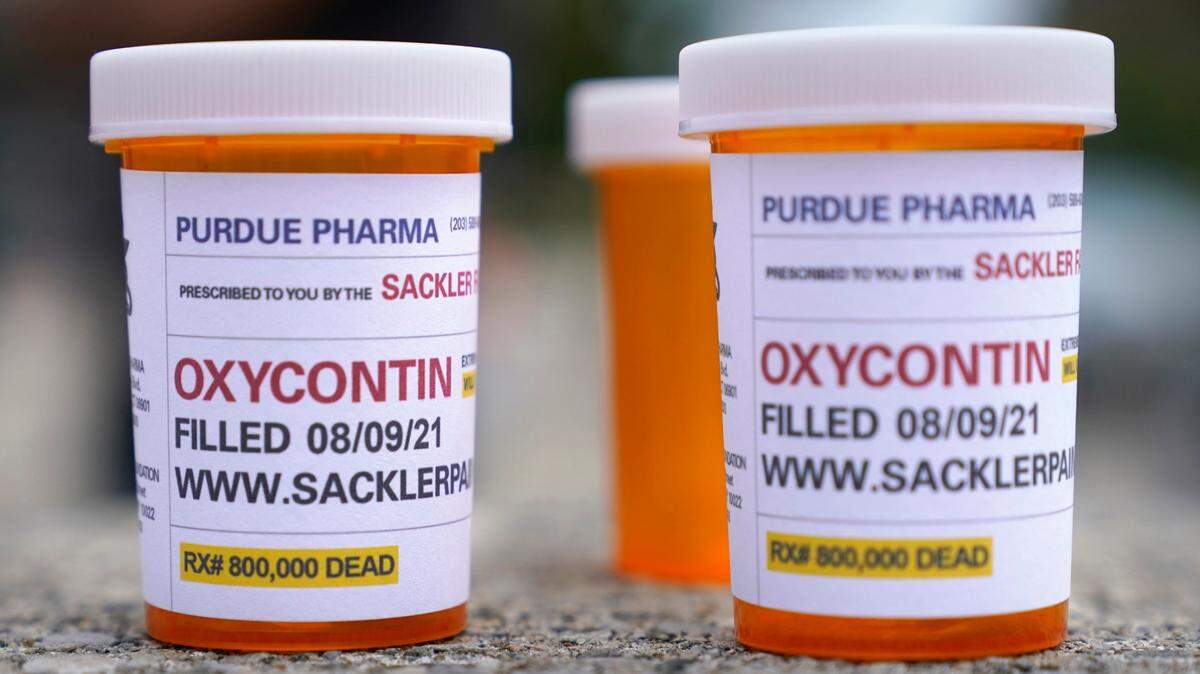
Jon had gotten in a motorcycle accident and was prescribed 56 pills each of Norco and OxyContin just days before his death, Cooper said. Two years later, the Los Angeles Times revealed that OxyContin was extremely addictive — a truth the drug’s manufacturer, Purdue Pharma, had worked for years to keep quiet.
Despite facing countless lawsuits, Purdue was able to shield damning documents from the public, thanks to broad protective orders granted by judges. Across the country, pharmaceutical companies like Purdue can bring these documents to court, but ensure they stay there. In California, such practices are commonplace.
Now, a battle is brewing in Sacramento. A bill moving through the Legislature would ban blanket court orders that conceal details about dangerous products. Standing behind SB 1149 is an alliance of consumer, legal reform and anti-secrecy groups. In opposition is the powerful California Chamber of Commerce and an array of associated business advocacy groups.
The measure, introduced by state Sen. Connie Leyva, D-Chino, has already cleared the Senate. But as they prepare to seek passage by the California Assembly, they’ve had to overcome intense lobbying efforts and misinformation.
“You have big industry. Candidly, this is just part of how they do business,” Leyva said. “They don’t care, they have no moral direction, and no integrity. They just want to make money, and they don’t care that people are being harmed and sometimes even killed.”
Some of the opposition isn’t “big” industry, though. The California Business and Industrial Alliance, which advocates for small businesses, says the constant development of new legal standards makes it hard for “the mom and pop shops” to keep up.
“They don’t have a chance at becoming compliant. And what’s happening is year, after year, after year, they’re adding to these laws, they’re changing these laws, and it makes it more and more complex and more and more difficult to understand,” said Tom Manzo, founder and president of CABIA.
But SB 1149 advocates say transparency is a reasonable standard for Golden State businesses, especially when safety is on the line.
The issue is bigger than Big Pharma. Blanket protective orders have become a courtroom tradition, rooted in convenience and favored by large businesses that don’t want their information made public, legal experts said.
Business groups say the alternative — going through each document during the pre-trial discovery phase of a lawsuit and individually making a case for its confidentiality — would be overly burdensome and time-consuming. Plaintiffs’ attorneys argue that it should be a company’s job to comb through such documents and make a legitimate case for their suppression.
“How many people do we need to lose because we’re not willing to bring forth that information? And all in the notion of the mighty buck,” Cooper said. “This was about very powerful pharmaceutical companies making a lot of money because they were selling a lot of drugs.”
Purdue Pharma could not be reached for comment for this story. Earlier this year, the company and its owners, members of the Sackler family, agreed to a $6 billion settlement with several states for the damage caused by opioids. The agreement protects the company from all current or future civil litigation.
A culture of secrecy: how protective court orders work
When companies like Purdue are sued for selling a potentially defective or dangerous product, they are often facing hundreds, sometimes thousands, of similar claims at the same time. In these “mass torts,” plaintiffs’ lawyers organize against the defendant.
During discovery, each side gets the opportunity to learn more about the relevant evidence the other may possess. The process can sometimes yield millions of pages of documents. Lawyers from both sides review the material and try to negotiate a protective order.
The judge has the final say. In California, they typically grant blanket orders, in some cases shielding over 90 percent of documents from the public, ostensibly in the interest of efficiency.
“Judges have busy dockets and they need to keep cases moving,” said Jason Solomon, who works for Stanford’s Center on the Legal Profession. “So if lawyers agree on something generally, it makes sense for judges to go along with it.”
Opponents of SB 1149 say it would increase judges’ workloads. Currently, however, no judges’ organizations in California have come out against the bill, according to Richard Zitrin, a lawyer who’s studied court secrecy for years and who helped shape SB 1149.
In a letter of support, Judge Jeremy Fogel, Executive Director of the Berkeley Judicial Institute, said the idea that the legislation will place additional strain on judges is a myth.
“I think that this view is short-sighted,” said Fogel, a former United States District Judge for California’s Northern District. Because SB 1149 places the onus on defendant lawyers to identify documents that should be given confidentiality, the bill would actually narrow the scope of what judges would need to consider.
Fogel added that once a judge makes information public, other judges dealing with the same documents in subsequent cases won’t have to consider confidentiality again, thereby simplifying future orders.
A barrier to safety: Essure and beyond
Essure was a contraceptive coil produced by Bayer, implanted in the Fallopian tubes to prevent pregnancy. In more than 27,000 lawsuits filed prior to 2020, women reported severe pain, organ perforation and miscarriages. But during litigation, Bayer was able to shield 97.7 percent of its documents.
“You have these women coming forward, who have terrible things that have happened to their bodies from using this, and the company gets to shield the information,” Leyva said.
For Lori Andrus, a lead plaintiffs lawyer on the Essure case, the secrecy is part of a frustrating, disturbing pattern. Despite the range of safe and effective birth control options that are available, she said, medical companies seeking more profits continue to turn out new and sometimes dangerous products, often with virtual impunity.
When Andrus represents women who have been harmed and seek settlement, she repeatedly faces the same dilemma: the client can get their money, but they need to keep quiet.
“Even after the case is settled, we can’t talk about it,” Andrus said. “That means that there’s this pattern of pharmaceutical companies and medical device companies really experimenting on women’s bodies. We know how to prevent pregnancy safely. They’re just always coming up with a failed new method so that they can continue to sell products and make money.”
Bayer stopped selling Essure in 2018. It paid $1.6 billion in 2020 to settle most of the lawsuits, but admitted no wrongdoing or liability. The settlement was announced a month after the advocacy group Public Justice released hundreds of files from the case in a Dropbox folder posted to their website. The group received the documents after filing a motion to unseal in court.
Nicole Hayes, a spokesperson for Bayer, said SB 1149 is based on “several flawed premises,” including lack of transparency. “The global settlement terms for Essure were disclosed at the time the settlement was announced in August 2020 and is available in the Company’s quarterly earnings reports,” Hayes said in a statement.
Business groups point to the fact that protective orders are standard in the state, “so common that most of California’s courts provide their own model protective orders for parties to use,” the Chamber and dozens of other groups wrote.
But these model protective orders, Andrus says, are exactly the problem.
“Most of these model protective orders have the exact same language and it’s way, way, way too broad,” she said. “It has a circular definition that says confidential information means anything that is confidential, proprietary, or sensitive business information.”
Florida, Louisiana, Montana, South Carolina and Washington have all passed legislation intended to roll back courtroom secrecy. In the last few years especially, the use of protective orders has drawn closer scrutiny. In 2019, a Reuters investigation showed the significant role judges have played in the opioid crisis.
Reporters examined the case of former West Virginia Circuit Court judge Booker T. Stephens, who signed off on a broad protective order before a giant settlement between Purdue and the state.
“It would be 12 years – and 245,000 overdose deaths – before evidence Stephens and other judges kept hidden was made public, and then only after it was leaked to a newspaper,” the reporters wrote. “What it showed was revelatory: OxyContin, the first billion-dollar-a-year narcotic, was not the reliable 12-hour painkiller Purdue long claimed it was.”
Business advocates opposing the bill don’t directly dispute the principle of the public knowing about defective and dangerous products. But they contend that SB 1149 is not necessary to provide this transparency. Plaintiff-side lawyers can still comb through the confidential documents and make a case to the judge that certain files should be made public.
Plus, many details about products and their dangers are already available, said Civil Justice Association of California president and CEO Kyla Christoffersen Powell.
“There’s already a great deal of information available to the public about products and environmental conditions,” Powell said. “We have the internet, we have lots of publications, we have lots of studies that are widely available. Additionally, there are regulatory bodies that are overseeing products and environmental conditions.”
Cooper understood that the bill could prolong some litigation. But at the same time, “the court’s job is to protect the public,” she said.
“If we aren’t provided with honest information and the truth, then there’s a barrier to the public being safe,” she added.
An obstacle: Cal Chamber and its friends
After SB 1149 cleared the Senate Judiciary Committee in April, the California Chamber of Commerce and other business groups circulated a scathing letter in opposition. They alleged that the bill would force companies to reveal trade secrets and violate intellectual property rights.
For Zitrin, the reasoning is bogus.
“Their opposition is based on the fact that it’s more important for them to keep secret any dirty laundry that they had for business reasons, rather than allowing the public to know the truth about that laundry,” Zitrin said. “That’s their reason. But they can’t very well say that, so they come up with reasons that make no sense and are factually untrue.”
The Civil Justice Association of California, a relatively new group paid lobbying firms Fernandez Cervantes Government Affairs and Omni Government Relations just under $20,000 in the first few months of 2022 to lobby against 1149 and two other bills. An analysis prepared by the state lists 28 groups, many of which employ lobbyists, in opposition.
The bill is expected to reach the Assembly floor next week. Supporters said they are nervous.
“With the entities who are in opposition to the bill... they’re very powerful,” said Karen Thomas Stefano, Administrative Director of the Consumer Protection Policy Center. “And they donate a lot of money to legislators. I’m guardedly optimistic for survival. But I also live in the real world, and I know how things go.”
Moderate Democrats, who receive contributions from the Chamber and other business groups, could block the bill. In 2017 a measure similar to SB 1149, introduced by Assemblymember Mark Stone, D-Monterey Bay, died on the Assembly floor after making it through a few committees.
Some things have changed since 2017. The Reuters expose drew more mainstream attention to the issue of court secrecy. And this time around, the bill has already made it through one chamber of the Legislature.
What comes next?
Late summer is a tough period for passing legislation. The home stretch before the Aug. 31 adjournment will be packed with bills waiting for votes.
If it becomes law, SB 1149 will significantly alter the judicial system’s relationship with citizens, according to Jason Solomon, who works at Stanford’s Center on the Legal Profession. It would mean that lawyers have “an ethical obligation” to the public.
“What’s at stake here is whether the public interest is going to be represented in court proceedings that really affect critical issues of public health and safety,” Solomon said.
In the meantime, the Chamber will continue to lobby. Leyva will continue to speak up. Judges will continue to grant wide protective orders. Amy Cooper will think about Jon.
“I feel very strongly that my son’s life... he had so much to offer,” she said. “And he doesn’t have his voice anymore. So I am a survivor, hoping that I can take his voice forward and prevent other people, other families from this happening to them.”