
Affirmative action heads to Supreme Court, years after UC Davis ordered to admit white man
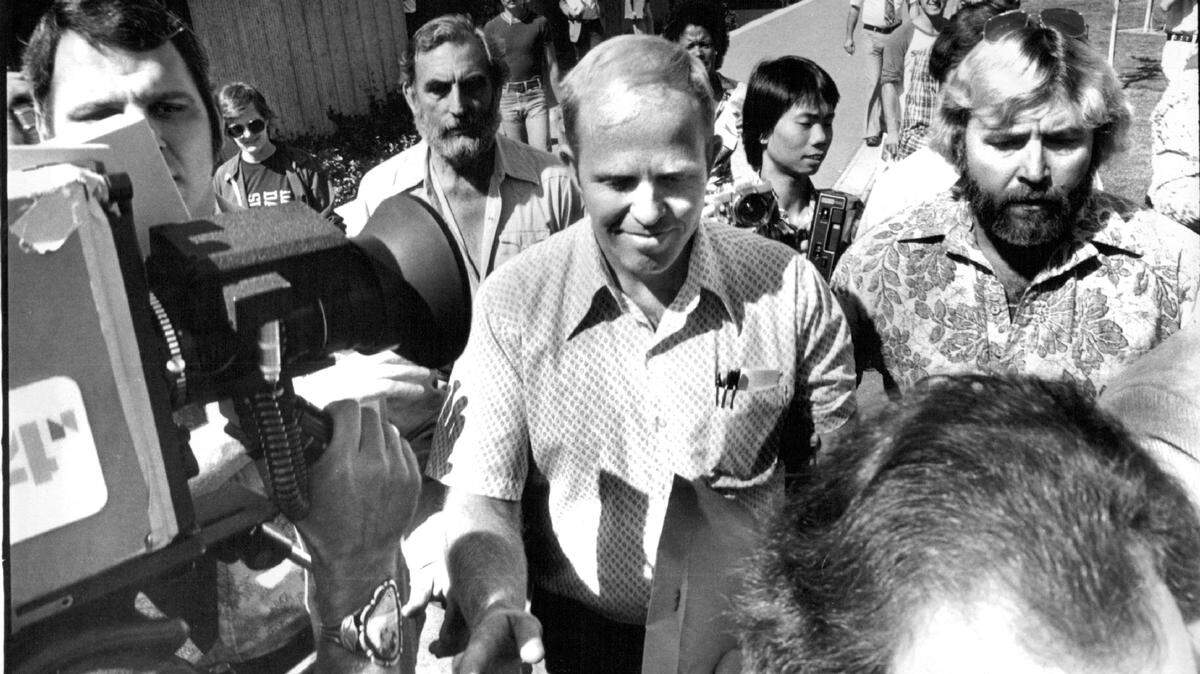
The first-year medical student at UC Davis was escorted into his first class by campus police.
About 100 demonstrators stood outside, waving signs and denouncing his presence on campus.
The target of their protest, a white, balding 38-year-old father of two named Allan Bakke, smiled and made one of his few statements to the press: “I’m glad to be here.”
It took a landmark U.S. Supreme Court decision to get Bakke into Davis’ medical school. On Jun 28, 1978, the court voted 5-4 to order the School of Medicine to admit Bakke.
The controversial ruling also struck down Davis’ policy of reserving 16 of its 100 slots for minority applicants. The court said such race-based quotas were unconstitutional.
However, the court did say universities could use race as a factor in evaluating applicants. That made the Bakke case one of the most significant court decisions in upholding the constitutionality of affirmative action — a concept that was being tested Monday at the Supreme Court.
The court heard oral arguments on lawsuits challenging affirmative action programs at Harvard and the University of North Carolina. Legal observers say the court’s 6-3 conservative majority, which already struck down Roe vs. Wade and gun-control laws, will likely weaken affirmative action.
Bakke wins admission, faces protests
Bakke, an engineer, was turned down twice by UC Davis before turning to the courts. He argued that he was passed over in favor of minority applicants with lower test scores. Lawyers for the University of California, in court filings, said there was no discrimination. Rather, Bakke was rejected “for exactly the same kinds of reasons that the Admissions Committee in making selection decisions denied many other well-qualified non-disadvantaged applicants, whites and minorities.”
The court ruled otherwise. In a series of rulings, it tossed out UC Davis’ quota system and ordered Bakke’s admission.
“There couldn’t be any quotas,” said Kevin Johnson, current dean of Davis’ law school. “But one factor in the overall admissions process could be race.”
The Bakke decision touched off civil rights protests in Sacramento and around the country.
Days after the ruling, a group of 100 members of the “Anti-Bakke Coalition” marched on the state courts complex near the Capitol in downtown Sacramento, saying the university hadn’t put up a strong enough defense of its admissions system. “UC regents, you can’t hide, we know you are on Bakke’s side,” they chanted outside a UC Davis extension office downtown.
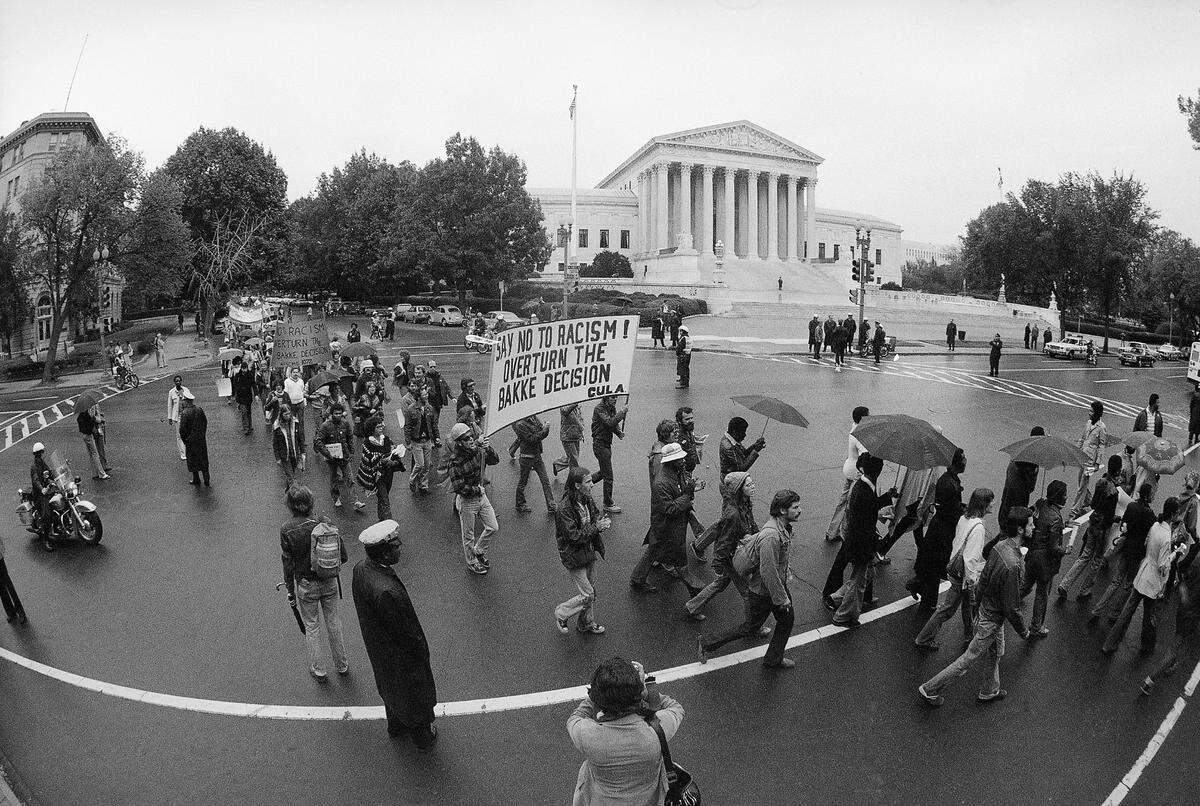
Three months later, the protesters were out in force again as Bakke attended his first lecture as a medical student. While he was escorted inside, they screamed, “Smash the Bakke decision.” They didn’t block his access to the building but presented the school’s dean, John Tupper, with a written list of demands regarding minority admissions.
That year’s medical school incoming class, as it turned out, had 20% minority enrollment, one of the lowest in years, but Tupper pledged to do better.
California history of race-based affirmative action
UC Davis’ affirmative action program would eventually be overtaken by California electoral politics. In 1996, voters approved Proposition 209, which prohibited race-based affirmative action in public university admissions, contracting by state agencies and more.
In the years since, Johnson said, universities have tried to work around Proposition 209 by crafting admissions policies that take into account “circumstances overcome, barriers overcome,” according to Johnson. That would include favoring applicants who grew up in low-income families or in households were English wasn’t spoken.
Nonetheless, admissions data showed that racial diversity suffered at California universities. A 2018 study showed that Latinos in particular were significantly under-represented on California campuses. The UC Board of Regents in 2020 urged voters to approve Proposition 16, which would have reversed the 1996 vote and made race-based affirmative action legal again.
Despite the regents’ plea, the 2020 proposition failed.
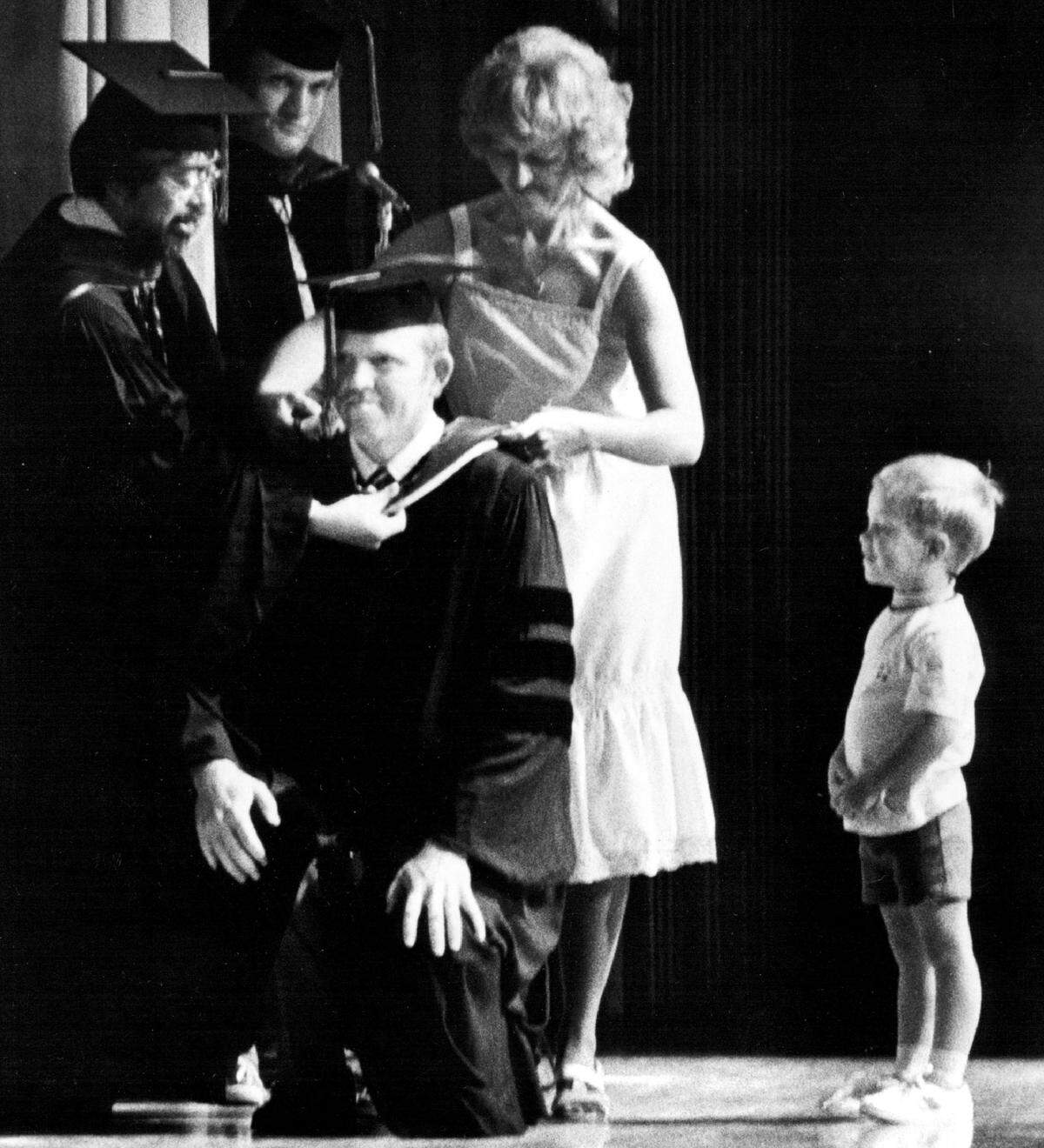
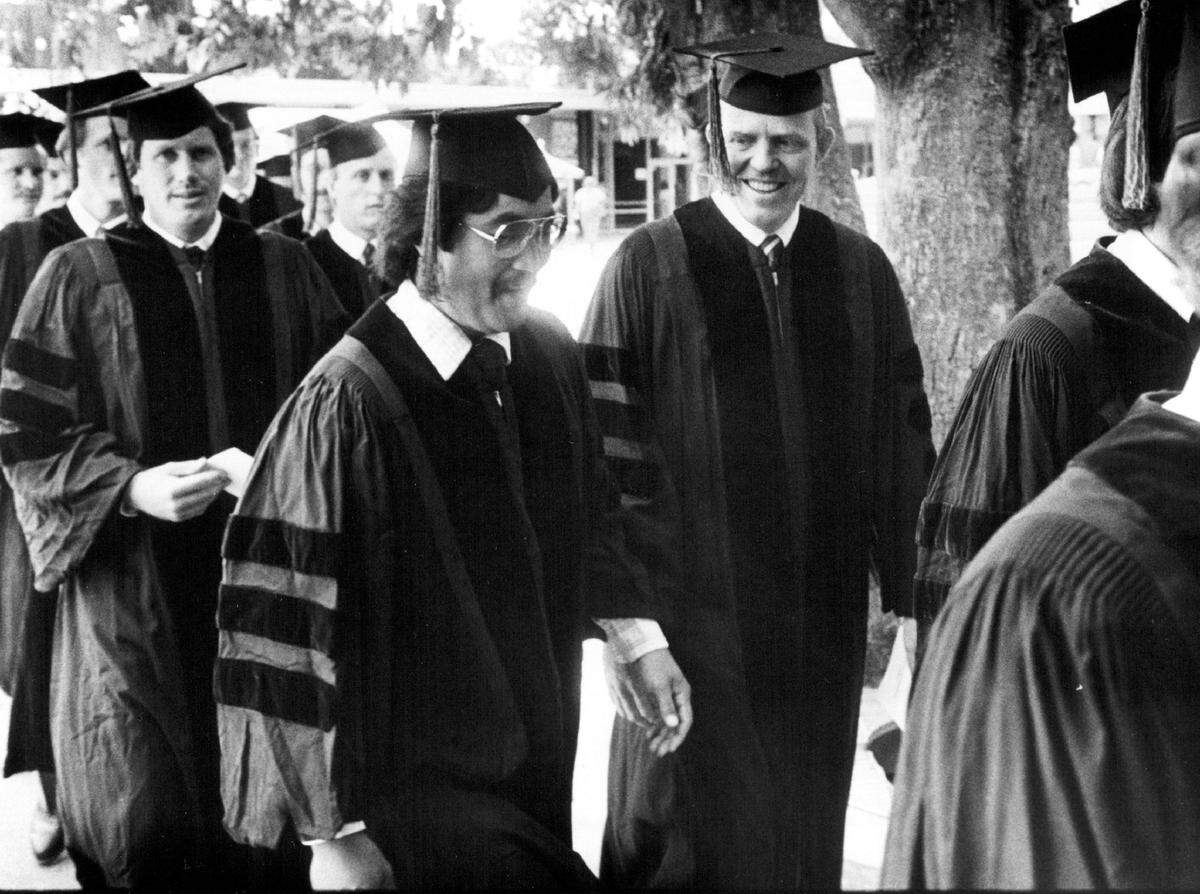
As for Bakke, despite the protests against his admission to the Davis medical school, he was apparently embraced by most of his classmates. When he graduated June 4, 1982, he received “the wildest and most sustained applause of any of his classmates,” The Sacramento Bee reported at the time.
Bakke declined to speak to reporters at his commencement, but a student who spoke at the ceremony, Steven Edelman, alluded to the controversy. “We stood against the news media in the midst of political repercussions about minority admissions even though our views varied widely on that issue,” he said.
Bakke moved to Minnesota, where he became an anesthesiologist.
This story was originally published October 31, 2022 at 11:21 AM.