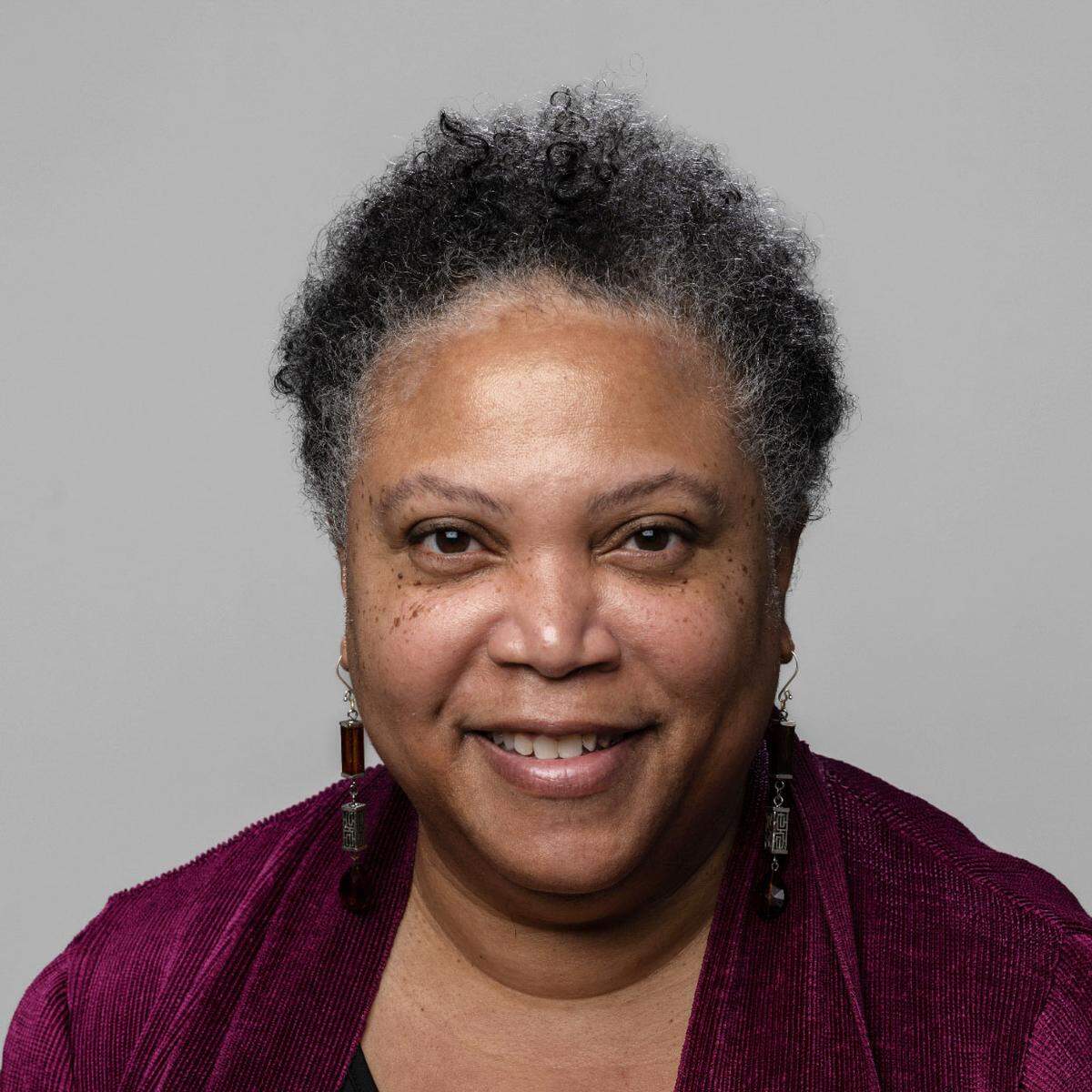
He’s leaving California politics as a ‘vaccine hero.’ One choice set him on that path
An industrious medical student, the son of immigrants, wrestled with the choice of two plum summer jobs during his second year of medical school at the University of Pittsburgh.
Richard Pan, from Yonkers, New York, knew the decision would have momentous consequences for his medical career. He was 23 and couldn’t know then that an eye-opening summer in 1989 would put him on the path to one day entering the California Senate and authoring the nation’s toughest childhood vaccine mandates. Or that he would be forced to fight for them in the face of violent threats and a hard shove outside the Capitol.
Pan was contemplating the two choices when he got a call from Pitt’s dean of student affairs, Dr. Frederick Ruben, an infectious disease expert. He asked the young man to drop by for a chat.
Ruben wanted to weigh in on Pan’s choices. One of the posts was at the influential National Institutes of Health, which bills itself as the largest public funder of biomedical research in the world. The agency directed almost $45 billion to scientists in 2022 for work aimed at enhancing lives and solving the challenges of illness and disability.
The NIH was offering Pan a chance to do research with virologist Bernard Moss, who had won the prestigious Dickson Prize that year for his “significant, progressive contributions” to medical research.
Practically everyone recommended Pan take that internship, and the NIH posting fit perfectly with the life he had envisioned as an undergraduate at Johns Hopkins University where he’d chosen biophysics as a major.
His career goal then was to discover “the next great cure,” and many of the U.S. scientists doing such work depended on NIH funds to pay for their studies.
Still, he was torn. He had been offered another elite and rigorous posting. It would place him on the frontlines of America’s public health system. Run by the U.S. Public Health Service, it was known officially as the Junior Commissioned Officer Student Training and Extern Program. Those who have gotten it, though, often refer to it just as COSTEP.
Was he crazy for considering it?
Surely, an infectious diseases specialist like Ruben would recommend Pan take the NIH post.
The dean, however, had a surprise for him.
Over the years, Pan had told Ruben about how he’d done some genetic research as an undergraduate at Johns Hopkins and how he’d lost a race to publish a paper on it to another researcher at the University of Pennsylvania.
Although disappointed, he looked for other potential research projects as his undergraduate adviser suggested. He discovered the university’s Center for Hospital Finance and Management where they studied pressing public health and policy issues.
Intrigued, Pan applied to work there and was assigned to help with research on a book about academic health centers. Between visits to the library, Pan listened as experts at the center chewed over how a proposed change in Medicare payment policy would affect patient access to care at hospitals.
That policy debate and its potential implications for millions of Americans left an impression upon Pan, and the dean had seen it. Despite his own ardor for disease research, Ruben recommended Pan take the COSTEP externship at a community health center in Pennsylvania.
Pan recalled Ruben telling him: “Richard, obviously you’re pretty good in the lab. Otherwise, you wouldn’t have gotten the NIH offer, and I know it’s something you’re really interested in, but when I hear you talk about what you did in the past, including in college, you sounded more excited about the things you were doing at the health policy center you worked at than the lab work you did. And I think you need to explore this part of yourself. … I think you should go to York, Pennsylvania.”
Pan did.

Taking the community pulse
Those two months in York ultimately propelled him about 20 years later to cut back on his work as a pediatrician and mount a dark horse bid for a seat in the California legislature that few expected he’d win. Yet he did.
Today, having hit term limits, Pan has left the California Capitol after serving four years in the Assembly and eight more in the state Senate. His final day was Dec. 5.
Pan is weighing job offers from academic medical centers. He said he “didn’t grow up wanting to be a legislator.” While his parents stressed the importance of voting, he said, they believed “no one will ever vote for anyone who looks or talks like us.”
He would test this conviction later, though, because of revelations he had during his COSTEP training with York Health Corp. Whether it was home visits or policy meetings, he learned just how much more the health of his patients depended on socioeconomic factors than on their visits to hospitals or medical clinics.
In a critical moment, Pan observed as York Health’s chief executive officer, Stuart Pullen, persuade other health care leaders with deep pockets to let community residents decide what health issue they should tackle with the money their big organizations had raised. The health care leaders had wanted to address teen pregnancy, saying data showed it was out of control.
.JPG "RCB_20170117 Planned Pa(2).JPG")
Pullen, however, began to speak for the people who weren’t in the room, the people they hoped to serve with this initiative, Pan said.
“He told the group, ‘OK, so we have the data. We certainly know it’s a big problem. Have we asked the community if they think that’s the most pressing problem?’ People were like, ‘Well, we have all the data. We see it.’ He said, ‘Well, maybe we should go ask the community whether the people who we think are having the problem think it’s a problem because, if not, if they don’t think it’s a problem, it’s gonna be hard to convince them to do something about it..’”
The group agreed to a survey and gave the clinic director funding to do it, Pan said, and he hired a man whom he knew local residents respected and would talk to without fear.
The man wasn’t a nurse. He had no experience as a pollster. He was a recovering drug addict.
Everyone in a community has assets and gifts, Pan said, and neighborhood residents will recognize one another’s gifts as they interact with one another.
These are cornerstones of asset-based community development, and as a legislator, Pan suggested that candidates for jobs in his office read such books as “The Abundant Community” and “Bowling Alone” to understand this phenomenon and to understand why he wanted to be certain they had community support for any work they did in his district.
Ultimately, community residents in York asked the county health leaders for help with ending domestic violence, Pan said. In survey responses, residents noted that the police would come to the door to investigate a 911 call, hear the threats and violence but then leave because the violence was contained within the walls of the house.
Pullen advocated to put the money toward training police officers in how to intervene in domestic violence situations, Pan said, giving up money earmarked for his clinic.
By helping to prevent domestic violence, Pan said, Pullen probably also helped to reduce teen pregnancy. Indeed, the Pennsylvania Coalition Against Domestic Violence noted on its website that teen girls in physically abusive relationships are 3.5 times more likely to become pregnant than non-abused girls.
A vaccine champion emerges
Pan was so deeply affected by his externship in York that he signed up to do a second COSTEP rotation starting in January 1991, this one in Philadelphia. Pan described his summer in York as a “turning point” in his career, but his winter in Philly is what birthed a champion for public health, universal access to care and vaccines.
That second COSTEP landed Pan in a clinic at the epicenter of a measles epidemic. More than 1,400 people in or around Philadelphia contracted the measles. Nine children died.
The virus had spread so quickly because members of two fundamentalist churches had refused vaccines for their children and then even refused medical care, because they believed in the power of God to heal them.

Dr. Bob Ross, now head of the California Endowment, was deputy health commissioner of Philadelphia at the time, and in an unprecedented move, he went to court to get an order forcing parents in the two churches to vaccinate their children.
Pan recalled: “We had to go do home visits because they wouldn’t bring the kids in when they got sick, and it was just terrible.”
Half of those who got sick were members of the religious sects, Pan said, but the other half weren’t. They were people exposed by just going about their lives, he said.
Who gets access to ‘the next great cure?’
In a community health setting, Pan began to see daily how a lack of insurance, limited income, systemic checkpoints, blockages in supply chains, and even family could stand in the way of access to care.
“We have people discovering the next great cure, but if people can’t get access to that cure, then it’s not gonna help them,” Pan said. “Someone needs to work on that issue. ... Throughout my career, I moved in that direction.”
Pan repeatedly pushed medical students and residents to go out into the community.
He did so as chief resident at the highly ranked Massachusetts General Hospital. There, he campaigned to have pediatric residents work a rotation in schools, clinics and other community settings. It meant carving out some of the time residents spent in the intensive care unit, Pan said, but after “much wailing and gnashing of teeth,” his campaign won the day.
During his fellowship in general pediatrics at Boston Children’s Hospital, he researched the small number of residencies offering community health rotations to pediatric residents and gave presentations on their best aspects.
As chair of the residence section at the American Academy of Pediatrics, he launched a grassroots initiative that paired residents with pediatricians practicing in the community, and he secured a grant to research the topic as a junior faculty member at Harvard.
Pan moves from Harvard to UC Davis
His work had captured the attention of leaders at the UC Davis Medical School, and they approached him with an offer: How would he like to launch a child advocacy rotation for their residents?
Pan came to UC Davis in 1998 and began lending his expertise to organizations working on children’s health issues. He did so, he said, because he believed in advocacy but also because he wanted to have an answer when his students asked him, “So, Dr. Pan, how are you doing it?”
So, he leveraged neighborhood collaborations that Sierra Health Foundation had helped residents create to improve children’s health. The students could contribute their expertise to these groups, he reasoned, and neighborhood residents could get advice on how to meet community needs.
Pan also joined the First Five Commission and worked to set up the Healthy Kids Healthy Future initiative to improve the health of children in Sacramento, Colusa, El Dorado, Yuba and Placer counties. He joined the board of the local United Way where he helped set up a program to fund health insurance for children whose families couldn’t afford it.

These efforts depended heavily on funding from regional community foundations, however, and by 2009, the housing bubble had burst, triggering the Great Recession. Community foundations saw their endowments shrink dramatically even as new needs surfaced. State income tax revenues also tanked.
Suddenly, the well buoying those children’s health initiatives ran dry. And, many community health clinics also were struggling, Pan said. They depended on funds from the state budget, but a stalemate held up passage.
Pan wanted to be a part of solving a crisis that deeply affected both children and community health centers. Noting that Republican Assemblyman Roger Niello would be leaving office soon, he began exploring what it would take to win that seat.
He sought advice from Dustin Corcoran, then the lobbyist for the California Medical Association, a nonprofit professional group representing more than 50,000 physicians in the state.
Pan also knew Corcoran as the father of one of his patients, but Corcoran didn’t pull any punches when Pan, a Democrat, told him he would like to run in what was the 5th District.
“That was a tough conversation to have with him,” Corcoran said. “His prospects for victory were anything but assured. In fact, most people did not give him that much of a chance to win.”
Could a Democrat win this GOP seat?
A week later, Corcoran said, political consultant Josh Pulliam visited his office and sat in the same seat that Pan had taken. Corcoran said Pulliam believed the right Democratic candidate could win Niello’s district.
Corcoran’s comeback: “Like, what kind of right candidate do you mean? Maybe like a pediatrician?” He said, ‘Yeah.’ And, I was like, “Well.’”
Corcoran said he connected the two men, and it turned out that Pulliam was right.
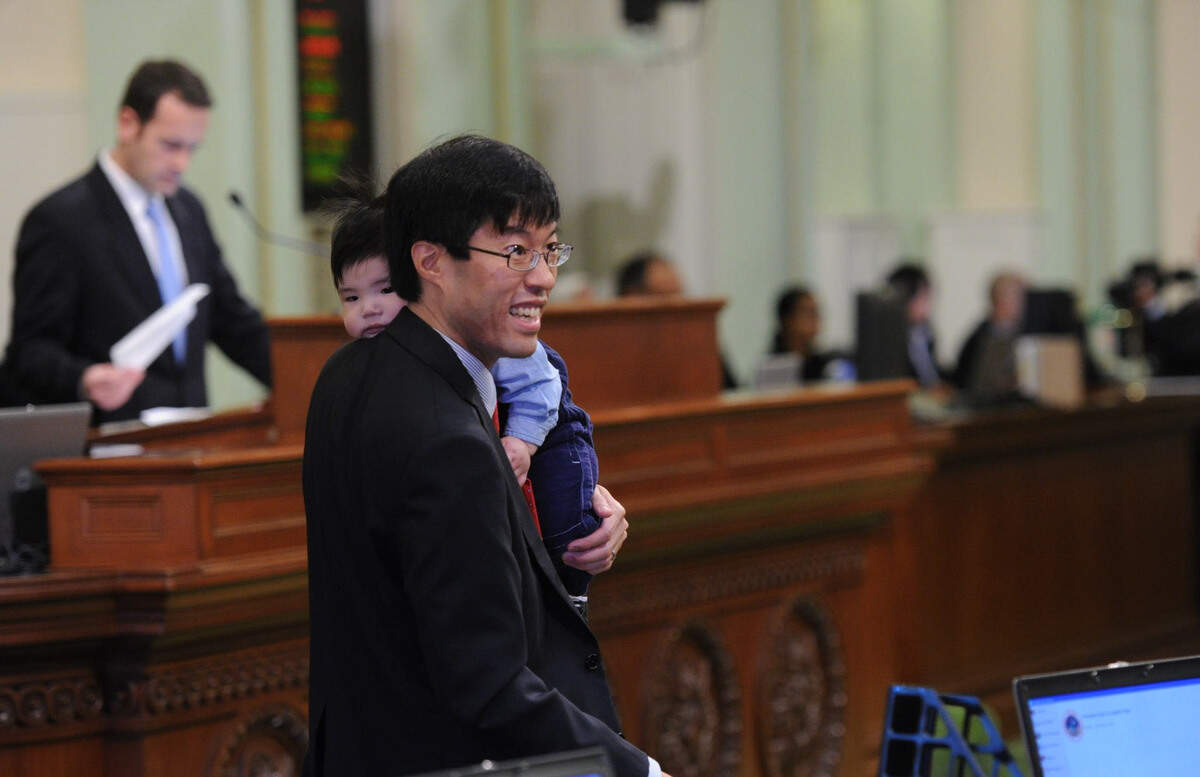
Pan won office when California faced a $28 billion budget deficit. As he leaves, the state has reported a reserve of $37.2 billion.
Even as Pan advocated for building reserves, he also did a lot of heavy lifting over the last 12 years to put California on the road to universal access to health insurance coverage, said Crystal Strait, Pan’s chief of staff for his first five years in office.
He carried legislation that allowed California to implement the Affordable Care Act, creating Covered California and ensuring that state residents with pre-existing conditions wouldn’t face discrimination in coverage.
He authored legislation to expand Medi-Cal coverage as the state was coming out of the recession, something that made a number of his colleagues nervous as they were trying to put California’s fiscal house back in order. In successive years, he continued to support legislation that expanded Medi-Cal to all California residents living in poverty, regardless of citizenship status.
In the years since these measures were passed, California’s uninsured rate has fallen to a record low 7% in 2021 from 17.2%.
How will Pan be remembered?
Despite these accomplishments, Pan said, he realized that most people will remember him for his work on vaccine mandates. He championed tough legislation to eliminate personal belief exemptions to vaccinations for children attending schools (Senate Bill 277 in 2015), another law to close a loophole in the vaccine mandate (SB 276 in 2019) and to keep protesters from obstructing access to vaccine sites (SB 742 in 2021).


The measures brought verbal condemnation and a physical assault, Pan said, as anti-vaxxers combined forces with right-wing militia forces. In a widely covered confrontation, one anti-vaccine activist shoved Pan so hard he stumbled as he walked to an event at Frank Fat’s restaurant in downtown Sacramento in September 2019.
While Pan made some headway on vaccines, he also faced setbacks. In April, he announced he would hold a bill that would have required COVID-19 vaccinations for schools.
Polls showed strong support for the vaccines, especially among groups at highest risk of infection, Pan said. But they also showed that parents were encountering barriers to accessing the shots. He felt pediatricians and public health officials needed more time to educate families about the vaccine.
Just as Stuart Pullen, the clinic executive in York, Penn., had stepped back to ask what residents wanted, Pan said, he knew the COVID school bill needed to wait until access to the vaccines improved.
The Bee sought comment from three people who have opposed Pan on vaccine legislation, but none responded.
Pan’s advocacy for vaccines will be remembered, Strait said, but what most people may forget is that he began in 2015, to predict that social media would be used to propagate misinformation and disinformation about the safety and efficacy of vaccines. Even then, she said, he expressed concern that these campaigns would keep people from getting care that could save their lives.
The vast majority of Americans are pro-vaccine, Strait and Pan said, but you wouldn’t know it if you sat in the Capitol where anti-vaxxers and their allies shouted epithets, swarmed opposition witnesses in the halls and spattered legislators with blood.
Pan’s concerns, Strait said, led him to establish a nonprofit called Protect US that provides a space where everyday people “can use their voices to fight for science, for using evidence-based policies in public health.” And, Pan stood tall alongside them to encourage them in the face of screaming protesters, Strait said.
If Pan has indeed earned the title of vaccine hero now, as Time magazine named him, he got there because of what he learned in community health centers about standing up for people who couldn’t speak for themselves.
Decades earlier in York, Penn., he’d watched a health center leader advocate for grass-roots autonomy, though he risked alienating civic heavyweights he depended on for funding. In Philadelphia, Pan had seen a community brought to its knees by a virus and public health officials battling in the courts to save lives. He was singularly prepared to meet the moment that awaited him under the dome of the California Capitol.
This story was originally published December 11, 2022 at 5:00 AM.