California eliminated single-family zoning to encourage more housing. Why it hasn’t worked
By Maggie Angst
Elizabeth Olson purchased her ranch-style home on a large corner lot in Sacramento’s South Land Park neighborhood with the dream of building a separate unit on the property for her aging relatives.
A new state law took effect at the start of 2022 making it easier for homeowners like Olson to construct additional units on their single residential lots. Olsen, a single mother who lives with her 4-year-old son Lucas, her aunt and her aunt’s partner, felt like the chips were falling into place.
Nearly a year later, she said she feels farther away than ever from making it happen. After accounting for California’s exorbitant construction costs and interest rates, she estimates that it would take 10 to 15 years to pay off the project — even if she were charging her relatives rent.
“Nothing has changed in terms of my desire to do this, but I just haven’t been able to make any progress on it,” Olson said. “Financially, it just doesn’t pencil out right now.”
The state does not have centralized data on the number of SB 9 projects that have been proposed or approved. Cities are required to begin reporting such figures starting next year. However,a Sacramento Bee survey found that participation in the Sacramento and Central Valley regions has been low, if existent at all.
The cities of Davis, Stockton, Modesto, Merced and Bakersfield have not received a single application. Fresno has one. Three applications were submitted in Elk Grove, though one was deemed ineligible because it was located in a designated wetland, which is exempt under the law.
Using state regulations enacted prior to SB 9, the city of Sacramento has successfully encouraged homeowners to build accessory dwelling units (ADUs) on their properties. The city allows up to two ADUs totaling 1,200 square feet on a parcel that already has a primary residential structure. After streamlining the permitting process for the units, the number of ADUs built in the city has doubled in recent years.
But under SB 9, the city has not yet seen the same enthusiasm. Although the city moved to eliminate single-family zoning ahead of the statewide measure, Sacramento homeowners have only submitted 17 applications for lot splits and additional units, of which 13 have preliminary approval. Only one of those applicants has received a building permit but no construction has begun, according to city records.
Experts say narrow interest in the law is due to a combination of factors: high-interest rates and construction costs, regulatory loopholes and efforts by communities to limit the feasibility of small developments.
Lee Ohanian, an economics professor at UCLA and senior fellow at the Hoover Institute, said he doubts that SB 9 will ever become the solution to California’s housing crisis that some had hoped for.
“I think the people who had been pushing for this for so long were just glad to get it through,” Ohanian said, “but it really ends up being much ado about nothing.”
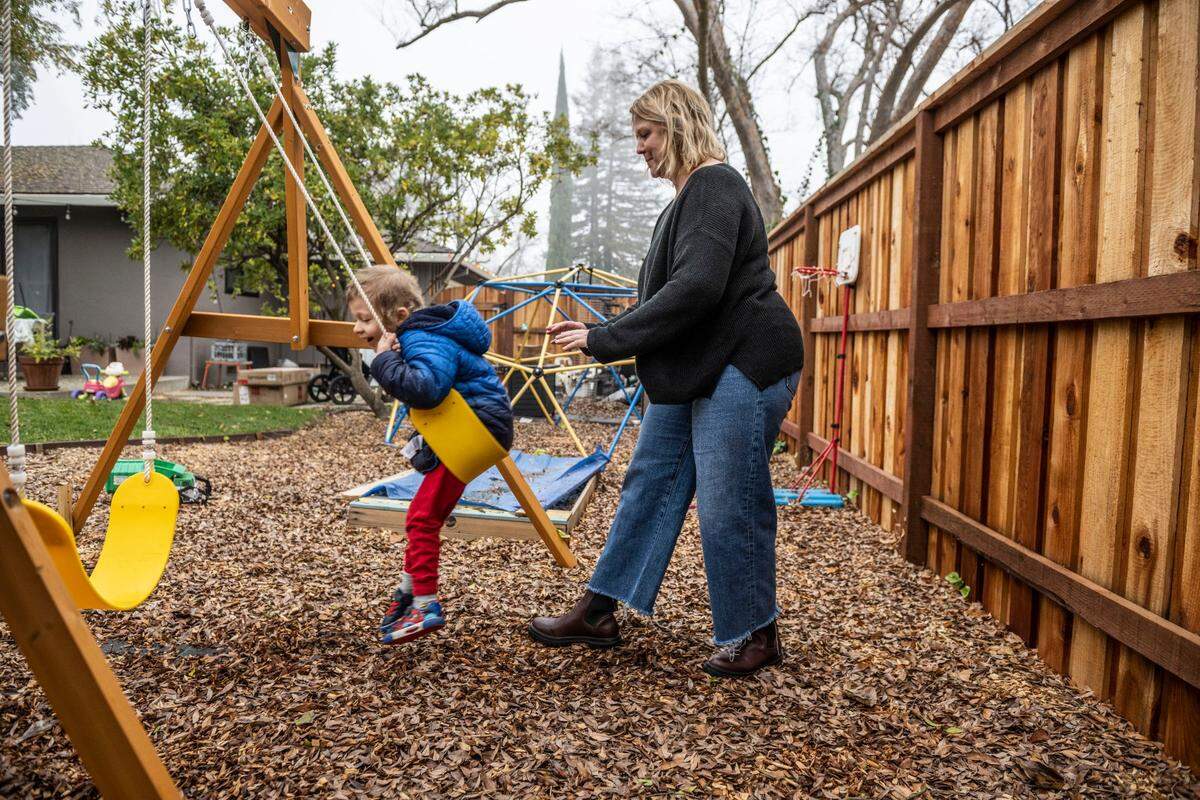
Elizabeth Olson plays with her four-year-old son Lucas in their back yard earlier this month. She wants to build an additional unit on the property, encouraged by SB 9, but has not been able to afford the construction costs. “Financially, it just doesn’t pencil out right now,” she said. Hector Amezcua hamezcua@sacbee.com
What is SB 9, California’s housing density law?
SB 9, enacted last Jan. 1, spelled the end of single-family zoning in California. It opened the door for the construction of up to four units on lots that were previously limited to a single home. Property owners can split a single-family residential lot into two and add a second home. Used to the fullest extent, the law allows owners to split their lots into two and place duplexes on each portion.
The legislation marked a historic shift from the land use classification that defined the American suburb, born from the mindset that each residential lot should come with a stand-alone home on a peaceful street with plenty of elbow room and green space.
But beneath that suburban idyll were often exclusionary housing practices. In California and across the country, single-family zoning was a means of barring lower-income residents and people of color from living in neighborhoods with good schools and other public services.
In SB 9, supporters saw a promising way to boost the state’s housing stock, curb sprawl and open up communities to those previously excluded. Yet, the “one-size-fits-all” changes stoked fear in homeowners who worried it would lead to falling property values, parking shortages and a diminished neighborhood character.
To overcome the opposition, lawmakers gave localities the power to implement the law using their own “objective design standards” and additional restrictions. They also added a requirement that the homeowner must live in one of the units for at least three years. The mandate, designed to prevent widespread up-zoning by developers, also diminished the pool of eligible applicants.
According to Ohanian, that’s where the problems started.
“It was effectively whittled down during negotiations in the Senate to the point where what was passed was the housing equivalent of a footnote,” he said.
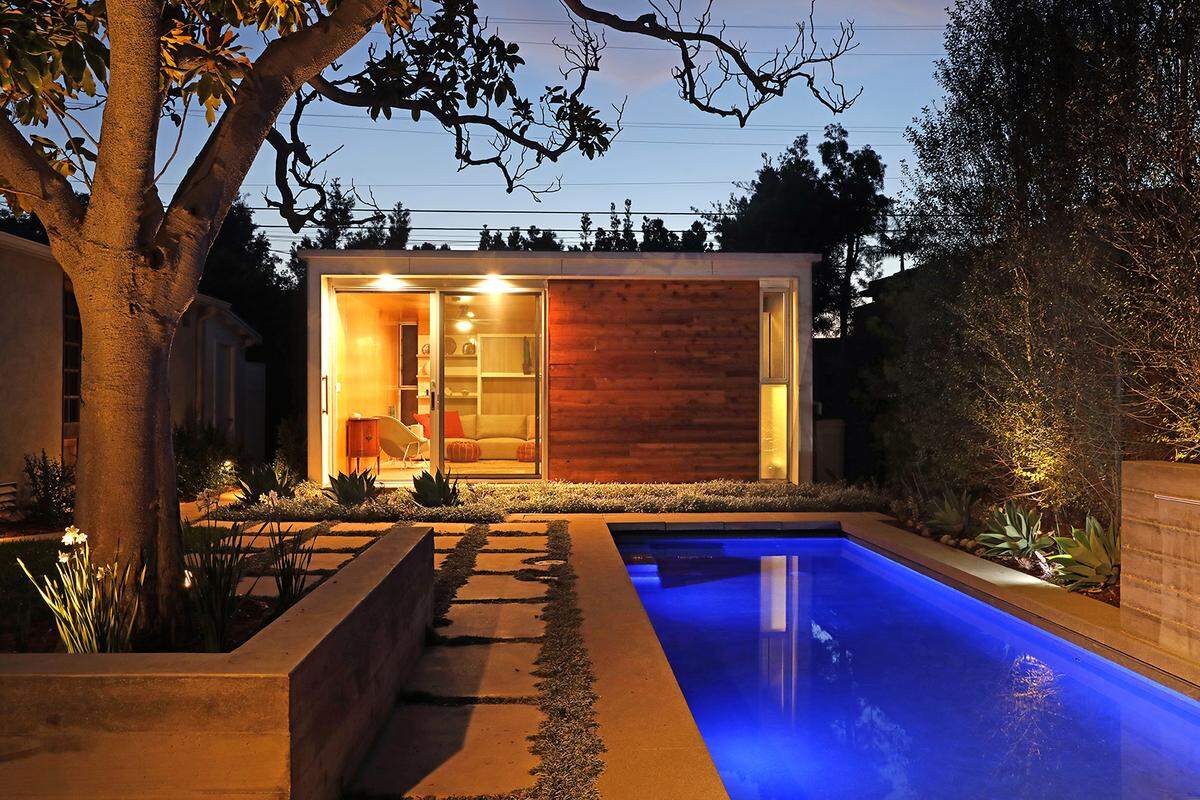
A midcentury modern accessory dwelling unit built in Santa Monica in January 2020 is based on a blueprint pre-approved by the city of Los Angeles. The ADU features a studio design with a kitchen and bathroom in 320 square feet. The estimated cost for constructing the design is $120,000 to $147,000, depending on site conditions, options and other factors. Carolyn Cole Los Angeles Times file via TNS
Restrictions set by cities inhibit state law
Cities across the state have used the broad leeway baked into the law to impose stricter — and often expensive — requirements that make it more difficult to build.
The most notorious example is the wealthy Silicon Valley city of Woodside, which designated itself a mountain lion sanctuary. Pasadena, in the Los Angeles suburbs, tried to exempt a large portion of the city by declaring the area as a “landmark district.” Both backed down after Attorney General Rob Bonta threatened to take legal action.
California housing and YIMBY (Yes In My Backyard) advocates have found dozens of jurisdictions implementing requirements for parking, open space, height and size, setbacks and affordability designed to circumvent SB 9
The city of Sonoma, for instance, requires homeowners to make one of the units affordable and to pay a housing impact fee. This goes against the conventional practice where cities exempt impact fees on low-income housing to help make it financially feasible.
Opposition at the local level, along with high inflation and interest rates in 2022, has limited the law’s full potential, according to Matthew Lewis, director of communications for CA Yimby. He hopes that with time and potential tweaks, it will prove more effective.
“As interest rates come down and we see the pressure build because of the crushing housing shortage we’re in, I think you’re going to see more and more homeowners say ‘I would like to do this,’ ‘I need to do this’ and ‘I’m going to take advantage of this,’” Lewis said.
Lawmakers have not yet indicated they have any plans to strengthen the legislation.
Shortly before it was passed, a study by the Terner Center for Housing Innovation at UC Berkeley estimated that just 5.4% of the state’s single-family lots had the potential to be developed under the legislation. At most, it would pave the way for fewer than 700,000 new housing units — not inconsequential but also nowhere near Newsom’s goal of building 3.5 million units by 2025.
Nevertheless, both supporters and critics say that it’s too soon to predict the full effects of the measure.
Opponents of SB 9 initially pushed lawmakers to reject it on the grounds that it would destroy the quality of life in single-family neighborhoods. After the Assembly passed the bill in August 2021, Our Neighborhood Voices, a statewide group, started gathering signatures for a November 2022 ballot initiative aimed at giving communities the power to override state zoning and land-use regulations. The group later withdrew the measure with the intent of bringing it to voters in 2024.
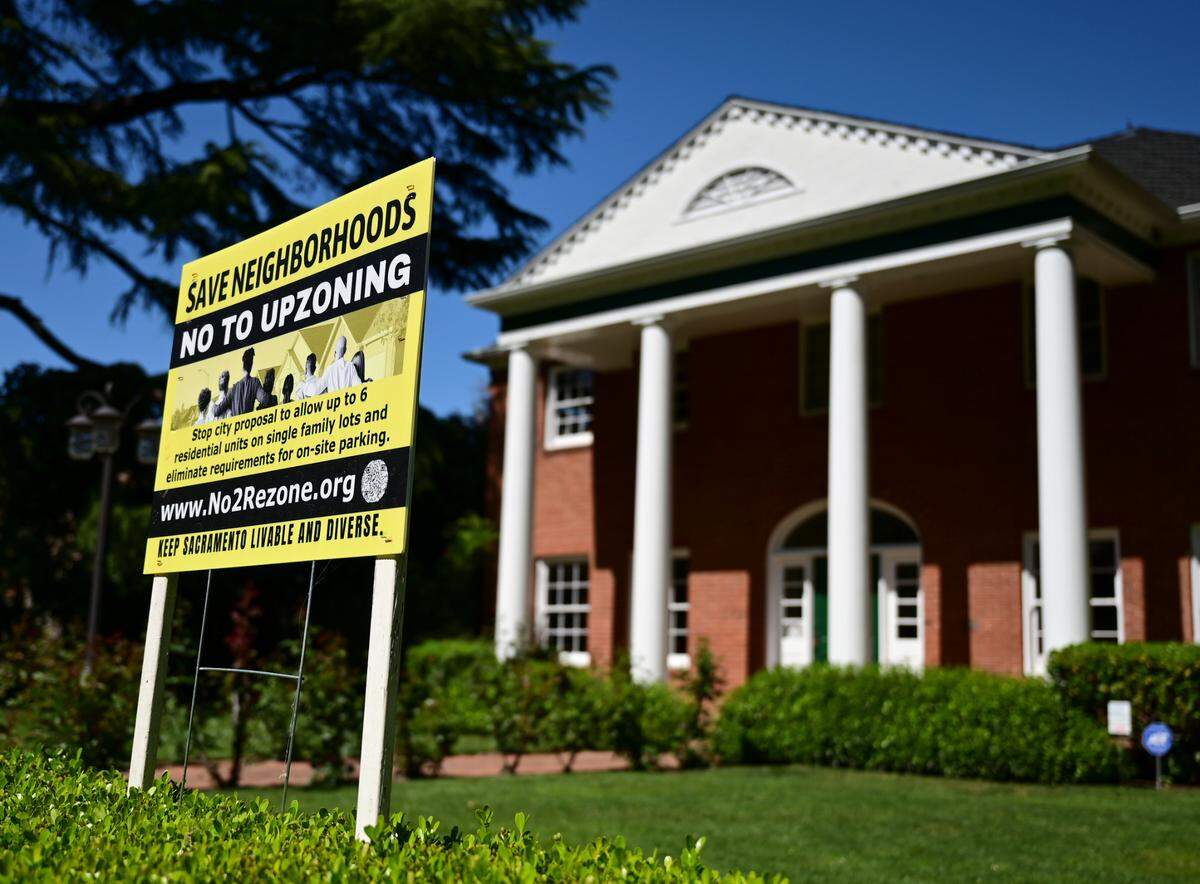
A sign stands in front of a home in Land Park in April 2021, opposing an “upzoning” proposal that was passed by the Sacramento City Council. Senate Bill 9, which passed later in the year, eliminated traditional single-family home zoning statewide, allowing higher density housing to be built on those parcels. Nathaniel Levine Sacramento Bee file
Sachiko Konatsu, president of the Natomas Community Association in Sacramento and a critic of SB 9, said she continues to worry about the negative results of potentially “packing more units into existing single-family neighborhoods.”
“What we do know is that SB 9 cuts out public input, so neighbors will not even be informed about these projects,” Konatsu said.
Sen. Toni G. Atkins, D-San Diego, who authored the bill, said she’s still convinced that SB 9 will offer the “opportunity for measured, gradual change over time.”
“At the end of the day, this law is one tool in the toolbox of housing solutions to help create more affordable housing and more generational wealth for California families, and that is going to take time,” Atkins said in a statement.
Building off of SB 9, two new housing laws were passed earlier this year to provide developers with an easier pathway to building on underutilized commercial sites currently occupied by parking lots, big box stores and office space.
As for Olson, she isn’t giving up on her aspirations for two separate units on her property, providing both her and her son and her aunt and aunt’s partner with their own private spaces. And for those who may be opposed to the new law, she welcomes a conversation.
“I think that people consider their own situations exceptional. And then, you know, don’t want to extend that understanding beyond their situation,” Olson said. “It’s not families that are fundamentally going to change the neighborhood, it’s developers.
“And for us, this is really our only shot at sanity.”
This story was originally published December 28, 2022 at 5:00 AM.
Get one year of unlimited digital access for $159.99