
Flavored tobacco ban enforcement confusion + Bowie’s Law aims to prevent animal euthanasia
Good morning and welcome to the A.M. Alert!
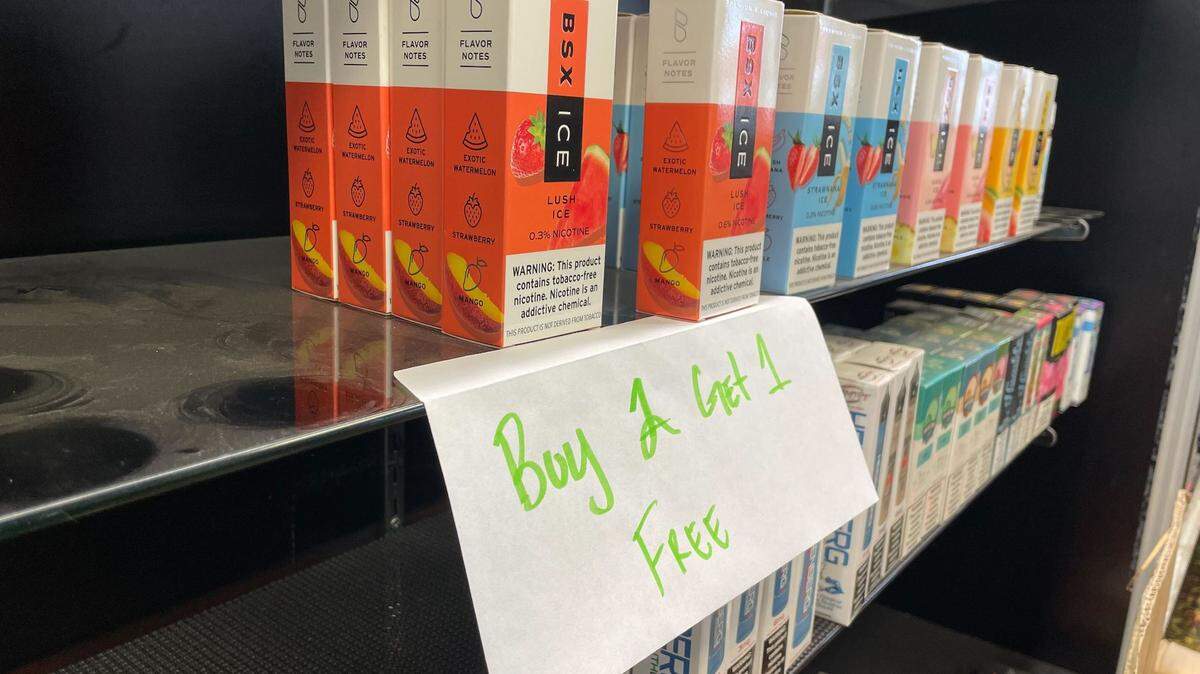
AFTER CALIFORNIA’S FLAVOR TOBACCO BAN, CONFUSION REIGNS
Last November, 63% of California voters chose to ban the sale of most flavored tobacco products in the state, including menthol cigarettes and e-cigarette products.
The vote marked a resounding victory for anti-tobacco advocates, who for years had worked to pass legislation restricting the sale of such products in the nation’s most populous state.
The 2020 law, SB 793, survived not only a voter referendum, but a legal challenge that made it all the way to the U.S. Supreme Court, which declined to hear the case, effectively killing it.
But four months after the election, some California retailers say that enforcement of the ban has been haphazard, leaving them unsure of what they can, and cannot, sell.
“Everyone is confused now,” said Rocky Malhi, owner of Tobacco Cartel, a West Sacramento-based tobacco product supplier, in an interview with The Bee.
Under the new statewide ban, most flavored tobacco products are banned from being sold. The law exempts hookah, pipes and loose leaf tobacco and cigars valued at more than $10.
However, both the City of Sacramento and Sacramento County have their own flavored tobacco bans, with the former implemented three years ago and the latter last year.
Malhi said that retailers are struggling to adhere to the different bans, which have varying levels of restrictiveness.
“I’ve been telling them that you have to adopt the most restrictive ban,” Malhi said.
Malhi said the ban went into effect before retailers could sell all their merchandise.
“What are they going to do with all the product? They’re waiting for (the California Department of Tax and Fee Administration) to issue tax write-offs,” he said.
The state should have provided retailers with a list of products that were banned and a list of products that could be sold, Mahli said. He added that the state also should have given retailers 180 days to clear their inventories and to educate code enforcement officers, retailers and distributors on what was, and was not, prohibited.
“The actual issue is that the state rushed to enforce the law,” Malhi said in an email to The Bee.
The California Department of Justice says that it is working to address any confusion around the ban.
The department’s Tobacco Grants Program has sent $151 million in funding to 330 eligible agencies thus far to educate retailers on the state law, ensure compliance and penalize retailers who unlawfully sell or market to people under 21.
Over the last few months, the DOJ has partnered with the California Department of Public Health “to educate local law enforcement agencies on the enforcement of flavor bans,“ according to an email.
CA LAWMAKER INTRODUCES 72-HOUR WAIT PERIOD BEFORE EUTHANASIA
Last December, a Los Angeles area animal shelter euthanized a 4-month-old puppy named Bowie. This kicked up much political dust with the Los Angeles County Board of Supervisors voting unanimously to demand that the shelter provide a “full accounting” of what led to the the puppy’s untimely death, according to the Los Angeles Times.
Now, a state lawmaker has introduced a bill intended to prevent other adoptable animals from experiencing Bowie’s fate.
AB 595, dubbed by its author as “Bowie’s Law,” requires that all animal shelters provide online 72-hour public notice of their intent to euthanize an adoptable cat or dog before carrying it out. The bill also directs the California Department of Food and Agriculture to study overcrowding in California animal shelters, and provide that report no later than Jan 1, 2026.
The bill’s author, Assemblyman Bill Essayli, R-Riverside, said in a statement that “every adoptable pet deserves the chance to find a loving home. Unfortunately, far too often, perfectly healthy, loving animals are euthanized before they have a chance to be adopted.”
Essayli said the goal of his bill is to make every shelter in the state into a “no-kill” shelter, a goal the Republican shares with Democratic Gov. Gavin Newsom.
“We understand it’s a complex issue and it’s going to take multiple strategies and partnerships, but Bowie’s Law will be a critical first step,” Essayli said.
QUOTE OF THE DAY
“Informal poll, should children learn cursive writing?”
- Assemblywoman Sharon Quirk-Silva, D-Fullerton, who has introduced a bill to make cursive mandatory for grades 1 through 6, via Twitter.
Best of The Bee:
California gave Teslas to an isolated farmworker community. Why did the cars vanish overnight? Via Ari Plachta and Laura S. Diaz.
While the Biden administration has supported immigration reform, it is unlikely that any proposed legislation will get to the finish line in a divided Congress, continuing the decades-long partisan battle over who can be put on a pathway to citizenship, via Gillian Brassil.
California Gov. Gavin Newsom on Friday pushed back against a lawsuit claiming his mental health court program robs severely ill individuals of their civil rights by forcing them into treatment, via Lindsey Holden.
California’s controversial bullet-train project has been passed over by the federal government in its efforts to secure about $1.2 billion to continue construction in the central San Joaquin Valley, via Tim Sheehan.
Just days after the U.S. shot down a Chinese spy balloon capable of collecting communications signals, two California lawmakers have introduced a bill intended to block hostile foreign governments from conducting surveillance of sensitive American locations, via Andrew Sheeler.