
California meets Jerry Brown-era electric car sales target early. But price remains a barrier
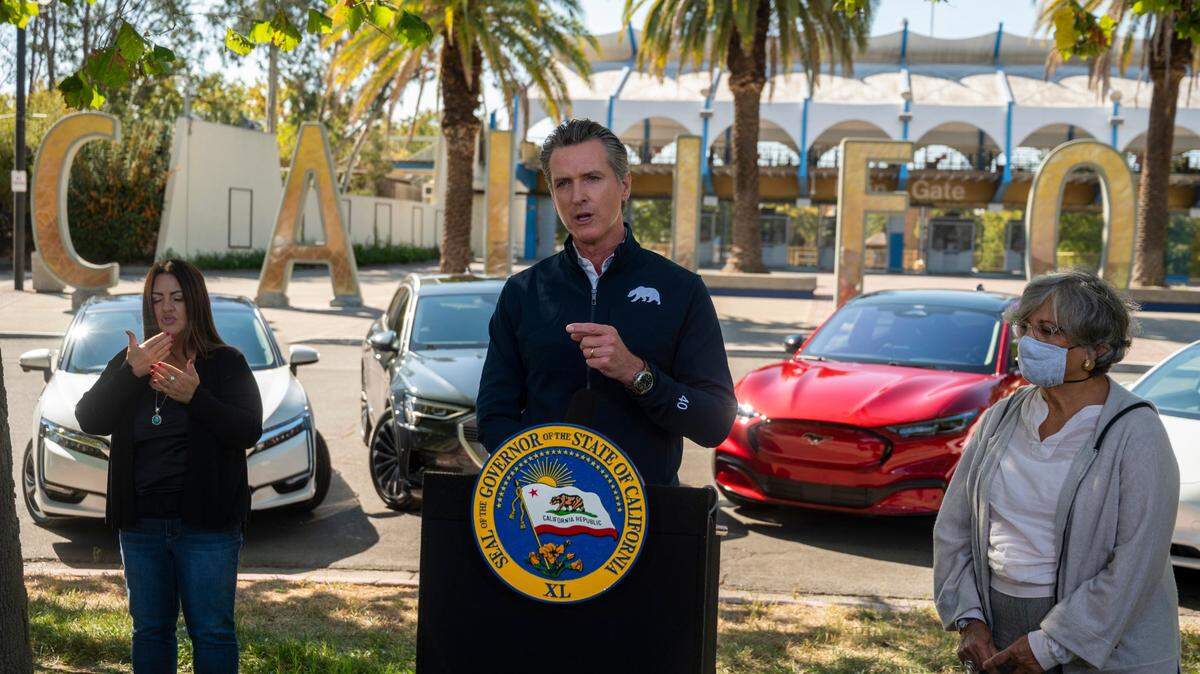
You’re not imagining it. Electric cars have become more commonplace on California streets, Teslas in particular. Motorists purchased 1.5 million zero-emission vehicles since 2011, according to state data released Friday.
The sales milestone comes two years ahead of the goal set by former Gov. Jerry Brown. California now makes up 40% of all electric vehicle sales in the nation, but challenges to their widespread adoption remain.
“When Governor Brown set this goal, people across the state and around the. nation said it couldn’t be done,” said Lauren Sanchez, climate advisor for Gov. Gavin Newsom. “But here in California, we make the future happen. We don’t just set goals, we achieve them.”
Brown signed an executive order in 2012 that set a target of 1.5 million zero-emission vehicles sold in California by 2025. Zero-emission vehicles (ZEVs) include battery electric, hybrid and fuel cell electric cars.
Through March 31, the total number of ZEV cars sold reached 1,523,966 according to quarterly data compiled by the California Energy Commission, making up 21.1% of the new car sales market.
Teslas are by far the most common electric vehicles on the road, making up almost half of all sales. The company’s Model Y, with a starting price of $46,990, was the most popular, followed by its Model 3 at $39,990.
Even as more economical models like the Chevy Bolt gain popularity, high costs remain a barrier for the vast majority of Californians. — even with the thousands of dollars in federal tax credits available to some buyers.
But state officials hope an array of new regulations by the California Air Resources Board will jump start the market, not just for passenger vehicles but also heavy duty trucks and the infrastructure needed to support them.
The board’s main clean cars regulation offers incentives for car manufacturers and buyers to reach 100% clean vehicle sales by 2035. Several states have adopted similar programs, including New York, Massachusetts, Oregon and Washington.
The 2020 clean trucks rule requires manufacturers to sell increasing numbers of electric heavy duty vehicles until 2036, when no more combustion trucks can be sold. A complimentary rule on truck fleets is scheduled for a vote at the board next week.
The state is currently home to over 87,000 EV chargers. Many of those are what’s known as “DC chargers,” which can take hours to refuel a typical car battery. Tesla stations are typically “rapid chargers” that can take as little as twenty minutes to recharge.
Patty Monahan, who serves on the Energy Commission, said the state plans to fund some 250,000 new chargers with state and private money by 2026. Charging reliability is often raised as a roadblock to wider adoption of EVs.
“Our theory is that the public share will be reduced over time as the private sector really takes over the market and these charging providers start making money from charging,” Monahan said, pointing to the need for more attention to low-income and rural areas. “We recognize this is an issue for many drivers.”
This story was originally published April 21, 2023 at 11:01 AM.