
California bill to make Facebook, Google pay for news is delayed until 2024
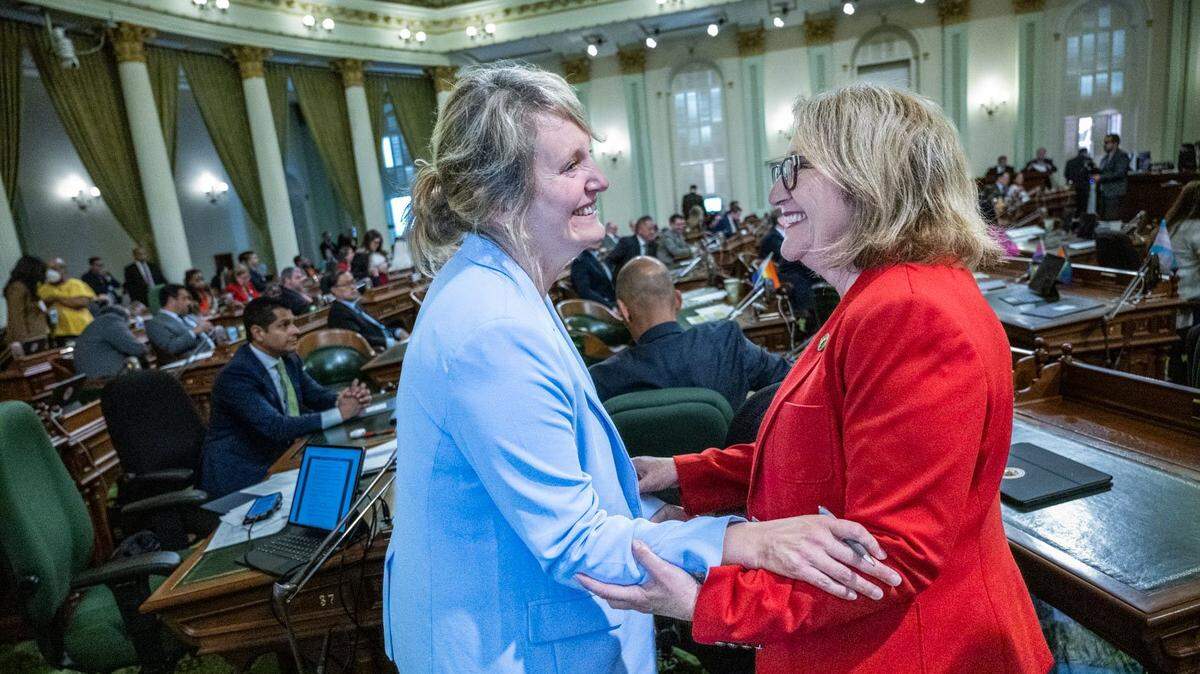
A California bill that would make Google and Facebook pay for news content that they use on their platforms to sell ads won’t be moving forward this year.
Assemblywoman Buffy Wicks, D-Oakland, and Sen. Tom Umberg, D-Santa Ana, announced Friday that Assembly Bill 886 is being made a two-year bill, meaning it won’t be taken up again until 2024.
The measure, the California Journalism Preservation Act (CJPA), had been scheduled for a July 11 hearing in the Senate Judiciary Committee, which Umberg chairs.
“There’s still work to do, and I’d rather get it right than get it quick,” Wicks told The Bee.
Wicks said that Umberg had voiced concerns about who would benefit from the bill, and that it needed to be focused on California news publications specifically.
Umberg’s position is similar to that of The Chamber of Progress, a tech-industry-funded center-left advocacy group run by former Google exec Adam Kovacevich. It has argued that the bill would result in benefits to right-wing misinformation sources.
“Funding local news is an important goal, but CJPA would create more problems than it solves,” Kovacevich said in a statement. “Ultimately, Californians don’t want to pass legislation that benefits Fox News.”
Wicks said she agreed to Umberg’s request for a delay because of the stakes involved.
“I’m very aware that this could be a model for other states or a model for federal legislation, and I really want to make sure we get it done right,” she said.
The bill would require big online platforms to pay outlets a percentage of their advertising revenue, with the amount to be determined by an arbitrator. The money would go into a pool and be divided up and shared with news organizations. AB 886 specifies that news outlets must spend at least 70% of this new revenue on newsroom jobs. It also requires publishers to report how much they received and exactly where it went.
The measure is backed by a number of media organizations, including McClatchy, which owns The Sacramento Bee, The Fresno Bee, The Modesto Bee, the San Luis Obispo Tribune and the Merced Sun-Star. Outlets such as the San Francisco Chronicle and the Los Angeles Blade have signed on, as has the California News Publishers Association.
It also has the support of the two major California newsroom unions, the Media Guild of the West and the Pacific Media Workers Guild, the latter of which represents journalists at The Sacramento Bee.
In 2024, AB 886 will pick up where it was left off, in the Senate. It has already passed the Assembly on a bipartisan vote.
This fall, Umberg plans to hold an informational hearing on the bill and its intended goal, as well as look at other legislation passed across the globe, including in Australia and Canada.
AB 886 met with stiff resistance from the tech industry, with Meta (parent company of Facebook and Instagram) threatening to pull news content from its platforms if the bill became law.
Wicks is no stranger to tech industry challenges. In 2022, she and then-Assemblyman Jordan Cunningham successfully shepherded a bill through the Legislature that is intended to protect children on social media, despite push back from lobbyists representing the industry.
“I’ve taken on tech before, and I’ve seen these kinds of tactics before. I think tech has less sway than they had in the past,” Wicks said.