
Gavin Newsom’s $4.7 billion mental health reform plan lacks rationale, report says
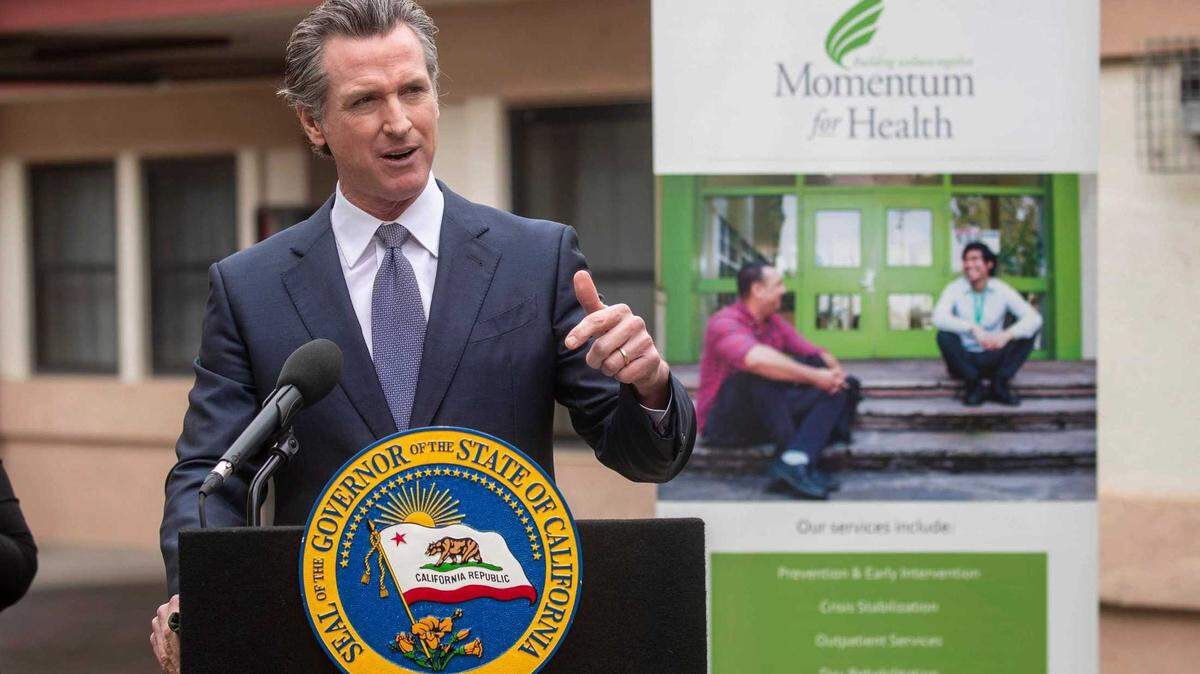
As Gov. Gavin Newsom attempts to rally support for the $4.7 billion mental health plan he wants to place before voters next year, the California Analyst’s Office is raising concerns that the proposal could actually jeopardize some ongoing mental health services.
The Analyst’s Office, which advises the Legislature on policy and fiscal matters, released a series of reports this week that criticized Newsom’s plan for adding thousands of new mental health beds and overhauling the state’s Mental Health Services Act (MHSA).
Passed by California voters in 2004 as Proposition 63, MHSA levies a 1% tax on personal incomes above $1 million to fund programs and services for Californians with serious mental health issues. The vast majority of MHSA funding goes directly to counties to use as they see fit.
Newsom has proposed a bond measure for the March 2024 ballot that would raise $4.7 billion to add up to 10,000 behavioral health beds in California. It would also make several significant changes to MHSA, including requiring counties to move funds from prevention efforts into housing and to reduce the amount of cash jurisdictions are allowed to keep in reserve.
The measure is Newsom’s latest effort to reduce encampments by treating and housing people dealing with a combination of homelessness, substance abuse or severe mental illness. It builds off of CARE Court, a new law he signed last year to compel residents struggling with mental health and addiction into court-ordered treatment.
The Analyst’s Office said that the proposed changes to MHSA would reduce funding for certain programs and could “discourage ongoing spending commitments that may help counties provide more consistent and successful mental health services.”

“We find that the administration’s justification of its proposed changes is incomplete,” a report from the LAO reads, adding that the Newsom Administration has not assessed how such changes may negatively impact current services.
“For example, while the administration cites the shortfall in psychiatric treatment beds as a primary justification for the focus on housing interventions, the administration has not provided the rationale for using MHSA — given the trade-offs — to address this and other issues,” the report continues.
The LAO is recommending the state legislature demand answers and hold the Newsom Administration accountable before approving the pair of bills that would form the March 2024 ballot measure. The bills need support from two-thirds of lawmakers.
Sacramento Mayor Darrell Steinberg, who co-authored the legislation behind MHSA as an assemblyman, said Thursday that he respectfully disagreed with the LAO’s criticisms.
“The governor for the first time is seeking to articulate statewide societal priorities for the expenditure of this money and I think that is not only appropriate, but essential,” Steinberg said. “The bills that laid the foundation for MHSA focused on people who are chronically homeless, living with mental illness. Despite our best intentions and best work, that’s not where a lot of this money is currently going.”
In response to a request for comment, Newsom spokesperson Brandon Richards did not directly address the criticisms made by the LAO. Instead, Richards said in a statement that the status quo was “not acceptable” and that MHSA needed to adapt to address “close gaps” in the state’s health care system.
The report came out a day after Newsom held a round table discussion with state and local officials and behavioral health advocates to bolster support for his plan. After the meeting, the governor told reporters he was aware of concerns about how the measure could disrupt programs and services. Newsom said members of his administration were meeting with critics and open to considering adjustments but did not specify what those might be.
“We’re hopeful that we can put a package to the voters that will be overwhelmingly supported,” Newsom said, “and that will put those dollars to use early next year.”
This story was originally published July 14, 2023 at 11:37 AM.