
Thousands of California inmates are sentenced to die in prison. Should some get to seek parole?
John Johnson and Christian Branscombe entered prison in the 1990s thinking they would never get out.
As young men, the two were convicted of murders and sentenced to life without the possibility of parole. During their decades behind bars, they were able to meet and build relationships with the people they harmed.
And both eventually received the exceedingly rare opportunity to have their sentences changed and appear before a parole board.
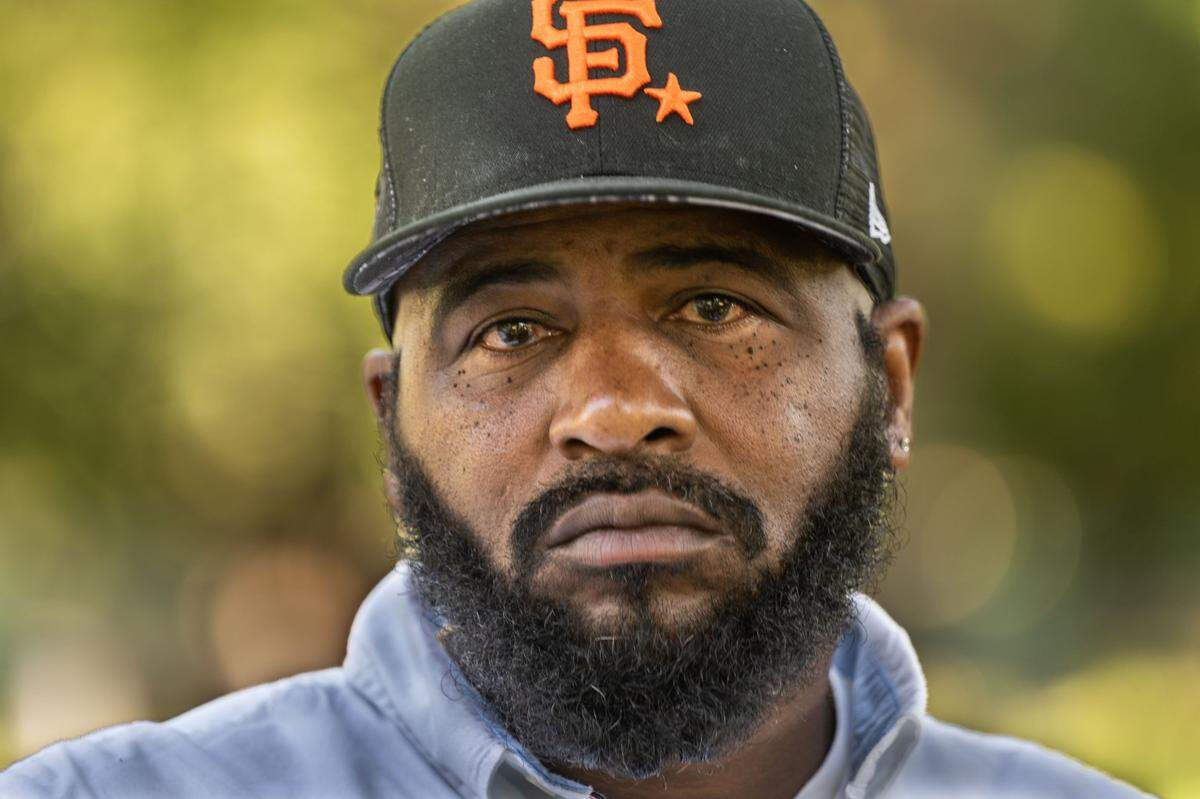
Now Johnson, 54, and Branscombe, 48, believe other California inmates set to die in prison deserve a similar chance. They are lobbying for Senate Bill 94, which would allow some life-without-parole-prisoners who committed crimes before June 5, 1990, to petition a judge for lesser sentences.
Under the bill, eligible inmates must have served at least 25 years in prison. Judges who grant inmates’ petitions would change their sentences to 25 years to life, opening up the possibility of parole.
Those who are resentenced would not automatically get out of prison. They would have the opportunity to make their cases before a parole board, which could deny them release.
The bill exempts those convicted of killing law enforcement officers, those who committed certain sexual crimes together with murder and those who killed three or more people.
“People will probably perceive it as a get-out-of-jail-free card,” Johnson said. “But it’s not that. If you’re not doing the work, and you’re not getting ready to really re-enter society, then you’re not going to get it. So for the people that’s doing the work and ready — and there’s a lot of people that are — I want them to have a chance.”
Resentencing options
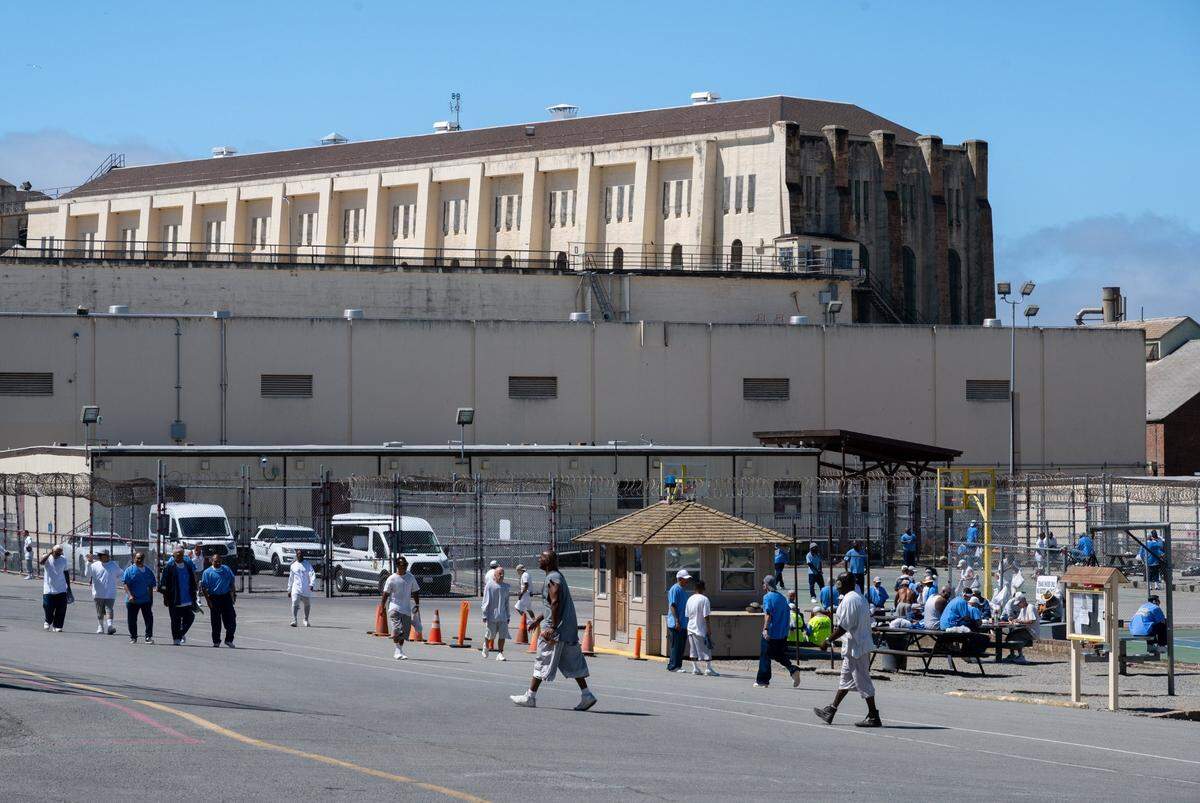
California incarcerated about 95,700 inmates as of July 31, according to the state Department of Corrections and Rehabilitation. Only about 5,000 of those prisoners were serving life without parole.
About 550 of those inmates would be eligible to petition a judge to change their sentence, according to a Senate bill analysis.
Bill author Sen. Dave Cortese, D-San Jose, and criminal justice reform advocates say some eligible prisoners received harsh sentences under a system that may look at their crimes differently today. They say inmates have worked hard to change themselves and atone for their crimes, and they no longer belong in prison.
“If there’s one of those, or two, or four out of 500, then I think we have a compelling reason to create a due process path for them,” Cortese said. “That allows them to make their case. And then it’s up to judges, parole boards and the governor, ultimately, to make a decision.”
Cortese has also pointed out that most inmates eligible for SB 94 would be older upon release — in their fifties, at least. Recidivism rates drop significantly for those released in their fifties and beyond, according to a 2018 CDCR report.
But opponents, including crime victims and district attorneys, believe life-without-parole inmates already have adequate avenues to seek sentence changes and commutations. They say SB 94 unfairly prioritizes prisoners over victims and lacks provisions requiring inmates to demonstrate remorse for their crimes or that they have rehabilitated themselves.
“SB 94 is unbalanced, in my view, in the administration of the law concerning the process,” said Todd Riebe, Amador County District Attorney. “It’s not concerned with what the victims think, and it’s stacking the deck heavily on the side of the petitioner.”
Currently, prisoners serving life without parole have a couple of options for seeking resentencing. They can appeal to the governor for a pardon or commutation through the clemency process, which results in a limited number of sentence changes.
Former Gov. Jerry Brown pardoned more than 1,300 inmates and commuted sentences for another 285 from 2011 to 2018. Gov. Gavin Newsom has granted 144 pardons and 123 commutations since 2019.
Prisoners can also get resentenced through referrals from district attorneys, CDCR, the Attorney General’s Office and county sheriffs.
Riebe thinks those resentencing routes are sufficient. Cortese disagrees.
“We have people in prison now ... who don’t fit within those other schemes, those other potential procedural remedies,” he said. “This is just the path for those who remain.”
Criminal justice policy changes
California lawmakers have spent the past decade and a half trying to rethink stringent sentencing laws from the 1980s and 1990s that led to mass incarceration of Black and brown people.
A panel of federal judges in 2009 ordered California to reduce its prison population to alleviate severe overcrowding. The U.S. Supreme Court upheld this ruling in 2011. Since that time, the state’s incarcerated population has decreased due to a combination of legislation and ballot initiatives.
The state changed a handful of lower-level crimes to misdemeanors, shifted some inmates to county jails and allowed prisoners to more quickly earn credits for good behavior and participation in rehabilitation programs. CDCR also released thousands of inmates during the COVID-19 pandemic to prevent virus transmission.
One lingering tough-on-crime initiative from 1990, Proposition 115, looms over SB 94. Among other things, Proposition 115 broadened the scope of what is considered felony murder. And those convicted of murder and another felony, known as a “special circumstance,” face the death penalty or life in prison without parole.
SB 94 applies only to prisoners convicted of crimes that took place before voters approved the measure on June 5, 1990. That’s because Proposition 115 made it impossible for courts to strike a special circumstance that has been admitted or a jury has found true.
A previous Cortese measure from 2021, Senate Bill 300, would have eliminated the provision requiring a death or life-without-parole sentence for felony murder with special circumstances in cases where the convicted person was not the killer and did not intend to kill. The bill required a two-thirds vote in both legislative chambers to alter the initiative, and it died on the Assembly floor.
SB 94 advanced from the Senate floor with 22 votes, just one more than it needed to move forward.
Opponents like Riebe insist Cortese is trying to circumvent the will of the voters who passed Proposition 115 more than 30 years ago. But the senator does not buy that argument.
“Pre-1990, there was no initiative,” Cortese said. “There was no will of the voters over what is the remaining cohort of inmates who were sentenced, that are still alive, prior to that time.”
Crime victim opposition
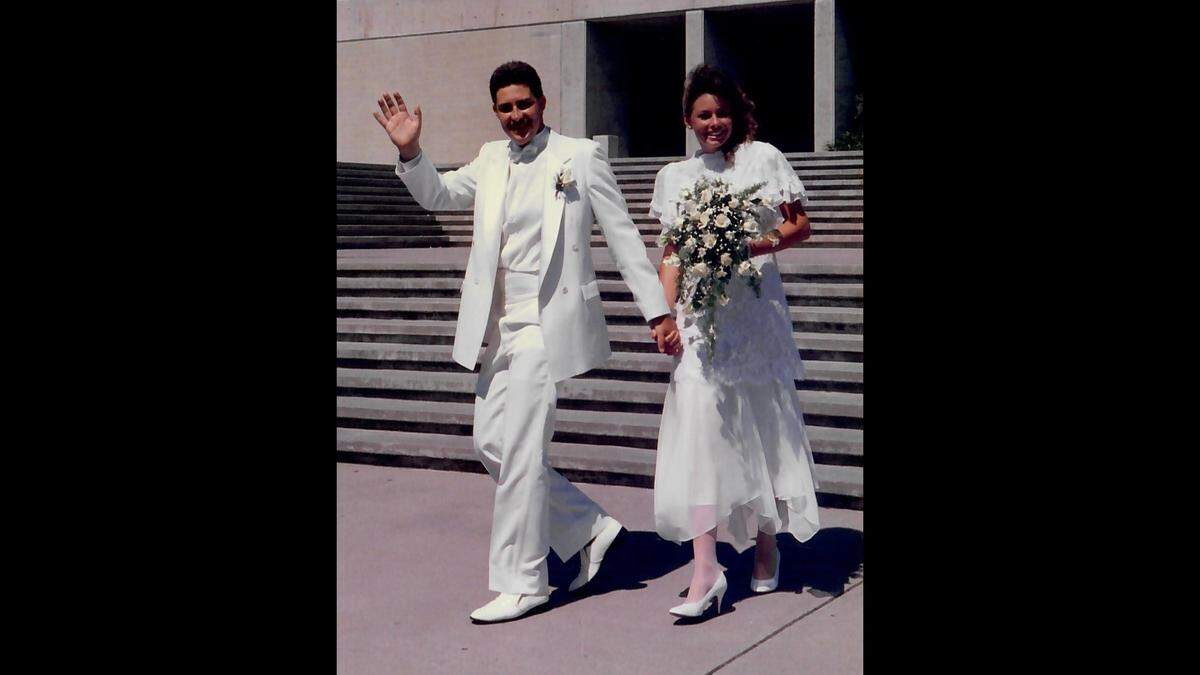
Vickie Petix was 23 and living in the San Diego area in 1988, when a man posing as an apartment handyman tried to rape her. He fatally stabbed Petix’s 31-year-old husband when he came to her rescue.
David Allan Weeding was convicted of the murder and attempted rape and sentenced to life in prison without parole.
Petix’s experience has led her to believe no one serving that sentence should get a chance to change it.
“Life without parole is life without parole, period,” she said. “Does that mean I don’t feel for those families? I mean, I do. I am a caring person, and I can only imagine the pain that those families of convicted felons have. But they had their day in court. And no judge, no parole board for life without parole should be allowed. The sentence was made, and that’s what it is.”
Life after release
Johnson and Branscombe are among a very small group of life-without-parole inmates who have gotten the opportunity to appear before a parole board.
Johnson was 19 when he killed a woman in a San Mateo County car crash in 1989 while fleeing a robbery. He received a life-without-parole sentence and spent decades in prison before connecting with the woman’s sister.
The two started communicating in 2021 through CDCR’s victim-offender dialogue program. The victim’s sister eventually lobbied the San Mateo County District Attorney to get Johnson resentenced.
He was granted parole in October 2022 and got out of prison on March 29. Johnson now lives in transitional housing in Los Angeles, where he has a job at a nonprofit that helps clean up Skid Row. At night, he works at FedEx.
Johnson now sees the victim’s sister as his “mentor,” and he is eager to see her once the conditions of his parole allow it.
“She would always tell me that punishment without mercy isn’t really punishment,” Johnson said. “That was her saying. That really stuck with me. And so we made a path just to do whatever we can to help other people heal from these types of situations.”
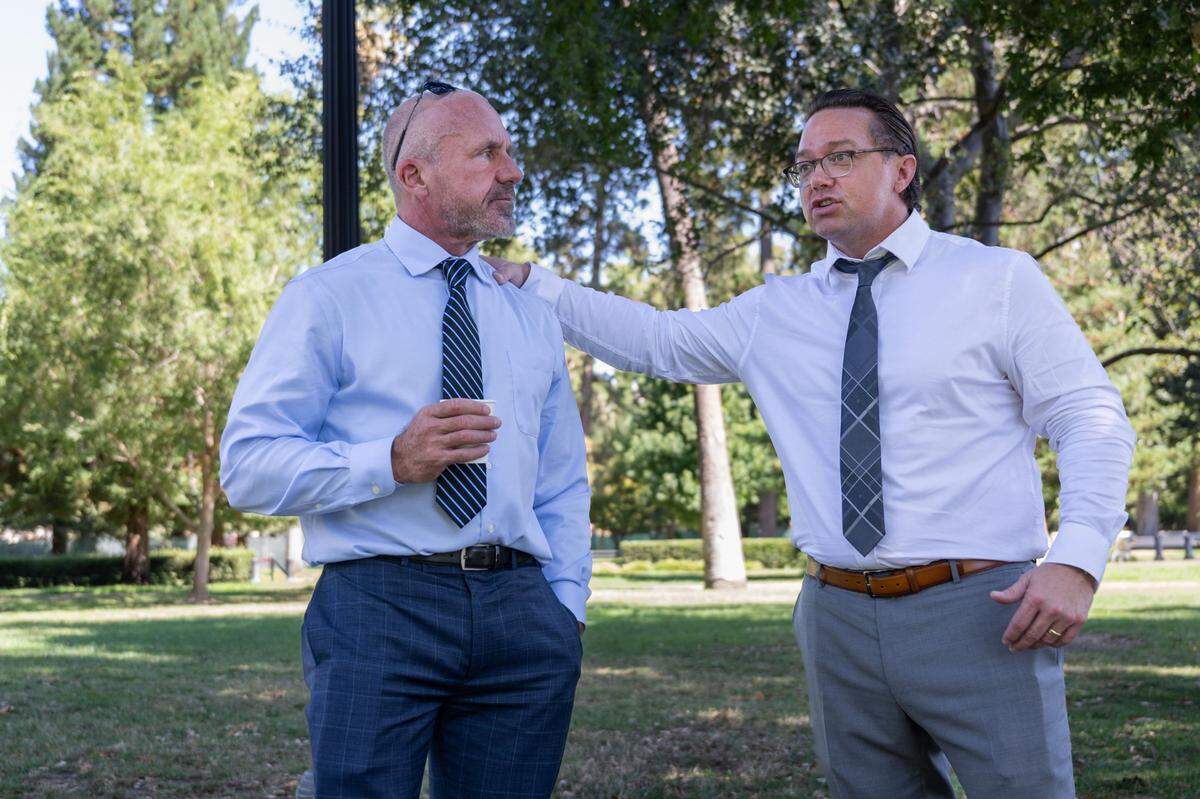
As a 19-year-old, Branscombe shot two people during a 1994 robbery in Sacramento, killing one of them. He also received a life without parole sentence. Over time, he dedicated himself to recovering from a drug addiction, leading a prison art program and training rescue dogs.
After more than 20 years in prison, Branscombe was able to meet with Gunner Johnson — who survived after being shot during the robbery — through a CNN show called “The Redemption Project.”
Branscombe and Johnson engaged in hours of emotional conversation. After Brown commuted Branscombe’s sentence in 2018, Johnson spoke on his behalf at his parole hearing.
Following Branscombe’s release in August 2019, the two became friends. Johnson even served as best man at Branscombe’s wedding.
Branscombe now lives in the Los Angeles area and has a life coaching consulting business. Johnson works with a program at Sacramento State called Project Rebound, which helps previously incarcerated people who want to be California State University students. He also helps with a horticultural therapy program for prisoners.
“I get to see remarkable human beings inside that have so much to offer society, and many of them were sentenced to die in prison,” Johnson said. “And it’s heartbreaking. There’s people that have made that choice to become better people without the hope of ever getting out.”
SB 94 is on the suspense file in the Assembly Appropriations Committee, which will decide whether to advance it to the Assembly floor on Friday.
This story was originally published August 31, 2023 at 6:30 AM.