
Buy an app off the Google store? You could soon be owed money. Here’s what to know.
Tech giant Google could soon pay hundreds of millions of dollars in restitution to consumers who made purchases on the Google Play Store between August 2016 and September 2023.
The payments would be part of a settlement with all 50 states, the District of Columbia and the territories of Puerto Rico and the Virgin Islands.
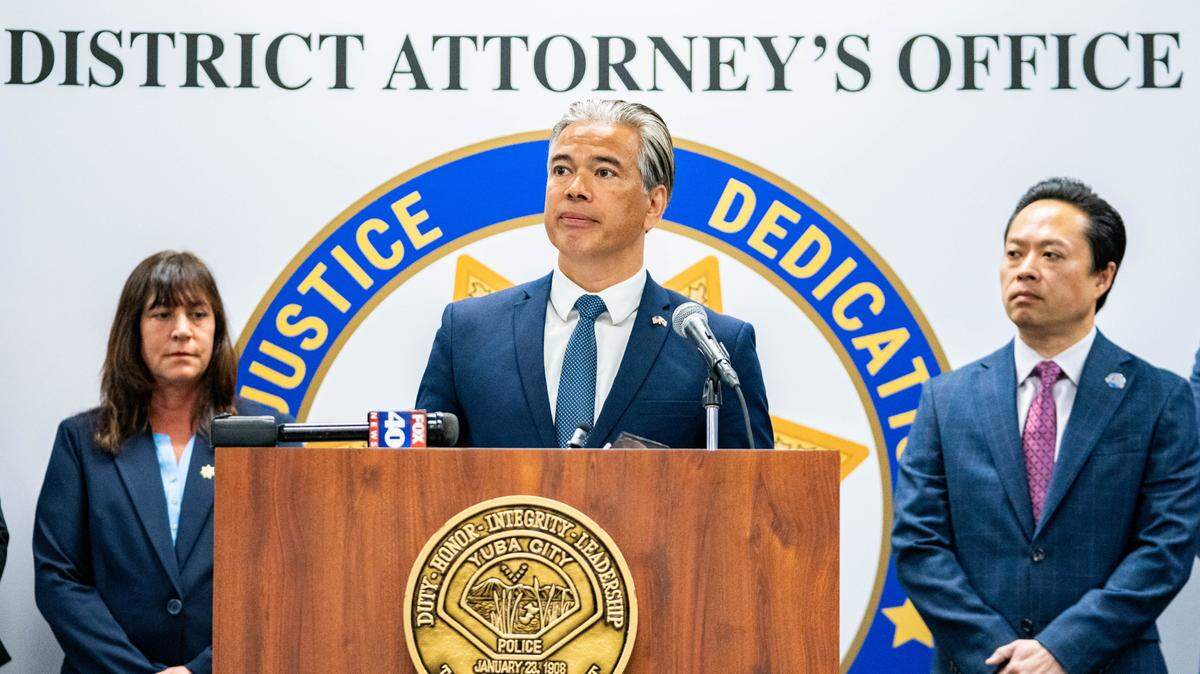
California Attorney General Rob Bonta, whose office participated in the multi-state lawsuit, announced the $700 million settlement Tuesday — which includes $630 million in restitution and $70 million in penalties, fees and costs.
The settlement affects people who were harmed by Google’s anti-competitive practices in that seven-year period, Bonta’s office said.
People eligible for restitution will not be required to submit a claim. They will be compensated via PayPal, Venmo, check or bank transfer, depending on their preference.
The settlement comes two years after the lawsuit was filed, alleging that Google unlawfully monopolized the market for Android app distribution and in-app payment processing.
“Specifically, the states claimed that Google signed anti-competitive contracts to prevent other app stores from being preloaded on Android devices, bought off key app developers who might have launched rival app stores to the Google Play store, and created technological barriers to deter consumers from directly downloading apps to their devices,” according to Bonta’s office.
Under the terms of the settlement agreement, for the next five years the company will be required to give all developers the ability to allow users to pay through non-Google Play Billing in-app billing systems, allow developers to offer cheaper prices for apps and in-app products and permit developers to steer consumers toward non-Google billing systems.
Google also will be required to submit compliance reports to an independent monitor during that five-year period.
“Google took advantage of Android phone customers by limiting consumer choice and capitalizing on commissions for in-app purchases, all while limiting alternative ways to download apps. Google’s anti-competitive behavior hurt consumers by limiting their options, inflating prices on in-app purchases, and creating an unfair marketplace designed to funnel ill-gotten profits back to the company,” Bonta said in a statement.
In a statement released following the announced settlement, a Google spokesperson said the company was pleased to reach an agreement in the case.
“Android and Google Play provide choices and opportunities for innovation that other platforms we compete against simply don’t — from allowing for multiple app stores and avenues of app distribution to piloting new ways for users to pay for in-app purchases.
“We’re pleased to reach an agreement that builds on that foundation and we look forward to making these improvements that will help evolve Android and Google Play for the benefit of millions of developers and billions of people around the world,” the statement read.
Not everyone was satisfied with Tuesday’s announced settlement however.
Corie Wright, vice president of public policy for Epic Games, which took Google to court over its alleged anti-competitive practices, released a statement calling it “a one-time payout with no true relief for consumers or developers.”
“Consumers will continue to overpay for digital goods as a result of Google’s imposition of supracompetitive 30% fees for Google Play Billing or 26% junk fees on top of payments Google isn’t involved in processing. Developers will also continue to be restricted in how they distribute their apps, and developers who choose to use a third party payment option will be forced to use Google’s deceptively-labeled ‘user choice billing’ system rather than having creative freedom over the design of their payment systems,” Wright said.
The settlement still must be approved by a judge before it is finalized.
This story was originally published December 19, 2023 at 12:25 PM.