Court halts Biden’s student loan repayment plan. How this affects California borrowers
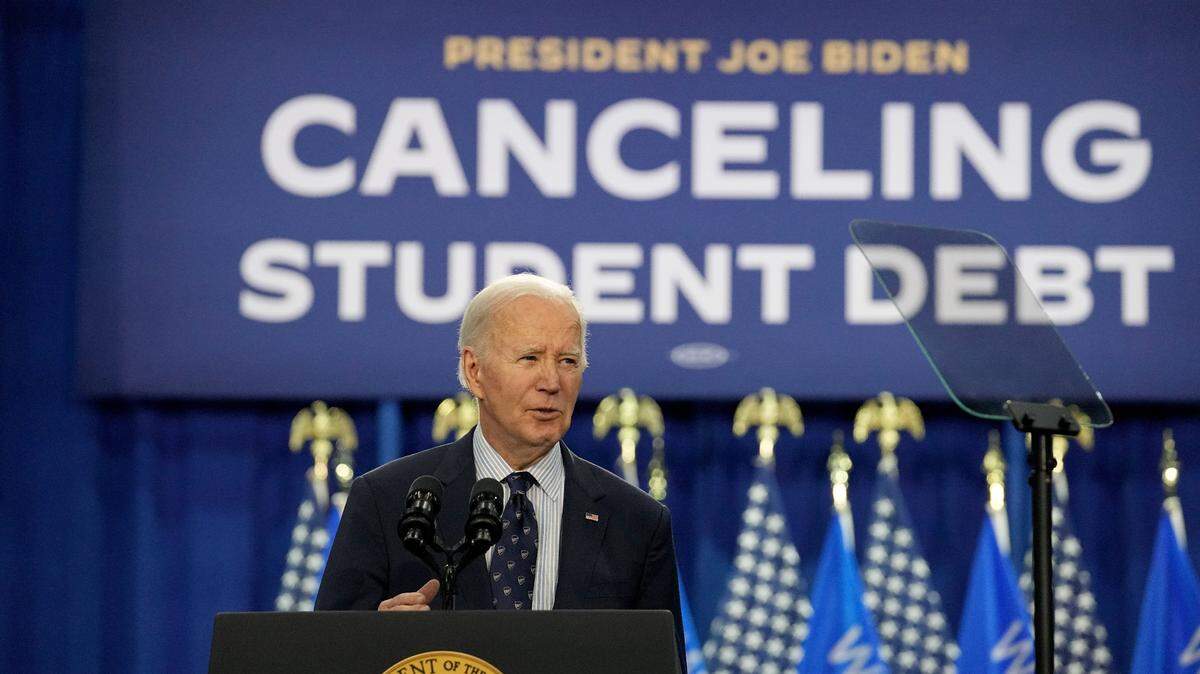
A federal appeals court on Thursday temporarily blocked implementation of the Biden administration’s student loan repayment plan that aimed to lower monthly payments for hundreds of thousands of Californians.
The U.S. Court of Appeals for the 8th Circuit in St. Louis agreed to Republican-led states’ request to halt President Joe Biden’s Saving on Valuable Education program, known as SAVE, while legal challenges work their way through courts. A lower court judge in Missouri had already paused future debt forgiveness under the SAVE plan.
SAVE is considered a more generous income-driven repayment plan with lower monthly payments and faster routes to debt forgiveness. Almost 670,000 Californians were enrolled in SAVE as of April, according to the White House.
The Biden administration launched the SAVE plan last year. It’s full implementation to further reduce federal payments was supposed to take hold July 1, 2024.
But the future of the program has been thrown into doubt as a pair of GOP-led challenges seek to invalidate SAVE, with states saying that the administration overstepped its legal authority, and that officials were trying to work around a Supreme Court 2023 ruling against Biden’s initial student debt relief plan, that impacted more borrowers.
With SAVE blocked pending court cases, its future is cast into doubt for 8 million enrolled borrowers, more than half of whom had $0 monthly payments.
“Borrowers enrolled in the SAVE Plan will be placed in an interest-free forbearance while our Administration continues to vigorously defend the SAVE Plan in court,” Education Secretary Miguel Cardona said in a statement Thursday night. “The Department will be providing regular updates to borrowers affected by these rulings in the coming days.”
What is the SAVE plan?
An income-driven repayment plan sets a borrower’s monthly payment at an amount that’s meant to be affordable based on income and family size. Monthly payments under an income-driven repayment plan are a percentage of someone’s discretionary income, or money that an individual has after paying for necessities and taxes.
SAVE initially decreased borrowers’ monthly payments compared to other income-driven repayment plans by redesignating discretionary income to be the difference between a borrower’s adjusted gross income and 225% of the poverty level. Other plans use 150% of the poverty line.
The federal poverty level in 2023, when SAVE started, was $14,580 a year for a single person. The 2024 federal poverty threshold for a one-person household is $15,060.
Individuals earning less than about $32,800 a year had no monthly payments under SAVE. Others saw reduced monthly payments.
Borrowers on SAVE have been making monthly payments on their federal student loans that amounted to 10% of their discretionary income under these calculations.
The administration’s plan was to lower the amount people paid on their undergraduate loans from 10% to 5% of their discretionary income beginning in July. Borrowers with both undergraduate and graduate loans were to pay a weighted average between 5% and 10%. Graduate school-only borrowers would continue to pay 10%.
What forgiveness did SAVE offer?
SAVE also offered a quicker route to forgiveness than other income-driven repayment plans. Federal student loan borrowers on other income-driven repayment plans must make payments for 20 to 25 years before having the remainder of their debt discharged.
Under SAVE, people who initially borrowed less than $12,000 could have their remaining debt canceled after a 10-year period of repayment, with a scale for others who took out slightly more to have loan balances erased before the 20-year mark.
The Department of Education had already used parts of the plan to erase $5.5 billion in debt for 414,000 borrowers using SAVE before the Missouri ruling blocked further forgiveness.
When SAVE came to be, federal student debt payments were resuming after a three-year pause during the coronavirus pandemic.
This story was originally published July 18, 2024 at 2:44 PM.