
The California Legislature returns this week. Here are 3 things you should know
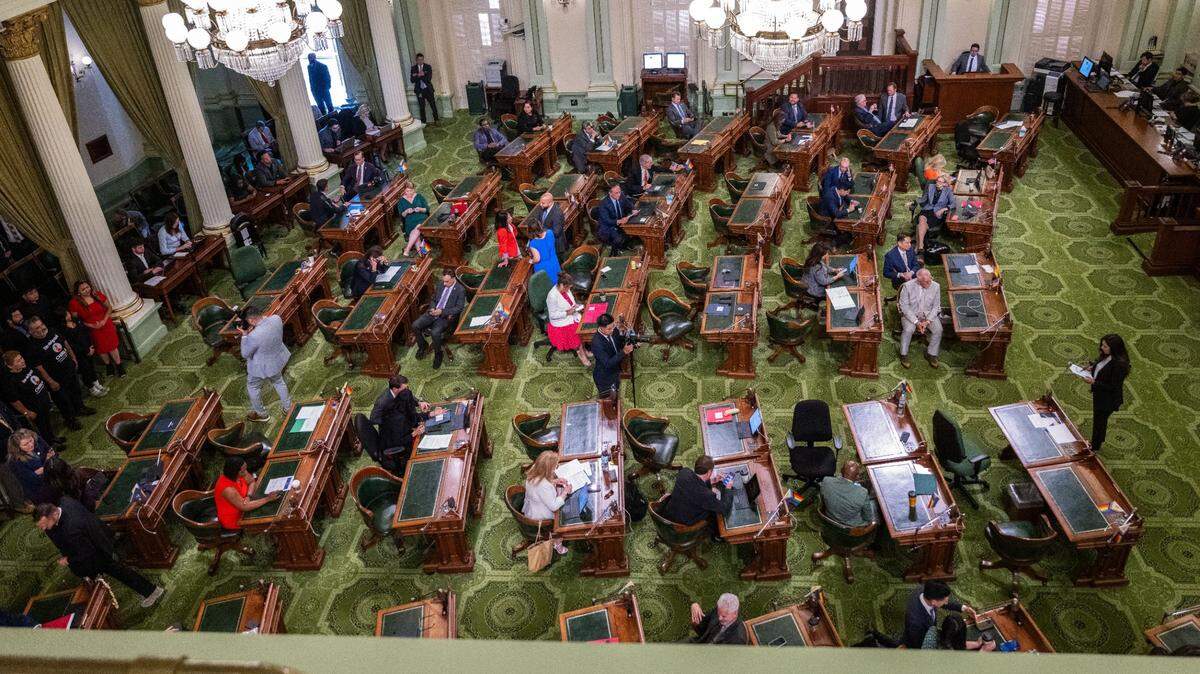
California legislators will return to Sacramento this Monday after spending almost all of July on summer break.
Though they have wrapped up a difficult budget negotiation, lawmakers must still debate and vote on hundreds of bills before their work is done for the year.
Lawmakers will tackle bills touching on a wide variety of issues from the tech industry to retail and grocery stores, higher education to election interference when they resume work.
Here are three things to know as legislative work resumes Monday.
Lawmakers have a variety of bills to tackle
Lawmakers have a good deal of unfinished business waiting for them starting Monday.
In the Senate, there is Assembly Bill 886, which would tax online platforms such as Google and Meta to pay into a fund intended to support California journalism.
There’s Assembly Bill 1780, which would end legacy admissions at private universities, such as Stanford.
Assembly Bill 2236 would ban grocery stores and retailers from offering reusable plastic bags, while Assembly Bill 2655 would prohibit artificial intelligence-generated “deepfake” videos from being shared on social media platforms if they pertain to elections.
In the Assembly, Senate Bill 1043 would crack down on so-called “troubled teen” reform facilities, while Senate Bill 1446 would limit grocery stores’ ability to offer self-service checkout stations.
Lawmakers have four weeks to wrap things up
Lawmakers have until Saturday, Aug. 31, to send any remaining bills to Gov. Gavin Newsom.
According to an analysis from Sacramento lobbyist Chris Micheli, there are about 1,350 bills remaining to be debated in the Senate and Assembly, including more than 1,000 that are set to be heard by the two houses’ powerful appropriations committees.
Once the Legislature wraps up business on Aug. 31, Newsom has until Sept. 30 to sign or veto any legislation on his desk.
Two major committees meet this week
On Monday, the Senate Appropriations Committee will hold a hearing, where it will determine whether to place nearly 500 bills on its suspense file or advance them to the Senate floor, according to Micheli. The Assembly Appropriations Committee meets Wednesday to do the same thing with the nearly 300 bills on its docket.
The suspense file is intended to serve as a place to hold bills that have a significant financial impact — it also tends to be where lawmakers dump controversial or unpopular bills. Bills that are placed on suspense then will have their ultimate fate determined at a pair of hearings set to take place Aug. 15.
On that day, the two committees will determine whether to kill or advance hundreds of bills to their respective house’s floor.
This story was originally published August 5, 2024 at 5:00 AM.