
Gavin Newsom vetoes AI regulation bill, says rules require ‘delicate balance’ in California
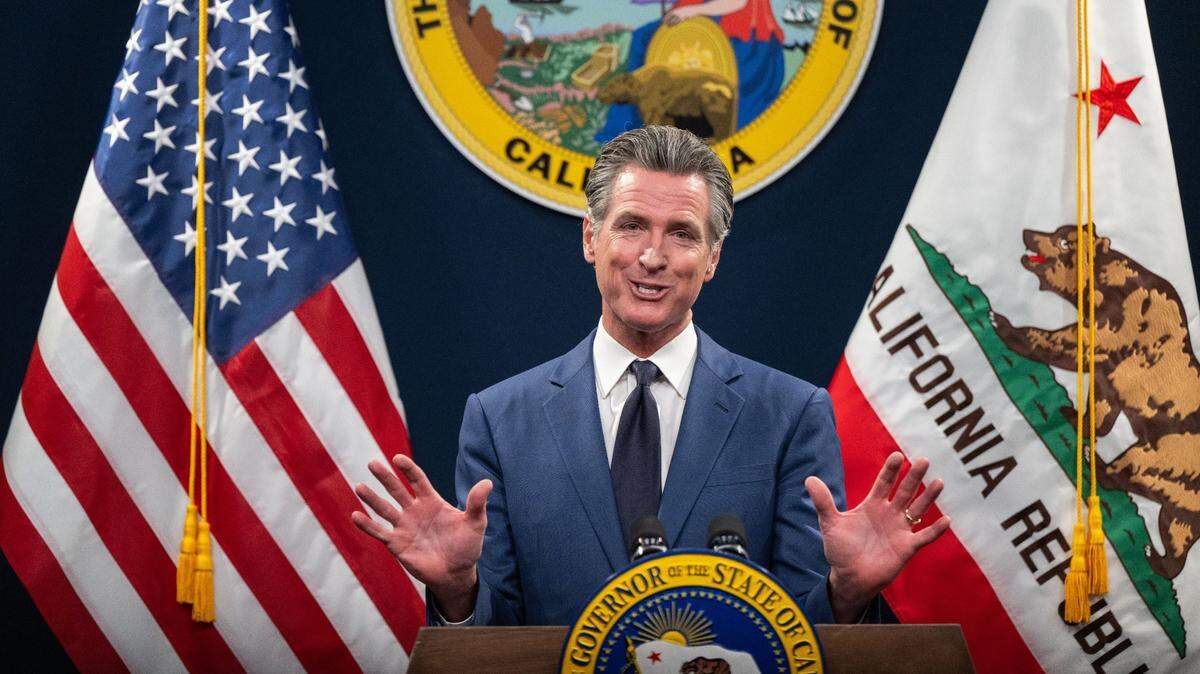
Gov. Gavin Newsom vetoed a bill closely watched by leaders in California’s tech industry to impose strict regulations on the largest generative artificial intelligence models in development.
Senate Bill 1047 by Sen. Scott Wiener, D-San Francisco, would have required developers of large-scale AI models to create guardrails to prevent “critical harms” like those out of a sci-fi movie: bank meltdowns, power grid paralysis and new biological weapons.
It also would have allowed the state attorney general to enforce the rules and create a state board to monitor the industry.
The proposal split Silicon Valley’s tech scions and political representatives. Some argued it would have stifled innovation while others said it included “light touch” regulations that were necessary in the absence of federal rules around the quickly-growing technology.
Newsom, in a three-page veto letter Sunday, said the bill “magnified the conversation about threats that could emerge from the deployment of Al” but said it missed the mark by focusing only on the largest models in development.
“Adaptability is critical as we race to regulate a technology still in its infancy. This will require a delicate balance,” Newsom wrote.
His veto message continued: “While well-intentioned, SB 1047 does not take into account whether an Al system is deployed in high-risk environments, involves critical decision-making or the use of sensitive data. Instead, the bill applies stringent standards to even the most basic functions — so long as a large system deploys it. I do not believe this is the best approach to protecting the public from real threats posed by the technology.”
The governor said he agreed with Wiener that “we cannot afford to wait for a major catastrophe to occur before taking action to protect the public.”
“California will not abandon its responsibility,” Newsom wrote, adding that “safety protocols must be adopted. Proactive guardrails should be implemented, and severe consequences for bad actors must be clear and enforceable.”
“I do not agree, however, that to keep the public safe, we must settle for a solution that is not informed by an empirical trajectory analysis of Al systems and capabilities. Ultimately, any framework for effectively regulating Al needs to keep pace with the technology itself,” he continued.
Newsom said he was “committed” to working with lawmakers, the federal government, tech experts, ethicists and those in academia on a path forward.
“Given the stakes — protecting against actual threats without unnecessarily thwarting the promise of this technology to advance the public good — we must get this right,” he concluded in his veto.
“This veto is a missed opportunity for California to once again lead on innovative tech regulation — just as we did around data privacy and net neutrality – and we are all less safe as a result,” Wiener wrote in a statement on X.
The San Francisco Democrat said the bill’s rejection “leaves us with the troubling reality that companies aiming to create an extremely powerful technology face no binding restrictions from U.S. policymakers, particularly given Congress’ continuing paralysis around regulating the tech industry in any meaningful way.”
Other AI bills signed
Newsom signed 16 other AI-related bills this month, according to his office. A handful of previously signed legislation impose new regulations on AI use in elections and in the entertainment industry.
One bill signed Sunday requires the Governor’s Office of Emergency Services to expand assessments of potential threats by generative AI to the state’s critical infrastructure. Another bans child pornography generated or altered by AI.