
EPA urges California to protect Native culture by keeping more water in the Delta
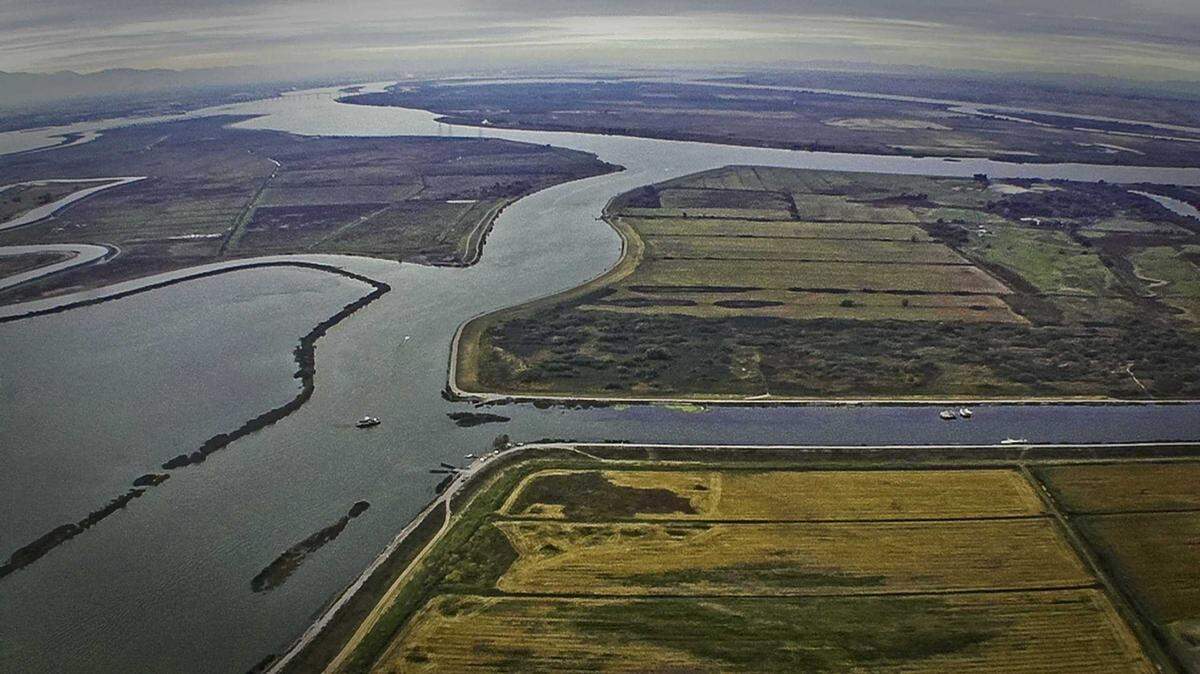
The Environmental Protection Agency urged California water regulators to protect tribal cultural practices in the Sacramento-San Joaquin Bay Delta, the troubled heart of the state’s water supply.
Comments to the State Water Resources Control Board by EPA regional administrator Martha Guzman at a hearing Tuesday marked rare federal intervention into state water politics as regulators weigh options to regulate how much water stays in the estuary.
“The EPA strongly supports the proposal in the draft plan to designate tribal cultural uses throughout the Bay Delta watershed,” Guzman said, referring to subsistence fishing. “This proposal recognizes the centrality of vital fish populations to many California tribes.”
Guzman also challenged a proposal spearheaded by Gov. Gavin Newsom to let water users voluntarily cut back on their use with limited oversight.
The Bay-Delta watershed is crucial to California’s water supply, which supports agricultural, urban, and ecological needs. But it is facing an ecological crisis as water quality and river flows drop and some species dwindle.
A century of dams and water diversions has led native fish in California to experience sharp and prolonged declines, according to regulators. Among the threatened and endangered fish are the winter-run Chinook salmon and tiny Delta smelt.
Coalition of environmental groups, tribes
A coalition of environmental groups and tribes filed a civil rights complaint with the EPA. Inadequate water quality standards have allowed the region to deteriorate, they allege, primarily burdening Native Californians who depend on fish for food and cultural preservation.
Krystal Moreno, a representative of the Shingle Springs Band of Miwok Indians, one of the parties on the complaint, applauded Guzman’s comments to the Water Board as validation of the tribe’s concerns with the status quo.
“Tribal communities need water quality standards that protect the unique way we utilize our waterways,” she said. “We appreciate her leadership elevating this issue and hope the board acts to incorporate her recommendation.”
California water regulators are weighing several controversial options for the Delta’s future. The water board is undergoing a contentious process to update a regulatory framework intended to protect water quality and ecosystem health in the region.
Several options of a draft Bay-Delta Water Quality Control Plan would require minimum amounts of water to remain in rivers and streams, forcing water suppliers and other users to cut back on how much they divert from the Delta for people and farms.
Another option
Another option is a controversial pact that Newsom reached last year with major water suppliers, called ‘Voluntary Agreements,’ who volunteered to surrender some water and help restore habitat in the watershed.
A coalition of water suppliers, mainly public water agencies distributing water to farms and cities, support the voluntary cutbacks. They say the proposal strikes a balance between offering environmental protections and providing certainty to businesses.
Guzman’s comments also challenged a proposal spearheaded by Gov. Gavin Newsom that would allow water users to voluntarily cut back with limited oversight.
If regulators move forward with Newsom’s plan, Guzman called for additional accountability and oversight. The water board “must develop robust and transparent accounting and monitoring program, one that is overseen by the board and not water users,” she said.
Environmentalists have been concerned the option does not provide enough water for fish and wildlife.
“Martha Guzman echoed the language of our petition and addresses the governor,” said Barbara Barrigan-Parilla, executive director for Restore the Delta, whose group advocates for direct regulation of water use. “This is important. Who will his legacy be for, tribes or water exporters?
Allotments of water from the state’s rivers and into concrete water delivery systems continue to be unpredictable year to year.
This week, California water managers announced a preliminary forecast for water supplies that will be available next year from the State Water Project, telling nearly 30 local agencies to plan for as little as 5% of requested allotments.
State Water Project’s aqueducts and pipelines transport water from the Sacramento-San Joaquin River Delta to 29 different water agencies that supply 27 million people.
Last year, the state’s initial forecast was 10% of requested supplies that was later increased to 40% in the spring following several storms. A weak La Niña is forecast to appear this winter, and NOAA forecasters said the pattern will likely bring drier conditions.
This story was originally published December 4, 2024 at 6:00 AM.