
What does the California resistance look like in a second Trump administration?
The day after Donald Trump’s first inauguration in January 2017, an estimated 20,000 people marched through downtown Sacramento, from Southside Park to the steps of the state Capitol, chanting “Enough is enough!” and “We won’t go back!” They wore matching, bubblegum pink knit pussyhat beanies, carried signs decorated with Princess Leia and Ruth Bader Ginsburg, and slogans such as “Nasty Woman” and “A woman’s place is in the resistance.”
The event, which lasted all day from about 9:30 a.m. to after 4 p.m., jammed traffic, public transportation and data service. It was one of hundreds of Women’s Marches across the country; the Women’s March on Washington was held in Washington, D.C., and drew at least 470,000 people — an estimated three times more than the number of attendees at Trump’s first inauguration. In California, local Women’s Marches were so popular that one in 45 people attended one.
On Jan. 21, 2025, there was no such presence. Not in Washington, and certainly not in Sacramento.
A Women’s March event appeared on the California Highway Patrol State Capitol events page for Jan. 18, but was abruptly removed from the calendar on Jan. 9. A CHP officer confirmed that the event, which was going to draw an estimated 300 attendees, was canceled, and did not share who the organizers were.
A smaller protest at the Matsui Federal Courthouse happened that day instead.
Unlike the Women’s Marches of years past, the courthouse protest was attended not by key Democratic political players, celebrities and thousands of angry voters ready to put their disappointment onto poster board and downtown sidewalks, but by hundreds of members of smaller, more progressive groups like the Peace and Freedom Party, Healthcare Workers for Palestine and the Yolo County Democratic Socialists.
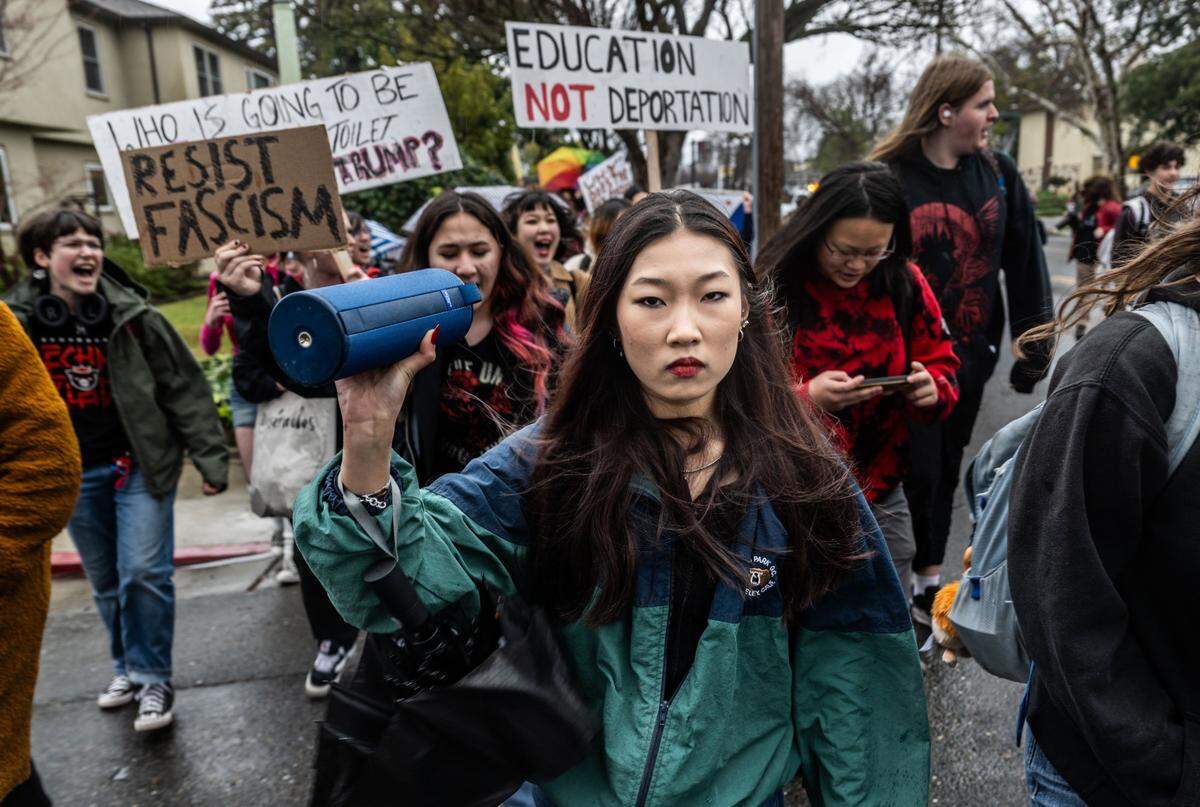
The resistance to Trump 2.0 may not mirror the intensity, anger and emotion that erupted after his first entrance into the White House in 2017. The protests are a bit more scattered, more sober and less intense.
But it’s not because Trump’s dissenters feel less anger. It’s because organizers say they have a more effective approach this time around — one with fewer pussy hats and more organization.
“Eight years ago we were all over the place, and just getting started,” said Alice Rogers, chair of the Democratic Central Committee in Siskiyou County.
“Now, we’re much more organized.”
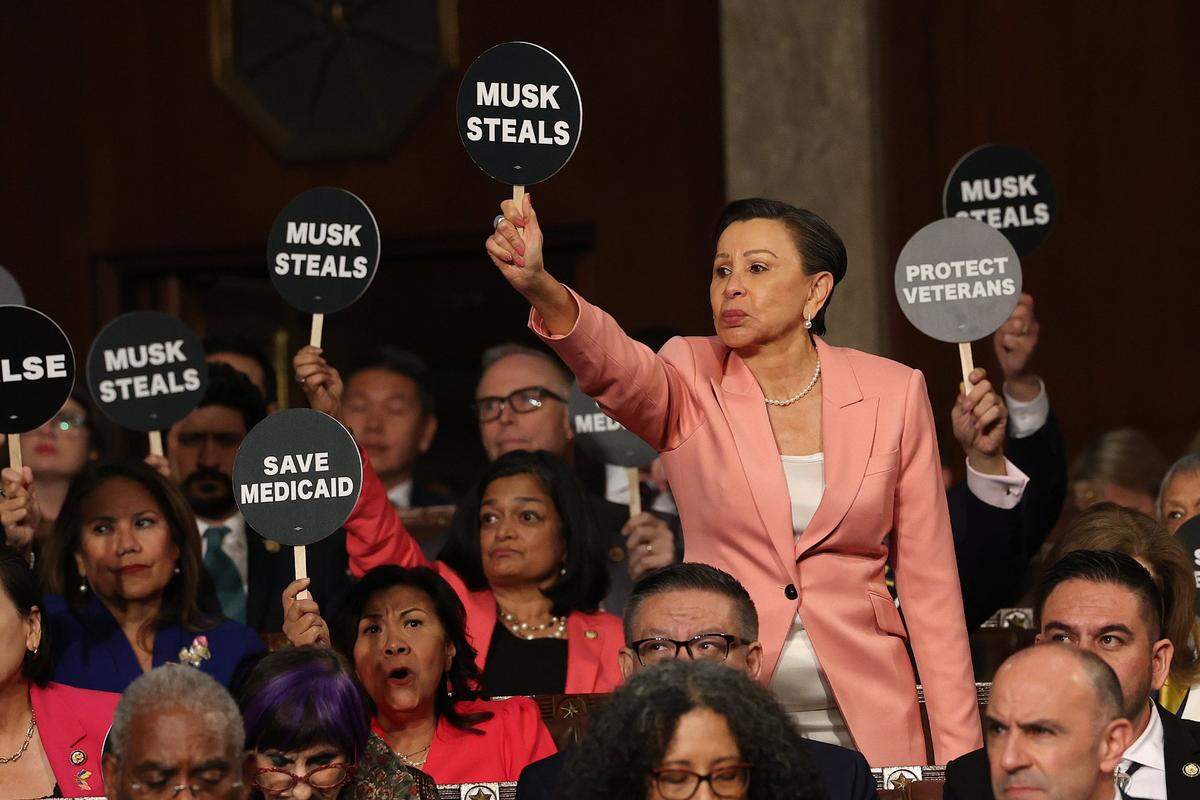
Of course, the public performances of resistance have not disappeared entirely. At Trump’s State of the Union address Tuesday evening, Rep. Al Green, D-Texas, was removed from the House chamber during Trump’s speech for shaking his cane at the president and yelling. Many Democrats wore pink “as a color of protest,” while others held signs that read, “False” and “Musk Steals” in silent protest.
And the vibe has changed. The masses are once again gathering.
It wasn’t until Trump megadonor and head of the unofficial Department of Government Efficiency, Elon Musk, began to gut several crucial government entities that major crowds began to swell once again.

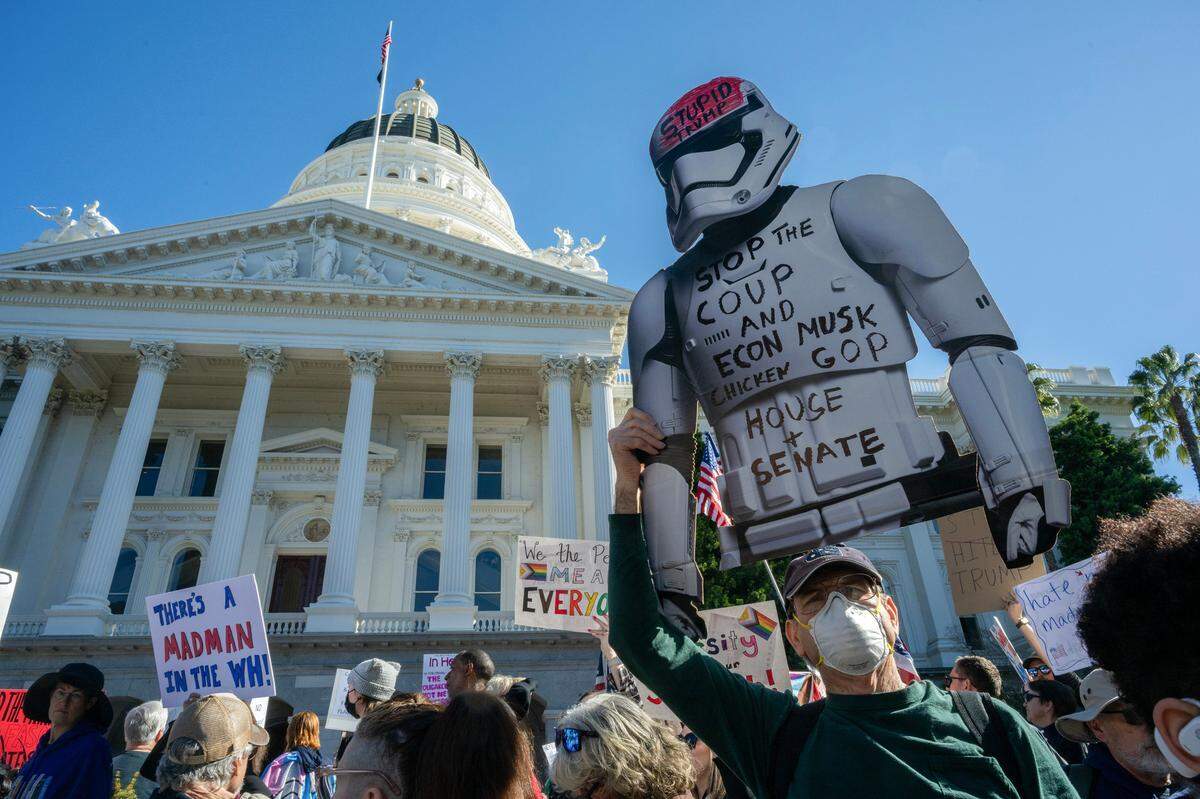
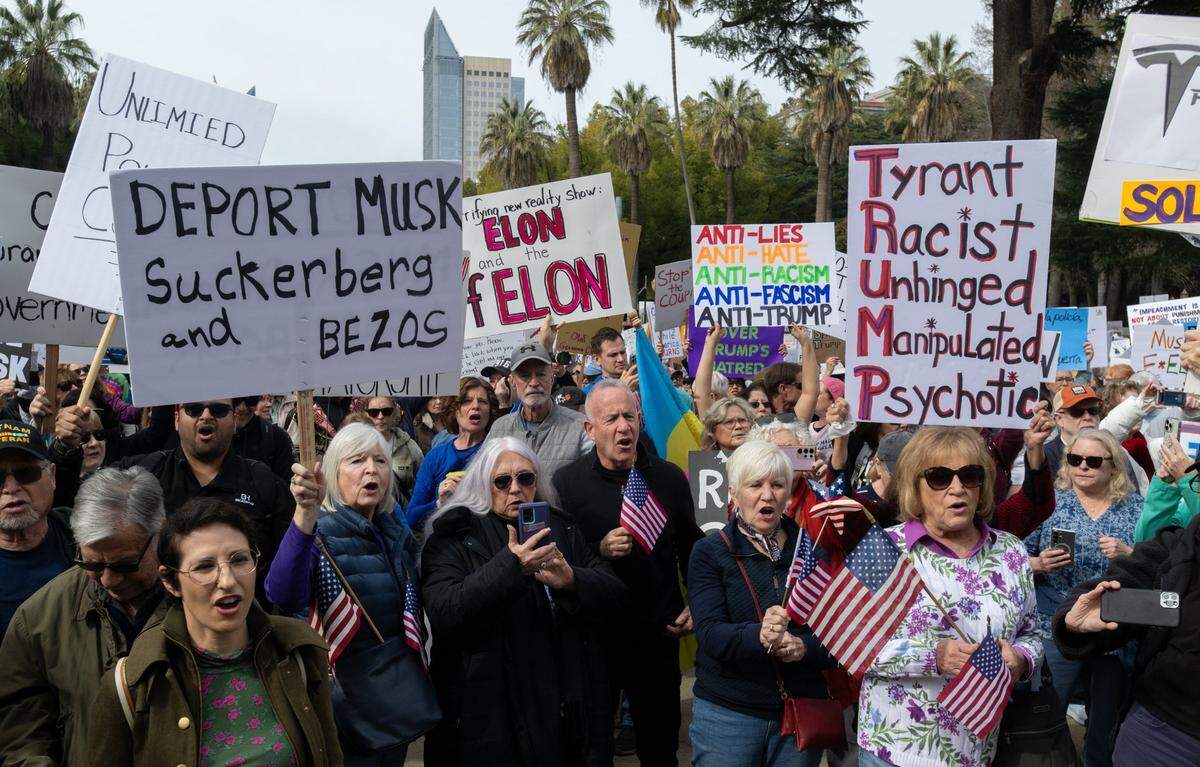
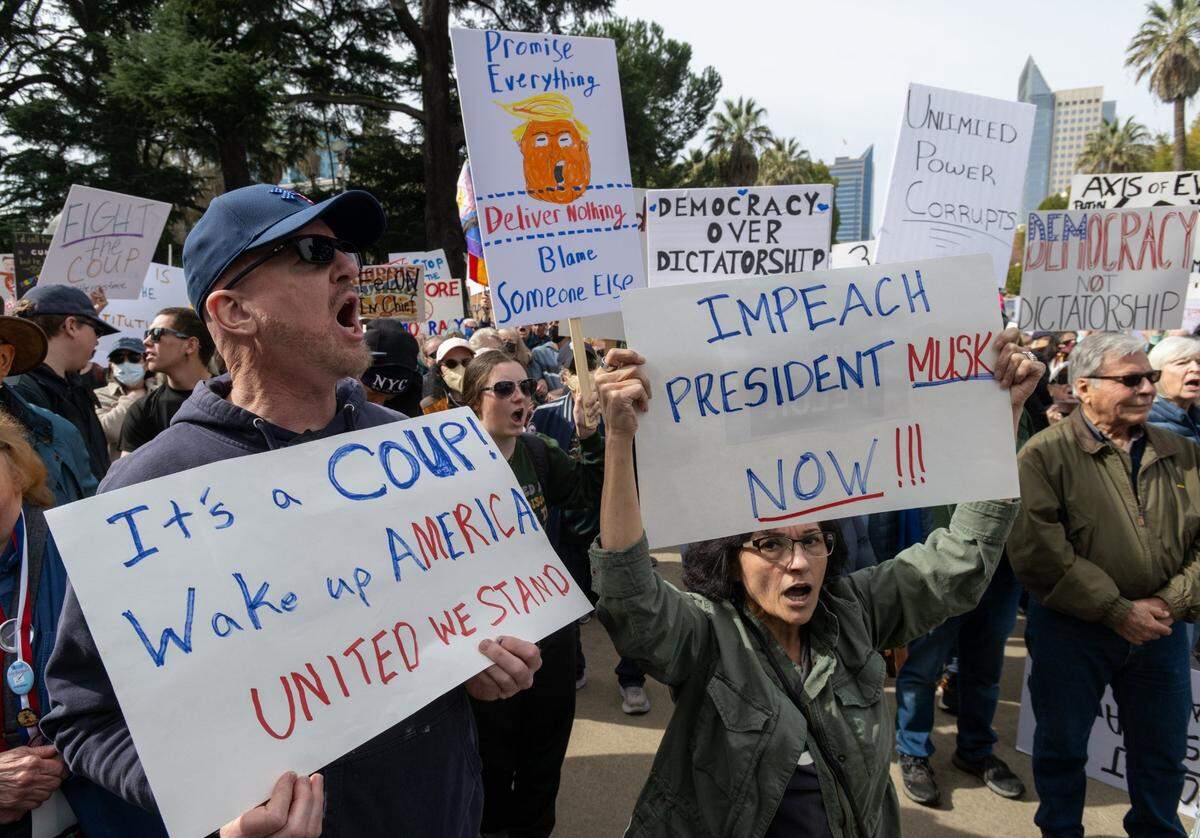
On Feb. 5, more than 600 people gathered with their anti-Musk and anti-Trump signage outside the California Capitol as part of the 50501 Project, which called for 50 protests in 50 states on one day.
It was a sizable turnout, especially for the middle of the day on a Wednesday without much advance notice; the protest slowed traffic on neighboring downtown streets, and drew several California Highway Patrol officers on horseback to monitor the swell.
The 50501 protest certainly activated an angry Democratic base. But it was no Women’s March — there were no speakers, no platform, no main characters, no meaningful organization and no central messaging beyond anger at Musk and Trump.
And as they are smarting from Kamala Harris’ November loss, Democrats have struggled to find a cohesive and unified resistance effort as Trump 2.0 gets to work. But a lack of performative resistance has not meant that there is a lack of resistance altogether.
Trump 2.0: ‘We’re much more organized’
When Trump won the 2016 election, Americans — particularly American women — who had formerly taken a casual view of politics found themselves eager to organize against the former reality television star.
Many of those women have been hard at work ever since — and this time around, they are organizing with more focus, more experience and a little more wisdom.
Rogers, who has spent the last eight years attempting to bolster the Democratic presence in the deep-red North State, said that since last November, so many people have reached out that she hardly knows what to do with herself. One thing she doesn’t want to do: protest.
“I do feel tired after eight years,” she said. She leaves the protesting to the newer and younger organizers, and works on organizing educational information events and helping people figure out how to call their Trump-supporting Congressman Doug LaMalfa.
“We all call him, we know it doesn’t do any good,” she said. “But he has to hear it. We have to put pressure on whichever way we can.”
Nagging LaMalfa’s office is particularly important given the cuts that Musk wants to make across the federal government, and the trickle-down effect that may have on the rural northern county. Siskiyou County’s biggest employers are the forestry, health service and education industries; cuts to these industries from the federal level could be devastating for her community. The United States Postal Service, which Musk wants to privatize, is also a crucial resource for many of the county’s rural citizens.
“Communication is going to be a key thing for us,” Rogers said. “We need the unity of all the other smaller counties coming together to work. We’re so small, it’s hard to be effective, but we have to think locally because that’s where we make a difference.”
Within other counties in LaMalfa’s Congressional District 1 — which encompasses much of the state’s most rural, northern and eastern counties — Rogers hopes to find candidates to run for local office and seats at the state level.
This time around, the resistance is less about witty posters and pussyhats and more about robust and accurate contact lists, effective digital communication strategies, and hosting small informational events at peoples’ homes.
“It’s just about knowing what to put in action,” Rogers said. “We’re more connected to other counties, we’re more connected to people in Siskiyou. I was in a funk after the election but we’re being forced out of the box at this point, because so many people are contacting us and wanting to get involved. And that is a positive thing.”
Dems vs progressives
Activists and organizers say that a lack of a major, visible, capital-R Resistance is not a lack of meaningful pushback against Trump, Musk, and Project 2025 — it’s just that they are pushing back more quietly, with communities that already exist to do boots on the ground work for people who may be affected by harmful policies.
“There is a resistance,” said Dave Kempa, an independent journalist and progressive activist who was the communications director in the primary election for Sacramento mayoral candidate Dr. Flojaune Cofer last year. “It’s just not so performative.”
Kempa is a critic of mainstream Democrats who have fought progressives on issues like universal health care and rent control — policies that “materially affect peoples’ lives.”
“If this is the resistance party,” Kempa said, “then what are we rallying for?”
Kempa and other progressives are less inclined to join a public display of allyship with the Democratic Party that has, in his words, “served the same class as the GOP.”
“People aren’t going to rally around that,” Kempa said.
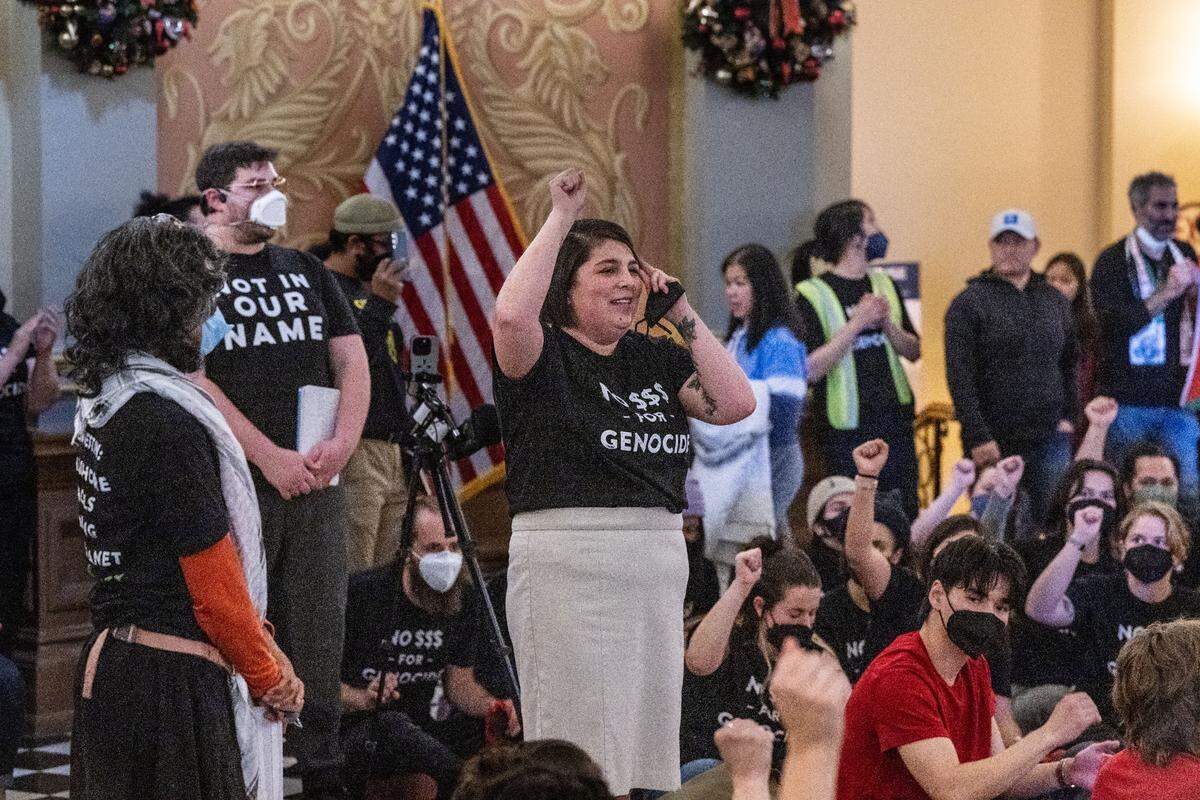
Another major point of conflict: the Democratic Party’s response to the Israel-Gaza conflict. Progressive Democrats spent much of 2024 pushing for their legislators to call for a ceasefire in Gaza and felt abandoned by the party when they didn’t do so.
“The last time Trump won, the Democrats led the resistance, and this time it feels like the people are going to lead it,” said Katie Valenzuela, former Sacramento City Councilmember and progressive political organizer who supported calls for a ceasefire in Gaza.
When Trump won in 2016, Valenzuela went to her first-ever Democratic Party meeting. She said she was dismayed by the fact that the hundreds of attendees were arguing about Bernie Sanders rather than working on immediately responding to Trump’s executive orders and how to protect immigrants.
“I think it’s much more focused this time,” she said, echoing Rogers in Siskiyou County.
Valenzuela recently attended a “Next Steps” event with Cofer, where more than 250 showed up to swap ideas and get involved in local politics. Kempa said that the Sunday after Trump was reelected last November, more than 80 people showed up to volunteer at the Seeds of Solidarity mutual aid farm in West Sacramento.
“The marches are great,” said Valenzuela. “But I haven’t been to any this cycle, and it’s not because I don’t feel a dire sense of urgency. It’s because I’m much more focused on the work we need to do. It feels so much more work-focused.”
A begrudging face of the resistance
In 2017, California political leaders took on the task of resisting Trump at the legislative level. Then-Senate leader Kevin De León, a Los Angeles Democrat, oversaw the introduction of more than 35 bills aimed at protecting the state from Trump’s policies. But De León did not have a lasting legacy in the resistance; in 2022, the then-Los Angeles City Councilmember was caught on tape making racist comments, but refused to resign. He lost a reelection bid in 2024.
In 2025, the Legislature is taking a similar tack.
Shortly after Trump was reelected last November, Gov. Gavin Newsom called for a special session to set funds aside for the state’s Department of Justice.
“The freedoms we hold dear in California are under attack — and we won’t sit idle,” Newsom said at the time. “We are prepared to fight in the courts, and we will do everything necessary to ensure Californians have the support and resources they need to thrive.”
Newsom called for the special session before a series of wildfires hit Los Angeles in January, and took heat from Republicans for not dropping the Trump special session entirely.
Assembly speaker Robert Rivas, D-Salinas, eschewed Republican complaints and brought two bills to the Assembly. One provided $25 million to the Department of Justice and the other provided the same amount for organizations to defend immigrants’ rights in the court system.
“Given the many executive orders that have been issued over the past two weeks, I can say with clarity: We do not trust President Donald Trump,” Rivas said on Feb. 3.
The bills were passed, and Newsom signed them on Feb. 7.
These legislative actions poised Attorney General Rob Bonta to become a begrudging figurehead of the resistance.
He has filed five lawsuits against the Trump Administration in just six weeks, joining attorneys general across the country in halting policies that may be discriminatory or downright illegal.
“I’m not looking for a fight. I’m not looking to be the face of a ‘resistance,’” Bonta said last week in a keynote address at a Capitol Weekly conference.
“But I also won’t sit back and let the federal administration attack our people, violate our Constitution, and pull us backwards.”
This story was originally published March 6, 2025 at 5:00 AM.
CORRECTION: This story was changed March 7, 2025 to clarify the role of Dave Kempa in Sacramento mayoral candidate Dr. Flojaune Cofer’s campaign.