
Hundreds rally in Sacramento against federal science cuts: ‘Never been an issue before’
When he retired from teaching biomedical engineering at UC Davis, David Fyhrie took a part-time job assisting the National Science Foundation in reviewing research grants in his field. One recent morning, he woke up to the news he’d been fired.
“Support NSF. I can’t. DOGE fired me,” the Davis resident wrote on the sign he brought to a Stand up for Science rally at the Capitol in Sacramento on Friday.
“Now the program is without support,” he said, of his former NSF job. “I don’t know how the person who’s left is gonna do it.”
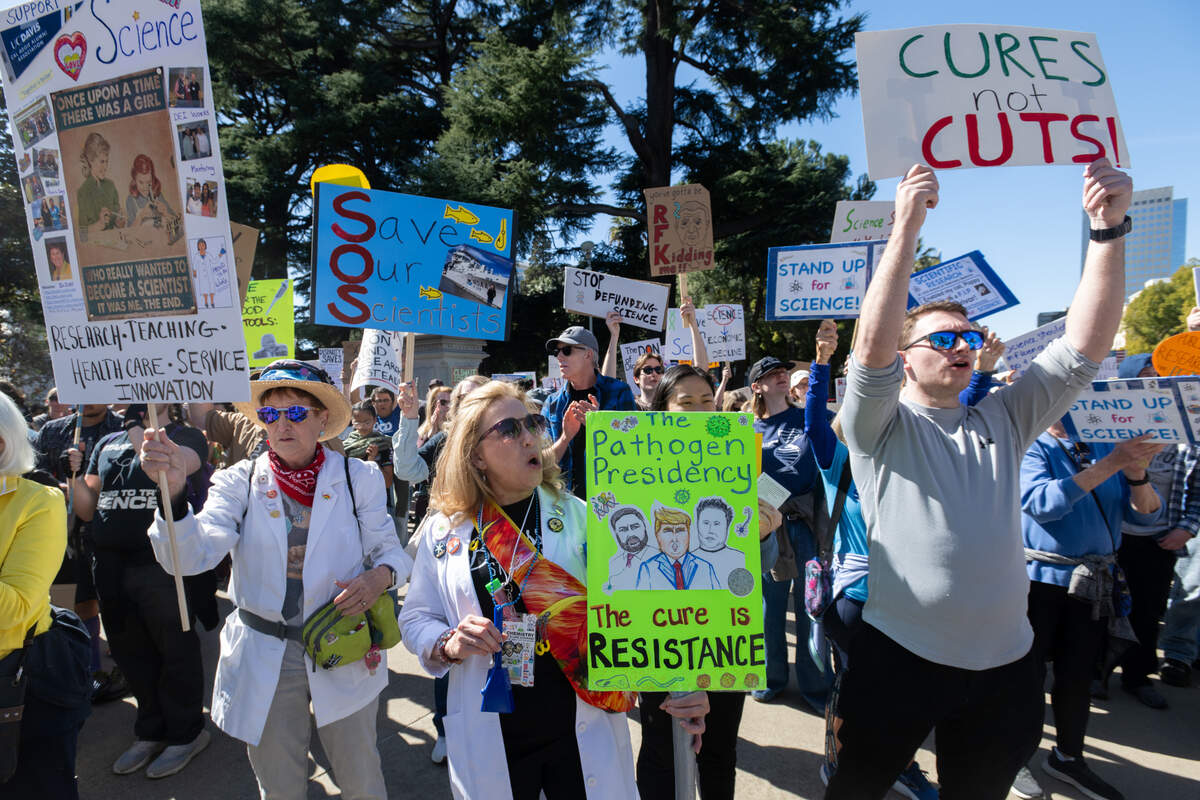
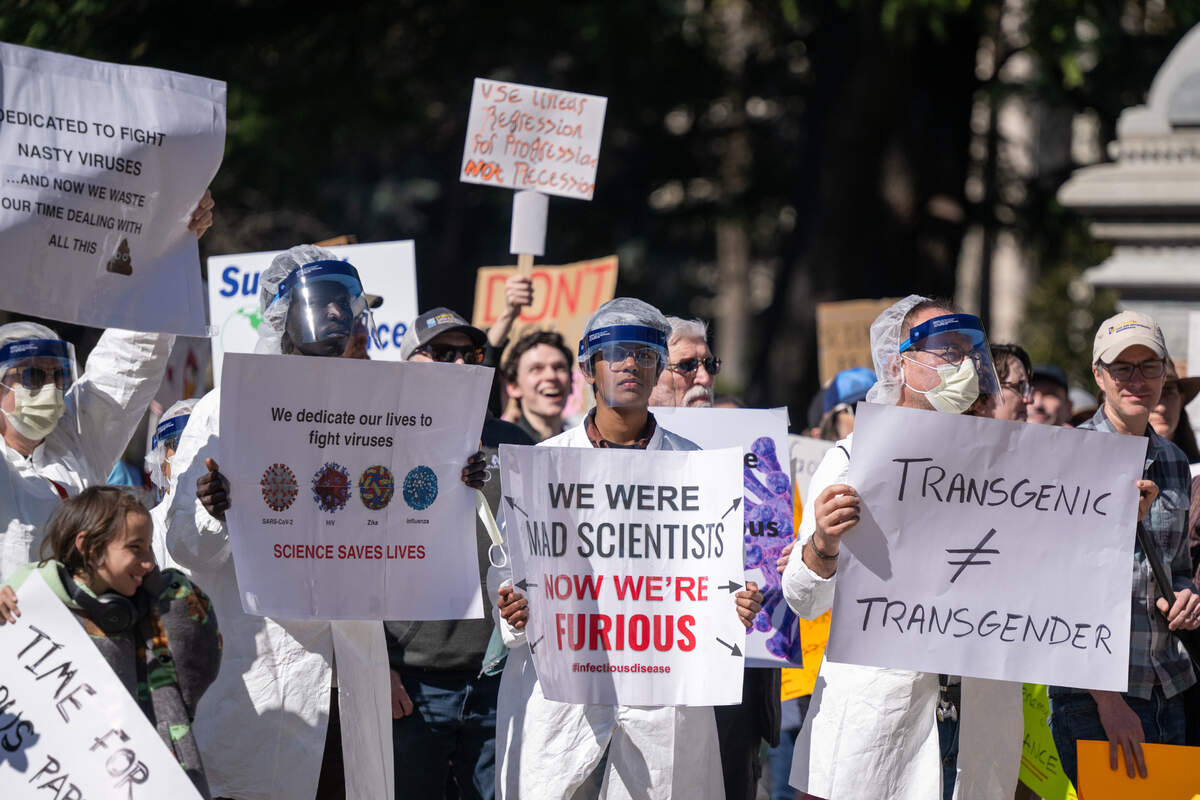
Fyhrie joined hundreds of other scientists and students at the Capitol to protest the Trump administration’s recent actions to eliminate positions at scientific agencies and interrupt research funding on the federal level. The Sacramento event was one of dozens held across the country, in addition to smaller events at some universities.
“Science has never been (a political) issue before. It’s been a bipartisan-supported endeavor, because we know how important science is for our society,” said organizer Theanne Griffith, an assistant professor at UC Davis, who said she worked on the event as a private citizen.
“It feeds us. It provides cures for rare diseases or common diseases. It makes us better, right? But ... current leadership doesn’t seem to see it that way.”
Last month, the Trump administration forbade health officials at the U.S. National Institutes of Health from giving notice about upcoming grant review meetings, throwing a wrench in the machinery of funding new scientific studies. The administration also tried to drastically cut the amount of money that could be spent on ‘indirect,’ or administrative costs, relied on by universities, although that move was blocked by a federal judge in Massachusetts.
The NIH distributes more than $35 billion annually to thousands of researchers across the country. In 2023, it funded over 50,000 grants.
According to the journal Nature, the NIH has terminated at least 16 active research grants that no longer meet “agency priorities.”
“NIH staff members have been instructed to identify and potentially cancel grants for projects studying transgender populations, gender identity, diversity, equity and inclusion (DEI) in the scientific workforce, environmental justice and any other research that might be perceived to discriminate on the basis of race or ethnicity,” the Nature authors wrote.
Sacramento-area feels hit of federal cuts
Brandon Zipp, a speaker at Friday’s rally, runs a start-up biotech firm in Rocklin, Placer Biosciences. He said his company, which relies on investments from venture groups and public markets, is already feeling the impact of an uncertain future.
“Right now, investors in the public markets are really on edge,” he said. “Any pauses and uncertainty will undeniably hurt the development of new medicines and new technologies.”
Zipp also emphasized how much the private sector relies on people trained at universities like UC Davis that receive research grants.
Another speaker, UC San Francisco professor James Fraser, said he was also in attendance as a private citizen. He said the current trend is making it impossible for the university to plan research programs, which rely on stable funding sources from the NIH.
“If we don’t invest in science now,” he said, “the students who make the discoveries, who launch new companies, who create new treatments, won’t be there when our friends and family need them most.”
This story was originally published March 7, 2025 at 5:05 PM.
CORRECTION: A previous version of this article incorrectly stated how much money the NIH distributes in grant funding.