For Sacramento’s Maggy Krell, ‘all-in’ fight over solicitation bill was worth it
Freshman Assemblymember Maggy Krell was shaken up after her first big battle in the Capitol — but she still rushed over to speak to a local Democratic club in Sacramento on May 1.
Anna Molander Hermann, a close friend, greeted Krell when she arrived. She said the prosecutor-turned-legislator was still recovering from how the morning’s Assembly floor session had played out.
Democratic leaders had stripped Krell’s name from a sex crimes bill she’d spent months working on. They put new authors in her place, and threw the future of the policy into question. She’d sided with Republicans during what became a highly charged debate, and didn’t have much to show for it.
Hermann said Krell felt like she had failed victims of sex trafficking.
“What hurt her, and caused her stomach to turn, was that these survivors weren’t going to be protected,” Hermann said.
But days later, the situation was markedly different.
Democratic leaders announced the following Tuesday a new version of the bill that preserved much of what Krell had originally sought. The Sacramento assemblymember even signed on as a co-author of the legislation, and sent out a statement of approval.
For Hermann, this came as no surprise.
“I’ve known Maggy for a long time and she somehow snatches victory out of the jaws of defeat,” she said. “She keeps working on the problem.”
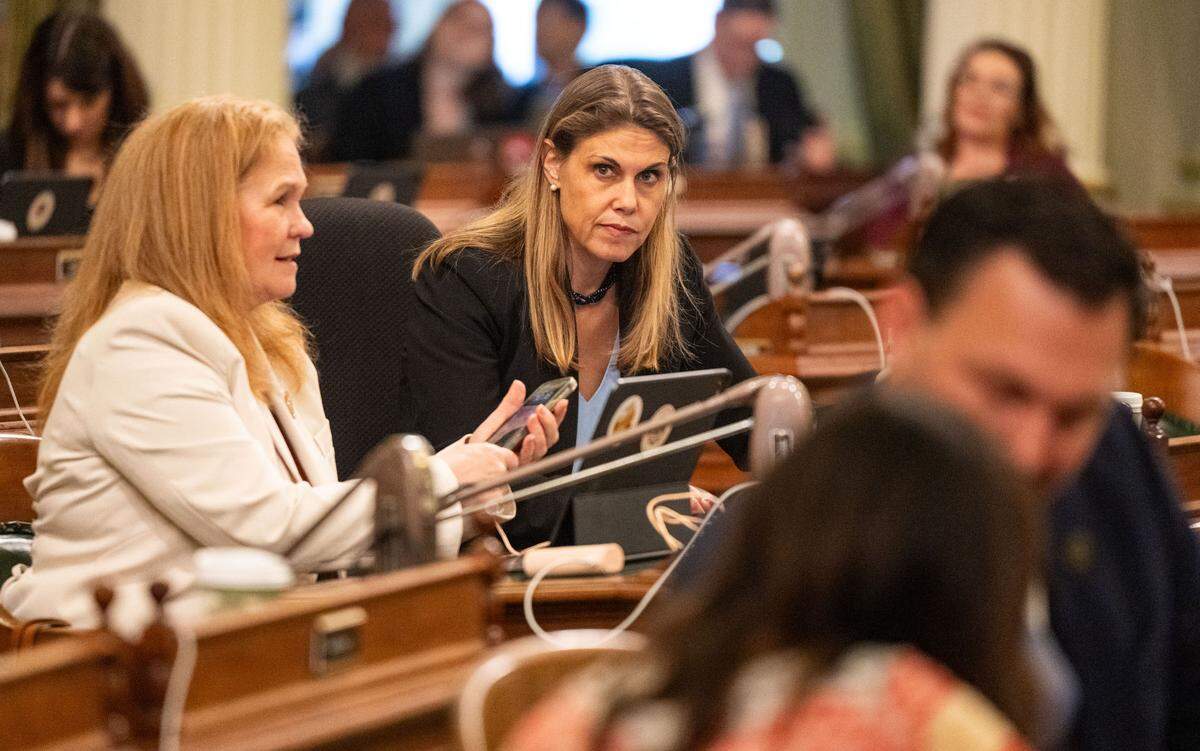
The freshman lawmaker has built a career on pushing past doubtful colleagues and confronting opposition to do what she thinks is right.
Krell’s risky move seems to have paid off for her for now, but it’s not clear how her willingness to fight for what she wants — no matter the political consequences — will serve her in an environment as volatile as the Legislature.
Stack of purple files
Krell traces her desire to help victims of sex trafficking to a morning over 20 years ago at a Stockton courthouse. She described it in the first chapter of her book, “Taking Down Backpage.”
She was a 25-year-old prosecutor, reading through a stack of purple misdemeanor files for female defendants arrested during a prostitution sting operation the night before.
The women were all young, many teenagers, mostly African American, and had been arrested in skimpy clothing late at night in the cold. For the first time in her career, she didn’t want to prosecute a defendant.
“I was supposed to be prosecuting people who made choices to harm other people or chose to violate the law,” she wrote. “What choices were these young women making?”
According to her account, Krell later identified the motel where the defendants were arrested, accused the owner and manager of knowing about prostitution was occurring, prosecuted them, and the motel was shut down. She called it “a good first little step.”
“The images of those girls from that motel in Stockton were etched into my brain and would drive me throughout my career,” she wrote.
Krell would use that motivation in her next job at the California Attorney General’s Office to push her colleagues to go further. She served two stints at the office from 2005 to 2024.
“She got our office much more involved in human trafficking cases,” said Brett Morris, a longtime prosecutor at the office who worked with Krell in its special prosecutions section.
That extended beyond human trafficking. She prosecuted Mark Peterson, a former Contra Costa County District Attorney, who pleaded no contest to perjury in 2017 for filing a false campaign disclosure statement.
“She became someone who would handle politically sensitive matters delicately, but also forcefully at the same time,” Morris said. “She finds the right thing to do and does it without concern about what it’s going to do.”
‘She’s all in’
Years after the motel prosecution, Krell executed a similar play, only bigger, when she challenged Backpage.com, a website with an “escorts” section where people posted advertisements for commercial sex.
Krell wanted to take the website down and charge the executives with felonies, but she faced doubts, including from allies. In her book, she chronicles pushback from higher ups at the Attorney General’s Office, who were worried about the scope of the project she was taking on, and wondered if the case could “backfire.”
The FBI wasn’t enthusiastic, either. Backpage had been a “prolific source of information for law enforcement,” Krell wrote, used to locate victims and make cases against pimps.
A judge even dismissed Krell’s initial case against Backpage in 2016, saying federal law protected the website’s executives from liability. The blow after years of compiling evidence left Krell feeling devastated and defeated.
But true to what her friends and colleagues have said about her, she persevered – reworking the case, and refiling it using money-laundering charges against the website’s executives. This time, the case moved forward alongside multiple simultaneous investigations and cases in other states, and in 2018, the federal government seized Backpage and it was taken down.
That outcome was not universally praised. Sex workers told media outlets that they used the site to vet clients before meeting them and its closure would drive the marketplace further into the shadows.
Even though the case was controversial, Krell received praise for how she handled it.
“Maggy has always had this remarkable ability to look at laws and figure out how to use them to help people,” said Crystal Strait, the former CEO of Planned Parenthood Affiliates of California.
Strait brought Krell on to be the group’s general counsel in 2018. During that time, Krell also volunteered to go down to the border and offer legal help to a mother who had been separated from her child under the Trump administration.
“She has a very strong moral compass that directs her,” Strait said, “and when she is passionate about an issue, she’s all in.”
Sex-trafficking showdown
That “all-in” approach came to a head over one of her first bills as a legislator.
Krell unsuccessfully ran for Sacramento County District Attorney in 2014, and in 2023, set her sights on now-Sacramento Mayor Kevin McCarty’s assembly seat. She won a crowded primary and later, the 2024 general election.
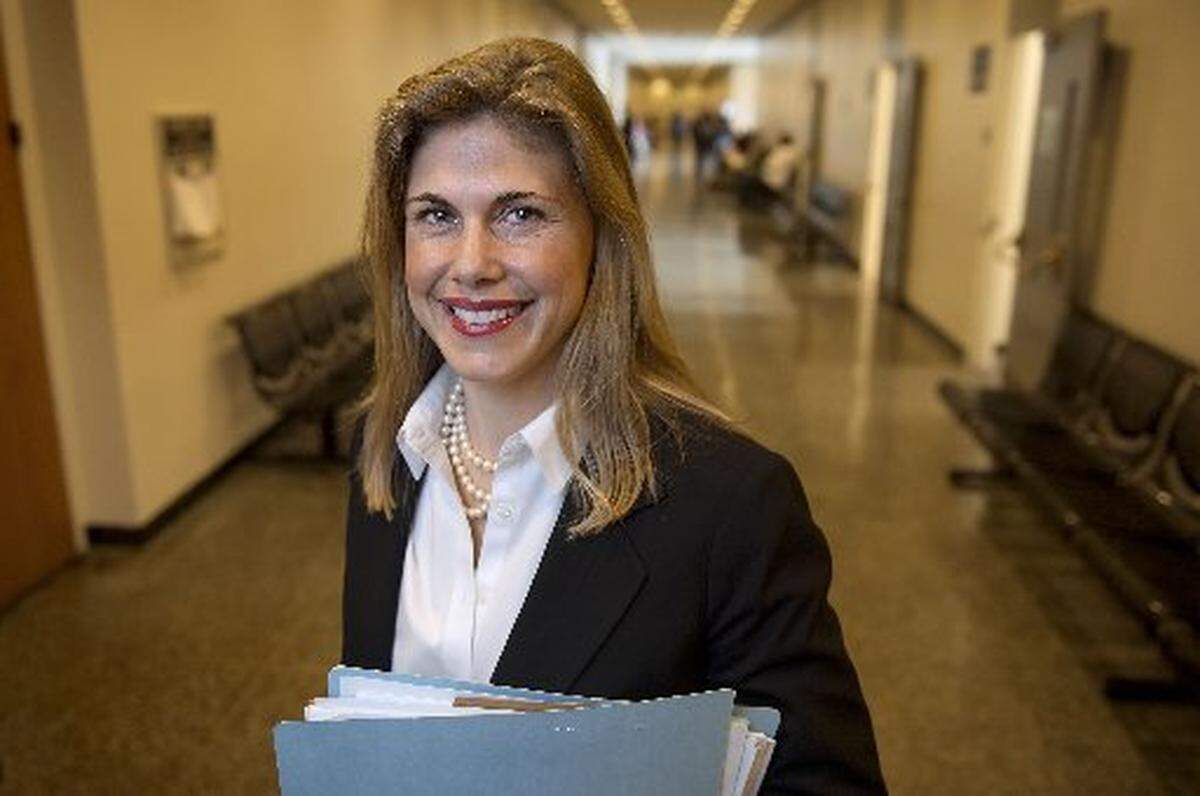
Krell wanted Assembly Bill 379, her first big swing at the Capitol, to recriminalize loitering to buy sex, create a victim’s fund and increase penalties for people who solicit, or exchange money or goods for, sex with minors who are 16 or 17 years old.
It was a controversial stance for a Democrat to take. Party leaders have resisted efforts to increase penalties in certain cases, saying it was important to counteract prison overcrowding and mass incarceration.
In March she announced the bill had 20 coauthors, many Democrats. It looked like it had a chance to pass easily.
But before it was set to be heard in the Assembly Public Safety Committee, Krell was told the bill would be pulled from the agenda unless she removed the piece about sex solicitation, she said the day before on X.
She planned to move forward without it, although she “wholeheartedly” disagreed with the amendment. The bill passed out of the committee.
Assembly Republicans seized on the opportunity to resurface a political battle they’d waged the year before by accusing Democrats of being too soft on crime — especially pedophiles and other sexual predators.
They told Krell they intended to bring her original bill to the Assembly floor and force a vote on it. Krell sent a letter to her Democratic colleagues letting them know about the plan.
“I do not consider this amendment ‘hostile’ and will be voting for it,” she said in the letter. “We should be clear and unequivocal in protecting children — especially those who are being bought and sold for sex.”
That put Democrats in a bind. Krell was breaking what could have been a united front, and the legislators would be forced into a public debate about a controversial and nuanced issue that Republicans have been eager to win in the court of public opinion. Assembly Democrats scrambled to come up with a countermeasure.
Democratic leadership took Krell’s name off the bill, and replaced it with Assemblymembers Nick Schultz, D-Burbank, and Stephanie Nguyen, D-Elk Grove. The new bill declared that it was “the intent of the Legislature to adopt the strongest laws” to protect teenage victims and “strengthen protections in support of survivors of human trafficking” but did not say how.
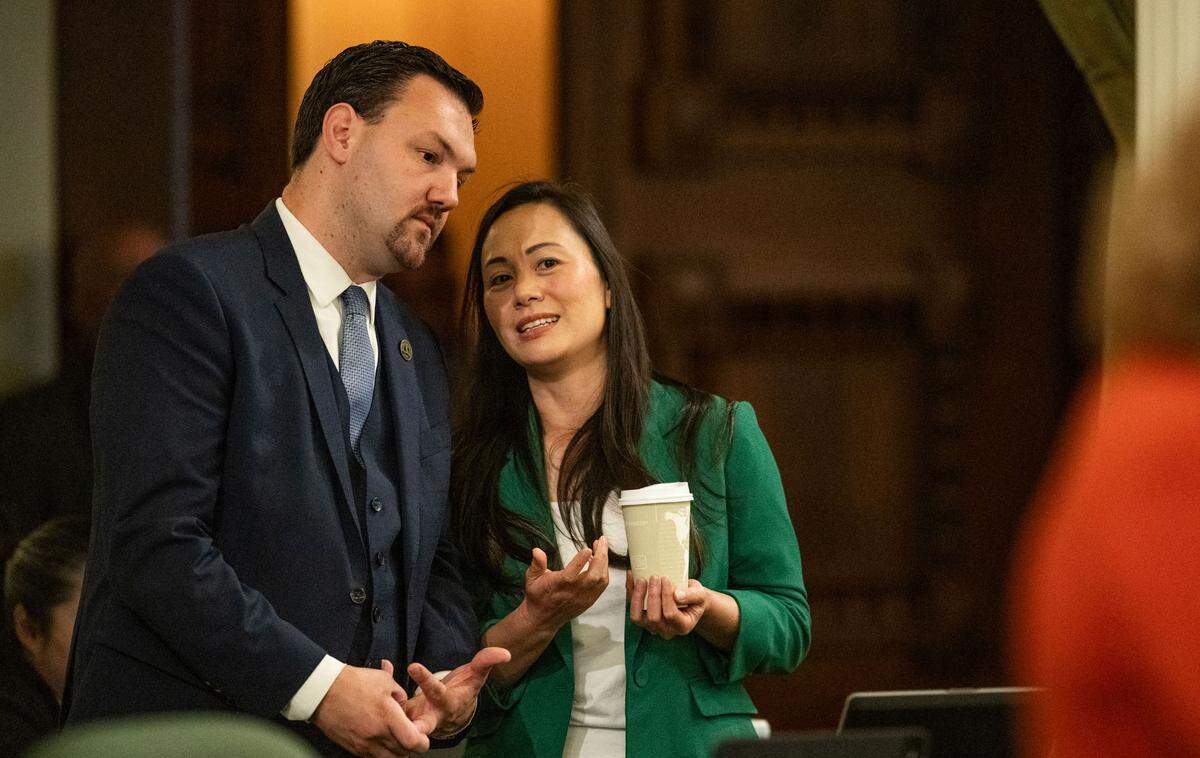
That wasn’t good enough for Krell. She said she didn’t care whether her name was on the bill, but she wanted the bill to explicitly protect 16 and 17-year-old children.
“If you’re 17 years old on a street corner and an old man comes up and purchases you for sex, that’s rape,” she said. “That should be treated as a felony.”
Nevertheless, that placeholder version of the bill was approved overwhelmingly by Democrats. Krell joined Republicans and two others in her party in opposition.
Assembly Speaker Robert Rivas told reporters after it was “unfortunate” that the debate had exploded and become a wedge issue.
He said Krell had “backed away” from the agreement she made to move the bill forward. Rivas declined to say whether Krell would face consequences for how she handled the situation.

‘No matter the cost’
A few days after the floor debate, the bill got a second life. The end result looked similar to Krell’s original bill, but didn’t allow prosecutors to file felonies against people who were less than three years older than the 16 or 17 year old they solicited for sex.
Schultz ran the changes by Krell, who approved them and signed on as a co-author. The bill advanced forward.
In the end, Krell, Schultz and Republicans all said they were happy with where the bill ended up.

But in the process, many in her party were targeted with accusations of not protecting children, and the issue put Democrats, even on the national stage, on the defensive.
During the week of the debate, the National Republican Congressional Committee put out multiple statements targeting Democratic representatives from California.
Immediately after the debate, the California Democratic Party began running ads accusing state Republicans of not protecting children. Then, the California Republican Party launched a video and social media campaign of its own singling out certain Assembly Democrats who didn’t support passing Krell’s original bill.
It’s too soon to tell whether Krell’s stubborn, dogged style will continue to serve her in the rest of her time in the Legislature — but that seems to matter less to Krell than the well-being of the victims she says she’s fighting for.
Darrell Steinberg, an attorney, former Senate President Pro Tem and Sacramento mayor, said he closely watched how the debate played out, and saw the merit in her approach.
“It’s never a mistake to vote your conscience ever,” he said. “And when you take a difficult or controversial stand that’s going to upset leadership and your colleagues, how do you navigate that in a way that allows you to maintain relationships over the course of a long session and, in some cases, many years?”
Krell told The Bee that all of the political spectacle was worth it.
“I’ll never stop fighting for victims of sex trafficking,” she said. “No matter the cost.”
This story was originally published May 11, 2025 at 5:00 AM.
CORRECTION: The story has been updated to reflect the timing of party attack ads over a sex-trafficking bill. The National Republican Congressional Committee made statements beginning April 29; the state Democratic Party started a social media ad campaign May 1. According to news reports, state Republicans started their ad campaign May 6.