Gavin Newsom shifted to the center. Some Democratic lawmakers feel left behind
AI-generated summary reviewed by our newsroom.
- Latino caucus opposes Newsom's Medi-Cal cuts to undocumented immigrants' care.
- Newsom faces growing tension with identity caucuses over policy and priorities.
- Strategists say voter focus on affordability is realigning Democratic messaging.
Democratic Latino lawmakers are waging a public fight against Gov. Gavin Newsom.
During two recent news conferences and in other public statements, members of the California Latino Legislative Caucus, one of several identity-based caucuses in the Capitol, called out Newsom for proposing significant changes to the Medi-Cal plans of undocumented immigrants over 19 years old, including adding $100 monthly premiums, eliminating dental and long-term care benefits and freezing enrollment.
The governor said the move is necessary to make up for a $12 billion deficit, but the caucus said the governor is turning his back on the values of California, and the promise he made to Californians by championing this very issue.
“It wasn’t a promise of, ‘hey, we’re going to do this only when it’s beneficial,’ ‘hey, we’re going to do this only when it’s a great budget,’” said caucus member state Sen. Caroline Menjivar, D-Panorama City. “When we say we’re approving a program, we should take on the responsibility to find the means and ways to fulfill those promises.”
Menjivar is part of the Latino, LGBTQ and Women’s caucuses. Caucuses are groups of elected representatives who advocate for the interests of state residents with particular characteristics and experiences. The Latino caucus, as well as the California Legislative Black Caucus, emerged in the aftermath of the Civil Rights Movement, said Mindy Romero, a political sociologist who runs USC’s Center for Inclusive Democracy.
“The caucuses have been and remain very powerful because they represent large swaths, especially together, of the population,” she said.
Menjivar’s participation in multiple caucuses means she’s been in conflict with the governor on a number of fronts.
When Newsom said on his podcast in March that it was “unfair” for trans girls to play sports against cisgender girls, she co-wrote the response from the LGBTQ caucus: “Sometimes Gavin Newsom goes for the Profile in Courage, sometimes not,” the statement read, in part. “...until Donald Trump began obsessing about it, playing on a team consistent with one’s gender has not been a problem since the standard was passed in 2013.”
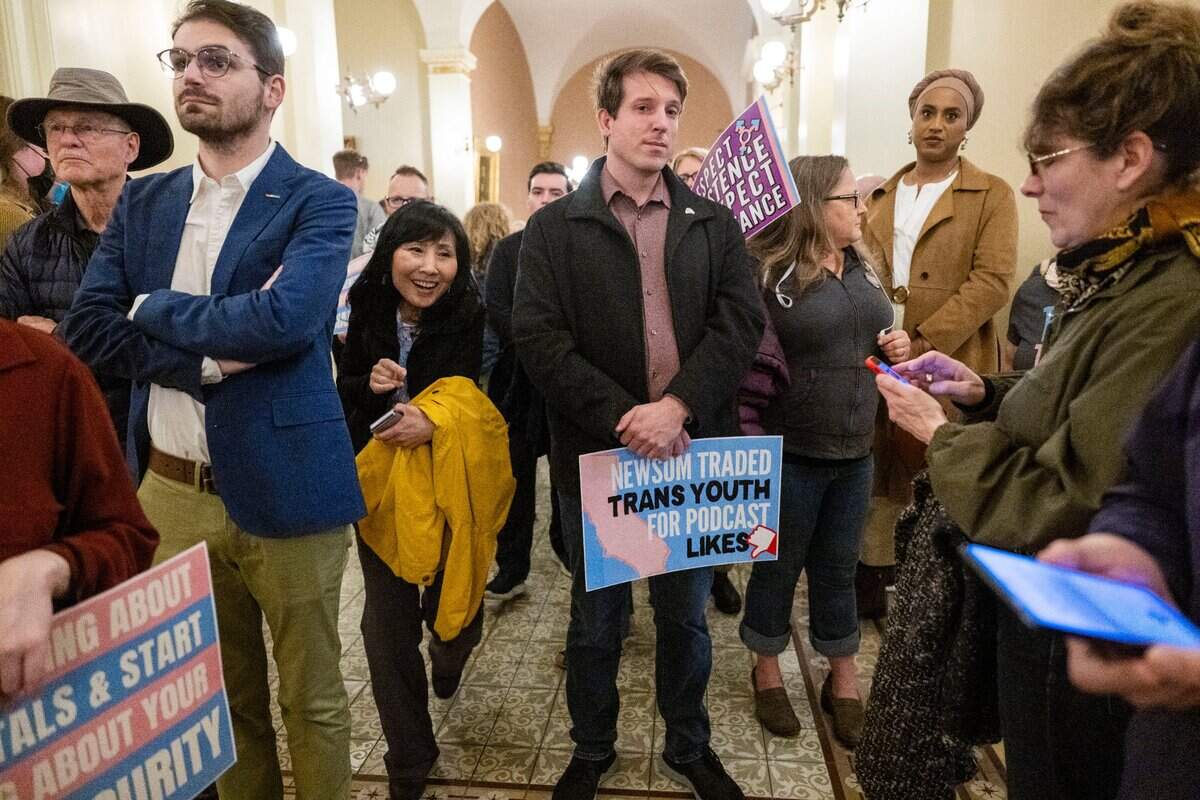
The San Fernando Valley lawmaker said it’s been a year full of surprises from on high: “It’s been shock after shock coming from my governor.”
Newsom has been publicly soul searching in the wake of Donald Trump’s 2024 presidential win, surprising members of his own party in the Legislature. The governor says he wants to make the tent of the Democratic party bigger and more appealing, but some lawmakers who represent and inhabit marginalized communities say his moves are coming at their expense and at a particularly vulnerable time for them.
The tension raises the question of what role the largely Democratic caucuses play in this environment, and what they can do to move the needle as the governor swings toward the political center.
An uncertain moment for the Democratic Party
In a TikTok video posted at the end of April, Newsom nods along with journalist Amie Parnes, co-author of “Fight: Inside the Wildest Battle for the White House,” as she argues that the Democratic Party has lost its way.
“I think it’s fundamentally one of the reasons I’m doing this podcast,” Newsom said. “I’m concerned that we’re taking the wrong lessons or not even absorbing any lesson,” from the 2024 loss.
Newsom’s TikTok feed features several searching moments like this, pulled from his podcast, where he speaks with a wide array of people from both sides of the aisle. His first guest, in March, was Charlie Kirk, a conservative activist who pulled out of Newsom his take that it’s fundamentally unfair for trans girls to play on girls’ sports teams. That statement spurred the rebuke from the LGBTQ caucus, but was largely in line with what polling in California and nationwide has shown parents feel. (The Public Policy Institute of California found in an April poll that 70% of public school parents think trans athletes should play on sports teams that align with the sex they were assigned at birth.)
“Newsom is clearly looking at the big picture, where the broad opinion is,” said Kevin Liao, a Democratic strategist who served as press secretary for former Assembly Speaker Anthony Rendon between 2015 and 2019. He said during that time advocates, not constituents, had the ear of Democratic lawmakers, and swayed much of the policy on hot-button issues. That seems to still be the case, he said, whereas Newsom seems to be “adjusting his political lens.”
California GOP strategist Mike Madrid said recent polling shows the Latino caucus may not be fully in line with the population they represent.
Madrid pointed to a recent Politico poll of about 1,020 registered voters that showed that a majority of Californians support some form of undocumented health care but that coverage shouldn’t come at the cost of the health care of people here legally. Of the roughly 200 Hispanic people who weighed in, about a quarter said the state should protect health care for undocumented immigrants no matter what, and a quarter said the state never should have opened health care up to undocumented people in the first place.
“There has to be a real period of self-examination and understanding that the politics of the last 30 years can’t be the politics for the next 30 years,” Madrid said, “because Latino voters have changed.”
For a caucus that represents about 16 million residents, or about 40% of the state’s population, the question is what to do next.
‘Retreat’ or double down?
The Latino Caucus is not the first caucus to navigate the changing waters of public opinion.
In 2020, in the aftermath of the racial justice protests that followed the police killing of George Floyd in Minneapolis, Newsom approved a task force to study what reparations could look like in California.
“Our past is one of slavery, racism, and injustice. Our systems were built to oppress people of color,” he said X. “It’s past time we acknowledge that.”
The governor thanked the Black caucus for its work on the issue.
The task force came out with their recommendations in June 2023, but by then, the protests had dwindled and the political tides had changed. A Berkeley IGS poll from September of that year showed almost 60% of Californians were opposed to the recommendation of cash payments to descendants of slavery.
Former state Sen. Steven Bradford was a member of the task force and Black caucus, and put forward measures that were inspired by the task force’s work. Despite being the vice chair of the caucus, two of his reparations-related measures were not included on the group’s priority list of bills for 2024.
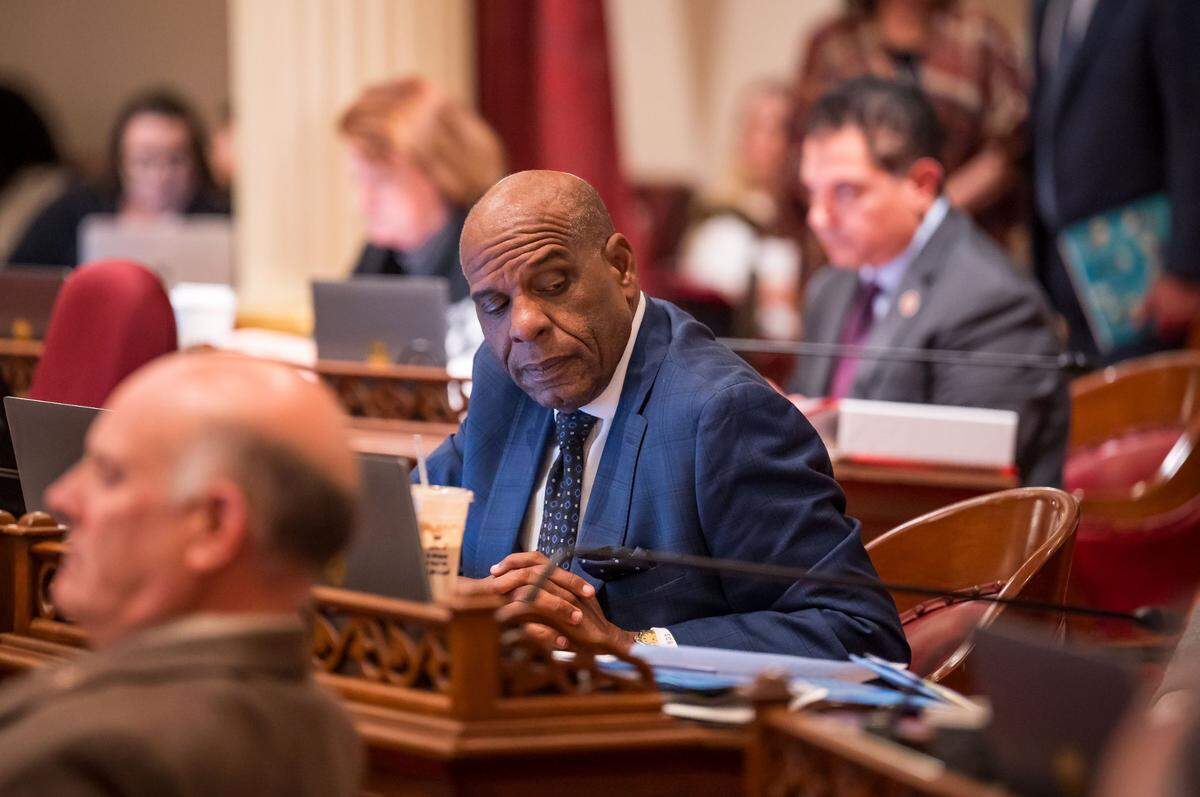
As the bills made steam through both houses, Newsom’s administration raised concerns about the bill that would create a new agency for reparations, and recommended dramatic changes to it that Bradford rejected.
Eventually, Bradford’s bills died on the Assembly floor after members of the Black caucus declined to bring them forward. He said during a recent interview he wished caucus members would have stayed together to push forward.
“If we stay unified, the Black caucus would be a powerful force to be dealt with in California if we always stayed locked arms on an issue.”
Bradford termed out last year, and Thursday announced his run for State Insurance Commissioner in 2026.
This year, the caucus is more unified, but around bills they have branded part of the “Road to Repair.” They are not using the language of “reparations,” and advocates are concerned they don’t go far enough.
Chris Lodgson, a lead organizer with the Coalition for a Just and Equitable California, an organization that has advocated heavily for reparations policies, called the bills a “retreat.”
“We need political leaders and elected people who are fearless and who are not afraid to say what needs to be said right now,” he said.
Regardless of the reparations back-and-forth, current caucus chair state Sen. Akilah Weber Pierson, D-La Mesa, said the group continues to work with the governor and his staff on their legislative priorities.
Assemblymember Chris Ward, D-San Diego, who chairs the LGBTQ Caucus, also believes the governor supports his group’s priorities. That’s even after Newsom’s comments during his March conversation with Kirk.
“It doesn’t change our belief that we have a long-standing bond and a lot of support,” he said.
“I cannot follow my party here”
The Latino caucus is putting up a united front against Newsom’s proposed changes to Medi-Cal. During a news conference days after Newsom unveiled a revised May budget, members of the caucus expressed frustration.
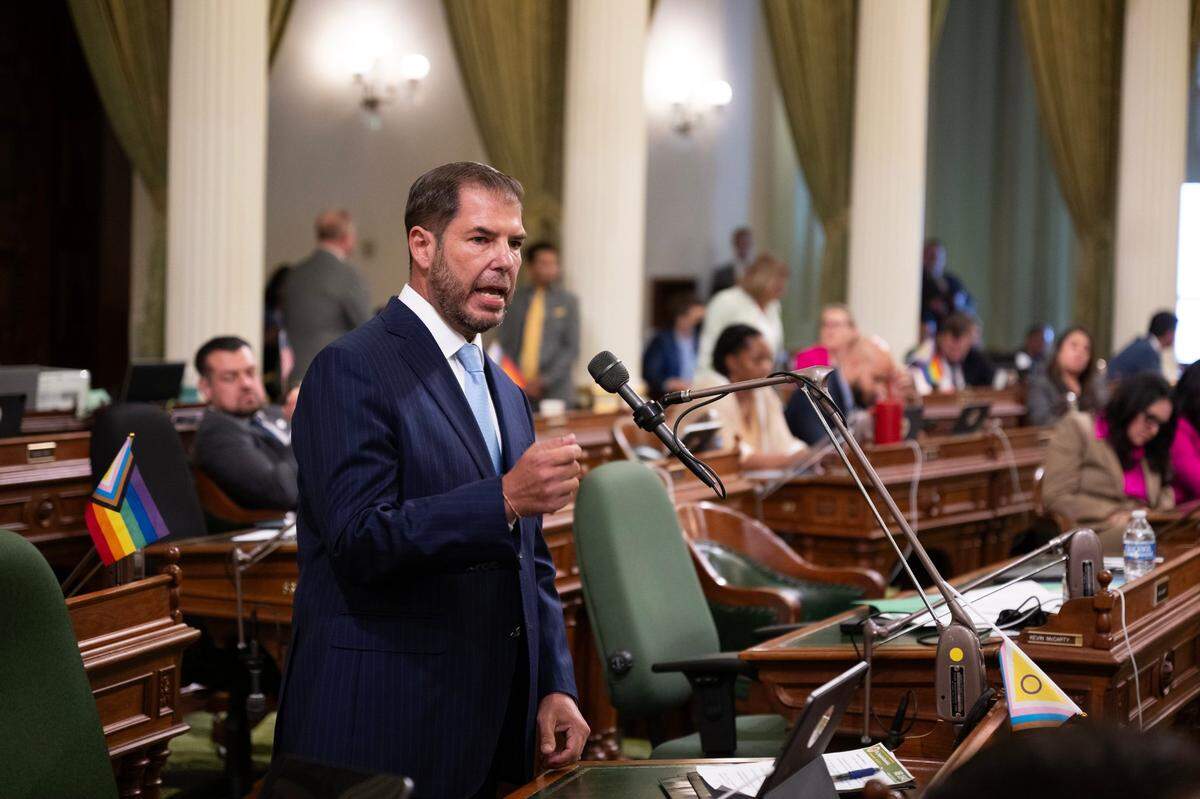
Assemblymember Joaquin Arambula, D-Fresno, emphasized that the fight to expand Medi-Cal to undocumented immigrants had been happening in the Legislature since 2015, and would continue for years to come. He encouraged fellow members to pick up the baton and “carry it with pride.”
“We are only able to accomplish this if we work together,” he said.
Conversations will continue to unfold in the next few weeks about the trade-offs in the budget. Caucus Vice Chair, Assemblymember Liz Ortega, D-San Leandro, has called for Newsom to propose cuts elsewhere, and members of budget subcommittees on health have encouraged the California Department of Health Care Services to consider different options.
However, strategist Liao said Californians, and Americans in general, seem to be more focused on affordability than equity and representation.
“I think it was pretty clear by the shifts towards Trump in 2024 that it was folks’ pocketbooks that came first and foremost over you know, electing the first woman, the first African American, first Asian American president,” Liao said.
He added the party needs to convey to voters that it is “looking out for as broad a swath as possible, because then people feel included in what you’re trying to do.”
When reached for comment, Newsom’s office addressed broadly the tension between himself and the caucuses.
“We won’t always agree on every issue — that’s part of a healthy democracy — but that doesn’t change the deep respect and strong relationships the Governor has with our legislative partners and caucuses,” said Izzy Gardon, a spokesperson for the Governor’s Office.
As for state Sen. Menjivar, she said she does not support a budget that makes these cuts.
“I cannot follow my party here,” she said. “I wouldn’t be able to sleep at night.”
The Latino caucus, she said, can make a difference in the negotiations.
“We need to use our caucuses and hold power,” she said, adding the caucus is 35 lawmakers strong. “That’s enough to stop budgets, right?”
This story was originally published May 30, 2025 at 5:00 AM.