
House passes Trump tax and spending bill. How California may be impacted
After an all-day, all-night marathon of intense pressure from the White House, the House Thursday passed and sent to President Donald Trump sweeping legislation to cut taxes but also cut help for the millions of Californians who rely on Medicaid and food assistance.
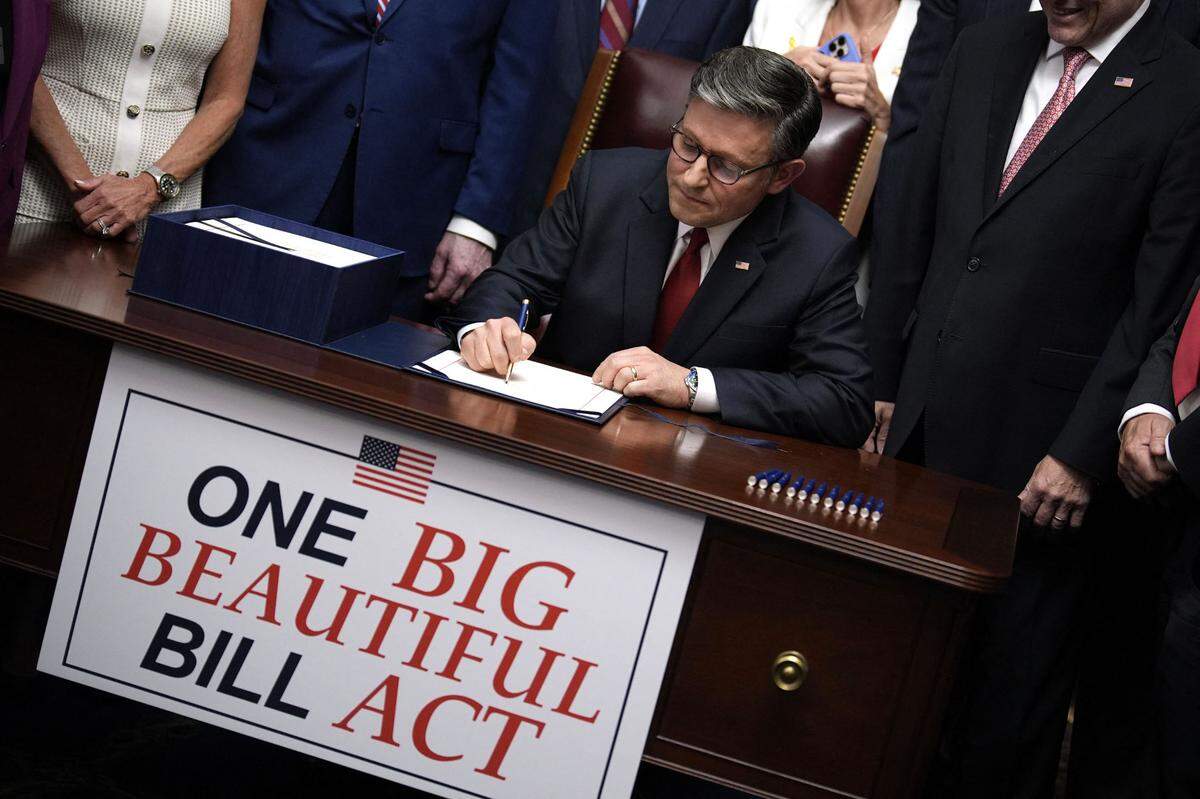
Trump plans to sign the bill at 5 p.m. EDT on Friday, the Fourth of July — his goal for the bill all along. “President Trump looks forward to signing the One Big, Beautiful Bill into law to officially usher in the Golden Age of America.,” White House spokeswoman Karoline Levitt said.
The vote was 218 to 214 with all Democrats and two Republicans voting no, Reps. Thomas Massie of Kentucky and Brian Fitzpatrick of Pennsylvania.
All 43 of California’s Democrats voted no, and all nine of the state’s Republicans voted yes.
It was a vote for Trump’s signature legislation, the centerpiece of his effort to dramatically change the scope and role of the government’s social safety net. He wanted it done by the Fourth of July, and against what seemed like enormous odds, the Republican-led Congress did it.
Healthcare assistance, mostly in the Medicaid program, will now face $1 trillion in cuts over the next 10 years. Food aid will be slashed significantly. Energy efficiency programs will be cut back.
At the same time, tax cuts first enacted in 2017 will continue; most were due to expire at the end of this year. There will be some new ones, notably bigger deductions for qualifying seniors and no income tax on tips or overtime.
The political battle is on
There will be political consequences.
Democrats were relentlessly critical of Rep. David Valadao, R-Hanford, regarded as one of the more vulnerable House members. Two-thirds of the people in Valadao’s Central Valley district use Medicaid, the state-federal program that helps lower-income people pay for healthcare and now faces big reductions..
“This vote will haunt our Republican colleagues for years to come,” said Senate Minority Leader Chuck Schumer, D-New York.
The final vote was delayed as House Minority Leader Hakeem Jeffries, D-New York, spent 8 hours and 44 minutes — a House record — outlining the Democrats’ case against the bill.
At one point, he singled out Valadao for criticism. Jeffries read a part of a June 24 letter Valadao and other Republicans wrote to Republican congressional leaders warning that if cuts were too severe, they could not support the bill. “No surprise, it was authored by David Valadao,” Jeffries said. Democrats in the House chamber laughed.
Valadao, who voted for the bill, was one of the top signers of the letter, which said that the members could not support a Medicaid plan that “threatens access to coverage or jeopardizes the stability of our hospitals and providers.”
California’s members of Congress
California Democrats were unified in warning of the bill’s problems.
“Every dollar slashed represents real human suffering. Republicans are forcing Americans with the fewest options to make impossible choices — all to give tax breaks to billionaires,” said Rep. Doris Matsui, D-Sacramento.
Republicans were quick to fire back. Minutes after the vote ended, the National Republican Congressional Committee blasted Rep. Adam Gray, D-Merced, one of the nation’s most vulnerable Democrats.
“Out of touch Democrat Adam Gray’s vote is a betrayal of Californians. Instead of standing up for Californians, he voted to raise taxes, kill jobs, and gut national security. Voters won’t forget it, not now, not next November,” said a statement from NRCC spokesman Christian Martinez
California Republicans praised the bill.
“Californians will soon get something long overdue: Major tax relief,” said Rep. Kevin Kiley, R-Roseville.
Soon after the GOP blasted Gray, Democrats had their own take on the vote.
Rep. Suzan DelBene, chair of the Democratic Congressional Campaign Committee, called the California Republicans’ vote “to once again pass their Big, Ugly Bill — bigger and uglier than ever — is the latest and loudest declaration of the fact that they will always prioritize serving Republicans’ billionaire campaign donors at the expense of the children, families, and workers they’re supposed to represent.”
Gray said in a statement, “This irresponsible legislation harms our most vulnerable neighbors, including seniors, veterans, single parents and children, while bending over backwards to give tax breaks to the ultra-wealthy — and adds trillions to our national debt to pay for it.”
Republican holdouts
The bill was full of compromises, full of features that made it difficult for some Republicans, mostly members of the ultra-conservative Freedom Caucus, to eagerly embrace. That reluctance fueled lengthy delays and fierce lobbying Wednesday and Thursday.
Routine procedural votes became lengthy dramas. The final vote to set the rules of debate, took nearly six hours, instead of the usual 15 minutes, as a handful of Republicans refused to go along, siding with Trump and GOP leaders only after hours of meetings that stretched well beyond midnight.
While Republicans hailed the tax cuts, many decried the $3.3 trillion that independent analysts say could be added to the already-enormous federal debt over the next 10 years.
There were also concerns about Medicaid. Valadao has been wary of the cuts.
The bill includes work requirements for able-bodied people. They’ll have to show they’re working or in school at least 80 hours a month, with some exceptions.
Fifteen million Californians use Medicaid, called Medi-Cal in the state.
The Supplemental Nutrition Assistance Program, called CalFresh in the state, also may have to cut back.
About 5.3 million people in California used the help last year, the state Legislative Analyst’s Office said. Last week, Gov. Gavin Newsom warned that “hundreds of thousands of Californians who need food assistance will be at risk of losing it, and it will punish working people by ending their eligibility.”
President Trump wins
In the end the GOP gave Trump his highly-sought victory, rallying around the tax cuts, long a cornerstone of Republican economic policy.
The bill keeps the current federal income tax rates, established in 2017 during Trump’s first term, in place. It adds other features, such as no tax on tips or overtime.
And in a boost for California, the bill would raise the limit on state and local income tax deductions, now $10,000, to $40,000 for people with incomes of less than $500,000.
Under the pre-2017 system, about one-third of taxpayers In Sacramento County deducted an average of $12,000 for the state and local taxes they paid. After the cap went into effect, and the standard deduction increased, the percentage of those taking the state and local tax deduction in the country plunged to 13% in 2022.
In El Dorado and Placer counties, 45% of taxpayers had claimed an average of about $16,500 in SALT deductions. In 2022, the percentages were down to 19% to 20%, according to the Tax Policy Center.
Democrats argued that the cuts are tilted to being more generous to the ultra-wealthy.
An analysis by the nonpartisan Tax Policy Center this week found that those earning from $460,000 to $1.1 million would get an average tax cut of $21,000, increasing their after-tax incomes by 4.4%.
The lowest-income households, making $35,000 or less, would receive an average cut of $150, or less than 1% of their after-tax income.
Middle income earners, who make $66,800 to $119,200, would save $1,780, boosting after-tax income by 2.3%.
This story was originally published July 3, 2025 at 11:32 AM.
.jpg)